

Magazine Issues
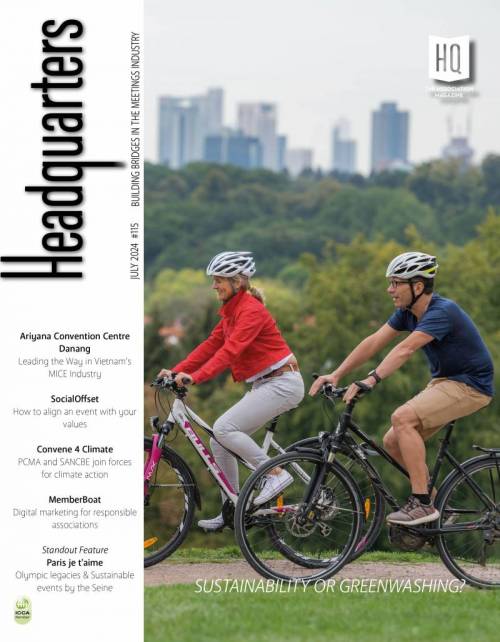
HQ #115 / Sustainability or Greenwashing?
Cover Image: Summary:
In each annual issue of HQ, we have been offering different perspectives on sustainability for associations, capturing practical examples of organisations and events that are proving to be the strategic beacon of this vital trend for the MICE industry. How are European associations aligning themselves with the European Green Deal? What new sustainable requirements are being included in bidding processes and who is bridging the gap between international associations and event destinations?
Sustainability is not really an ‘issue’ anymore. It has moved past the issue stage and into the consciousness of virtually every company, organisation, association, and government in the world. So, for your next event, start by defining your sustainability objectives, being transparent, and communicating them to all stakeholders to engage them in the process. Once clearly communicated, lead with a practical plan to implement them, and measure and report the results, which can then become a benchmark for future editions to further improve and evolve the process.
As Mohamed Mezghani, Secretary General of UITP and new President of European Society of Association Executives (ESAE), tells us, “when we talk about sustainability, it’s important to distinguish between the association, its members and the sector in which it operates. What associations can do is identify measures to make the sector more sustainable, provide members with tools to support them in this, and ensure that the associations’ own activities are sustained.”
In this edition of HQ, we invite you to discover, not just browse, the many examples and diverse initiatives that highlight real efforts towards sustainability and advocacy for eff ective, sustainable practices in our industry, whether they come from convention bureaux, venues, national or local governments, congress organisers, private or public organisations or individuals. There are many great ideas to take away and apply to your organisation.
Click below to download or read our HQ #115 live:
Live URL:https://www.flipsnack.com/8B6DFADEFB5/hq-115-july-entire-web-v1/full-view.htmlHQ #114 / How to Build Legacies in the Meetings Industry?
Cover Image: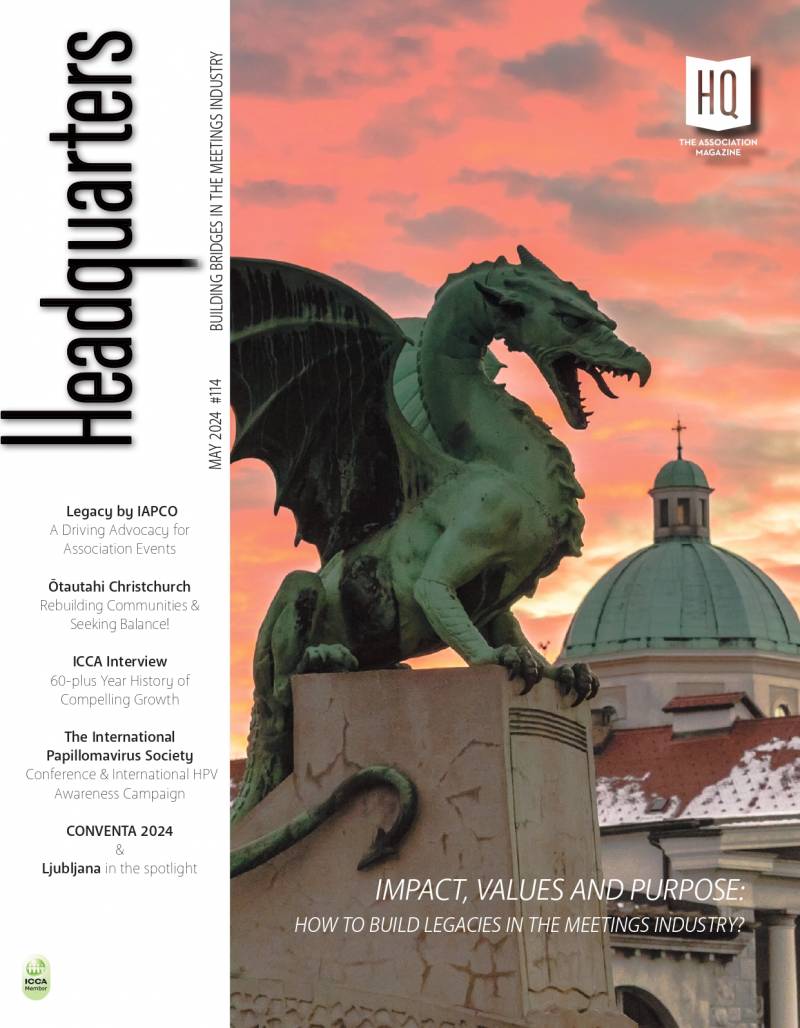 Summary:
Today, associations are commonly accepted as the great unifiers of society, and the role between their sectors, groups and members follows a logic of value and representation. On the other hand, outdated models for recruiting, retaining and involving members may not survive in an increasingly demanding and ever-changing operating environment. Legacies can make a difference in this respect!
Associations clearly need to acquire a broad understanding of the benefits and added value that events bring not only to their members but also to the environment in which they operate. It's not just about setting goals and meeting them; it's about continuous improvement and constant progress towards building a better association and creating more value and impact for our members, employees and other stakeholders.
As Sissy Lignou tells us on page 37: "Legacy is a win-win long-term impact like no other, compared to other sectors, and it is a powerful argument for all meetings professionals to use when defending our activity. It is a superpower that is often not recognised by political decision-makers, but which should serve as a driving force in the defence of associations when they seek to gain recognition and support in the destinations that host their events.
In this issue of HQ, we set the tone for exciting discussion around the social, economic, political and environmental ramifications of our meetings industry, and showcase the best and diverse examples and practices for achieving them. We spoke to the heads of the International Papillomavirus Society about the ICCA Seed Fund grant allocated to their legacy programme for the 2024 conference in Edinburgh; we covered more than 60 years of growth in the business events sector with ICCA CEO Senthil Gopinath; and dissected the concept of association and the multiple scenarios and common challenges with association expert Belinda Moore.
In the destinations chapter, we published the second part of the story about the social balance of Otautahi Christchurch after an environmental tragedy; we went to Slovenia to witness one of the industry's new rebels, the Conventa tradeshow; and we were under the spotlight of the 2024 Olympic Games with the Paris convention bureau. We echo the brilliant perspectives of our associative contributors, and welcome two more in this issue: Gordon Lannister's Membership World and ExpoPlatform.
Click below to download or read our HQ #114 live:
Live URL:https://www.flipsnack.com/8B6DFADEFB5/hq-114-how-to-build-legacies-in-the-meetings-industry/full-view.htmlAustralia MICE Destination Report 2024
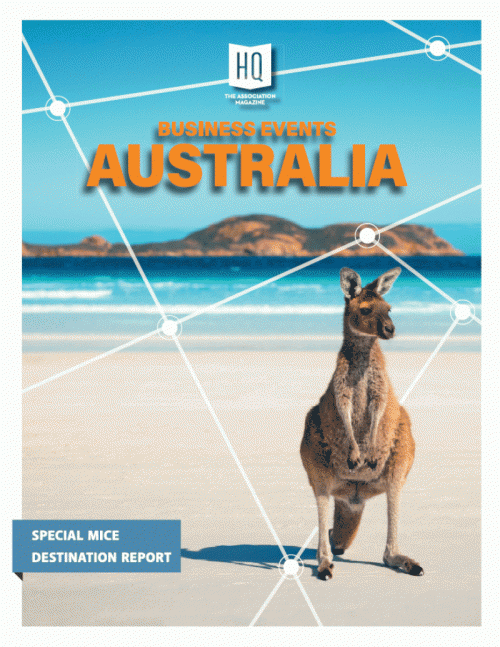
Cover Image: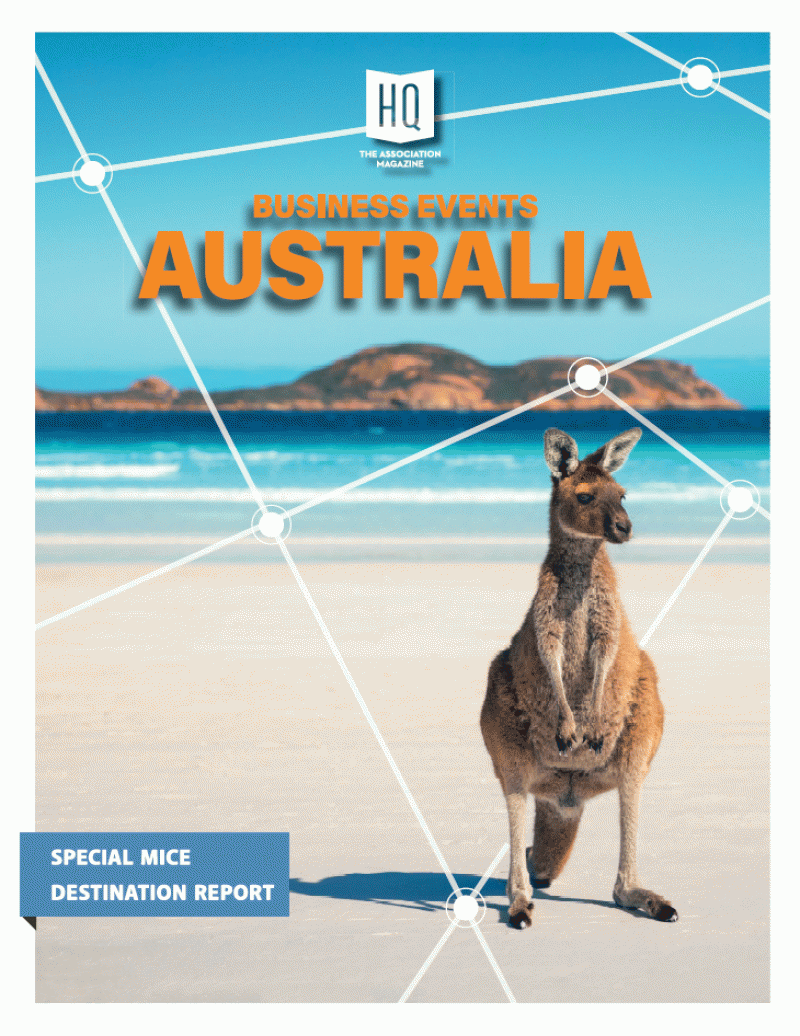 Summary:From the ancient whisper of the rainforest to the quiet solace of the desert, from rugged mountain ranges to tranquil lakes, immerse yourself in the Land Down Under, where the pulse of innovation beats in every corner and the excitement of adventure beckons from across the country's vast natural landscapes. Australia's commitment to sustainable and culturally rich business events is painting the nation's buzzing cities and breathtaking nature with new strokes of progress.As HQ readers flip through the pages of this report on Australia, they will embark on an inspiring discovery journey through captivating Australian destinations renowned for their innovative and sustainable approach to business events. From the iconic skyline of Sydney to the rich cultural tapestry of the Northern Territories, our detailed destination report awaits. Dive into the exciting stories of Australia’s states, cities and venues, and discover how the country's commitment to sustainability and respect for First Nations and Indigenous culture is setting global standards. Explore the future of business events, where tradition meets innovation in Australia’s stunning landscapes.This Destination Report is an introduction to a country undergoing a remarkable transformation. This journey through Australia's transformation promises a glimpse into the future of business events, where the timeless allure of the outback meets environmental and community engagement stewardship.Live URL:https://www.flipsnack.com/8B6DFADEFB5/australia-destination-report-2024/full-view.html
Sydney MICE Destination Report
Cover Image: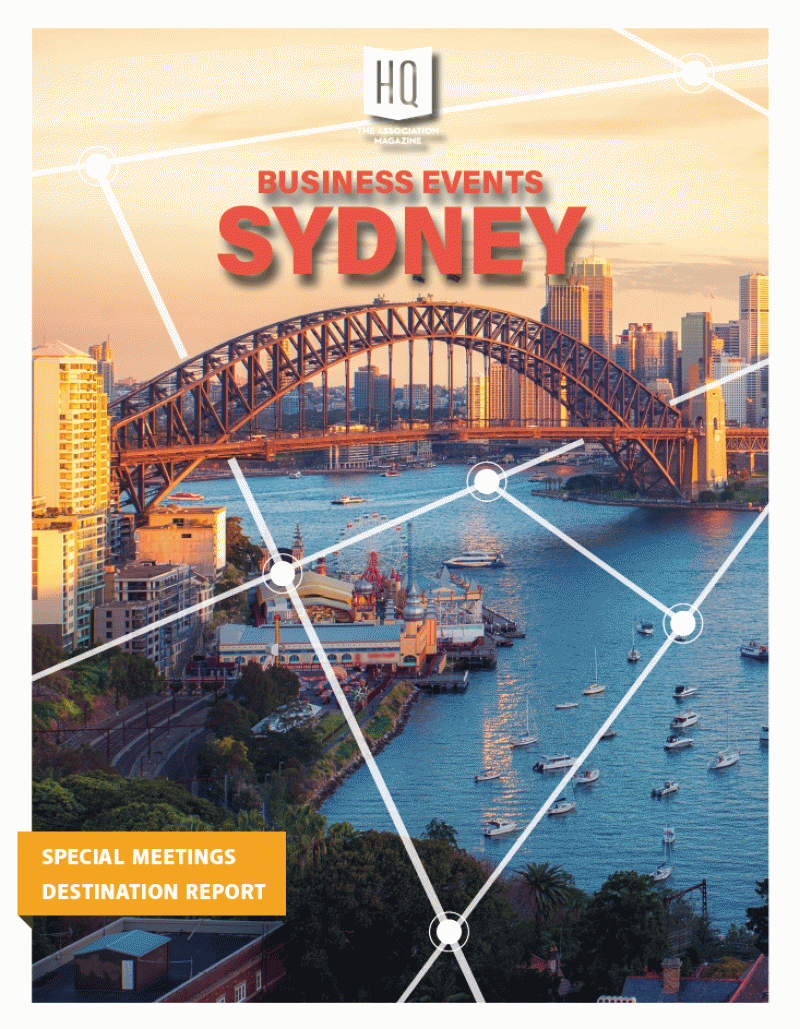 Summary:Sydney, a city where natural beauty blends with a buzzing urban energy, offers a rich combination of experiences for business event planners. As a leading MICE destination, Sydney showcases its iconic harbours, cultural scene and innovative business sectors to offer the perfect setting for conferences, meetings and corporate events. This city is much more than a place to convene; it's a catalyst for change and a platform for fostering global business relationships.Sydney's commitment to sustainability is demonstrated in its infrastructure and community initiatives, positioning the city as a leader in green meetings. Thanks to state-of-the-art venues like the ICC Sydney, which embodies the city's forward-thinking philosophy and environmentally friendly policies, delegates enjoy world-class amenities while simultaneously benefiting from the city's commitment to protecting the environment. Discover the six trends shaping the future of events with ICC Sydney.Explore Sydney's many strengths, from its rich First Nations heritage to its cutting-edge technological advances in areas such as Technology & Innovation, Health & Life Sciences, Finance & Professional Services, Science & Engineering and Aerospace & Defence.Our full report on Sydney, available in the in-depth destination report, explores how Sydney is shaping its future through business events and highlights the city's strategic approach to integrating social responsibility, sustainability and inclusive growth.Live URL:https://www.flipsnack.com/8B6DFADEFB5/sydney-mice-destination-report/full-view.html
HQ #113 / Embracing Lifelong Learning & Partnerships for the Future
Cover Image: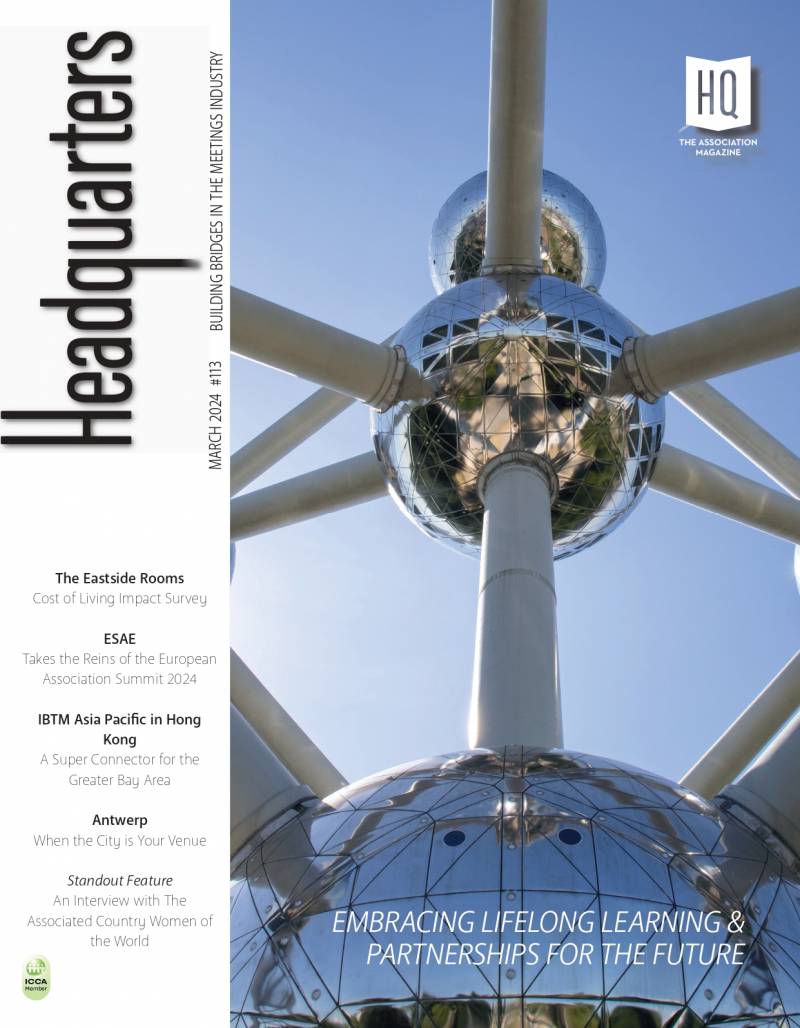 Summary:
At a time when technology is evolving at lightning speed and global challenges are becoming increasingly complex, education and partnerships have never been more important for association executives, especially in the face of disruptive challenges and threats posed by artificial intelligence.
In the dynamic world of association management, staying relevant and effective requires a keen understanding of evolving trends in leadership development and strategic partnerships. As the traditional landscape of associations undergoes a profound transformation, association executives are challenged to redefine success and embrace new approaches to skill development and learning opportunities.
That is why creating industry partnerships not only helps determine the key skills needed to be successful in the industry, it also can identify (or create) training and employment strategies that meet the shared needs of your partners. By collaborating with industry partners, organisations can swiftly address talent gaps, allowing businesses to tap into growth opportunities, drive transformation, and expand their market presence.
In this issue of HQ, we focus mainly on industrial partnerships and the value of education and lifelong learning. It's an issue full of excellent articles, with highlights including the wide range of opportunities Brussels offers for association staff looking to improve their skills; two association interviews with Associated Country Women of the World and the Association of British Professional Conference Organisers; coverage of events such as the AIME tradeshow and the BestCities Global Forum, as well as the usual destination stories featuring Hong Kong, Colombia, São Paulo and Antwerp.Without forgetting the magnificent insights and concepts that our Association Partners bring us in the back pages... welcome to 2024 with Headquarters!Live URL:https://bit.ly/4cxyoflHQ #112 / How to Attract the Next Generation of Talent?
Cover Image: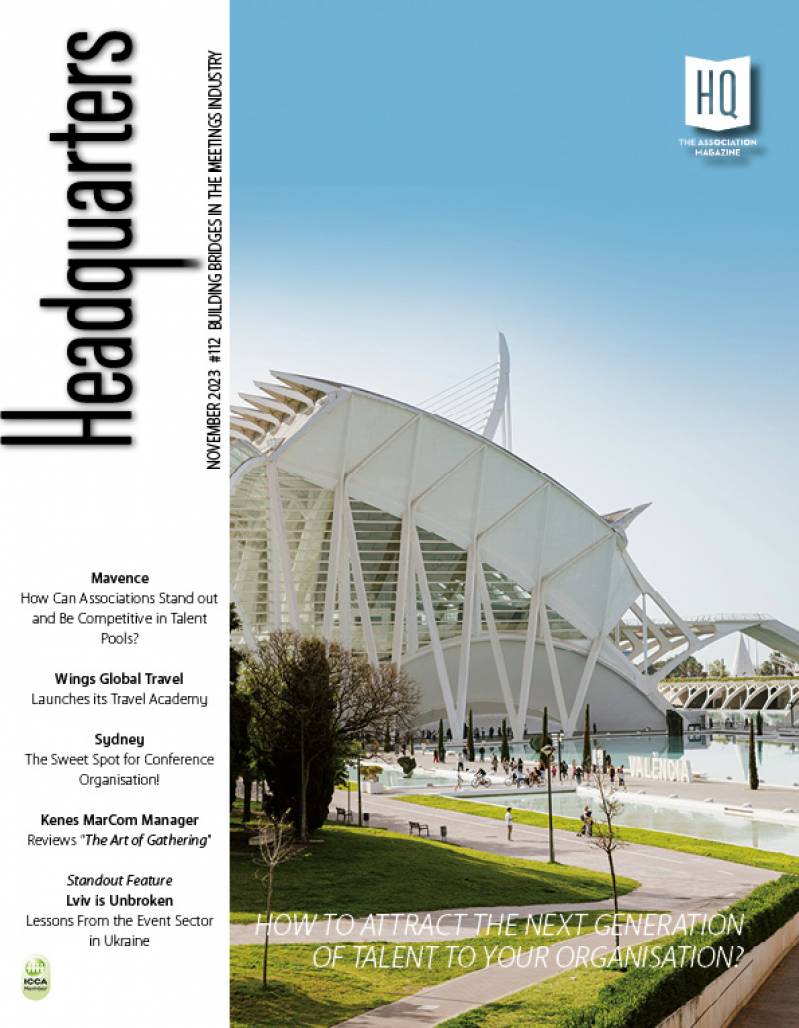 Summary:
As we speak, in October 2023, the world is slowly waking up from a three-year sleepwalking pandemic to a reality of regional wars, galloping inflation and an environmental emergency - all of which are combining to pave the way for a slowdown in globalisation. Everywhere we go, we see posters saying "Trainee wanted".
For several years now, associatins in certain sectors have been struggling with a severe staff shortage. In this last HQ of 2023, we address one of these megatrends that, despite being of great importance for the association events sector, has been under-emphasised as a matter of concern in such a competitive market. How can we attract the best talent to our associations, train our staff and retain the best professionals?
In this regard, we would like to draw your attention to the interview with Jason Descamps, CEO of the recruitment firm Mavence. As he used to say, “Employers are the demand, candidates are the offer”. That’s because in that previous world we lived in, the clients were the demand, and the candidates were supposed to do “anything” to meet the demand... Well, not anymore, right?
On the other hand, we also visited the Academy of the Travel Management Company Wings, which, through this training camp, is trying to combat the rampant unemployment among young people in South Africa and steer their careers towards the industry. Also, not to be missed are a series of exciting articles featuring the AI, Data and Robotics Association, the event planner Melva LaJoy and her post-pandemic experiences, and a tour of Sydney.
Last but not least, a mandatory reference for our stand-out piece on Lviv, a beacon of hope in the Ukrainian war. We present you with an extensive and detailed report on how the city went from being an event powerhouse in western Ukraine to the largest humanitarian hub on the continent.
All this and much more on the button below.
Live URL:https://www.flipsnack.com/8B6DFADEFB5/hq-112-how-to-attract-the-next-generation-of-talent/full-view.htmlLuxembourg MICE Destination Report
Cover Image: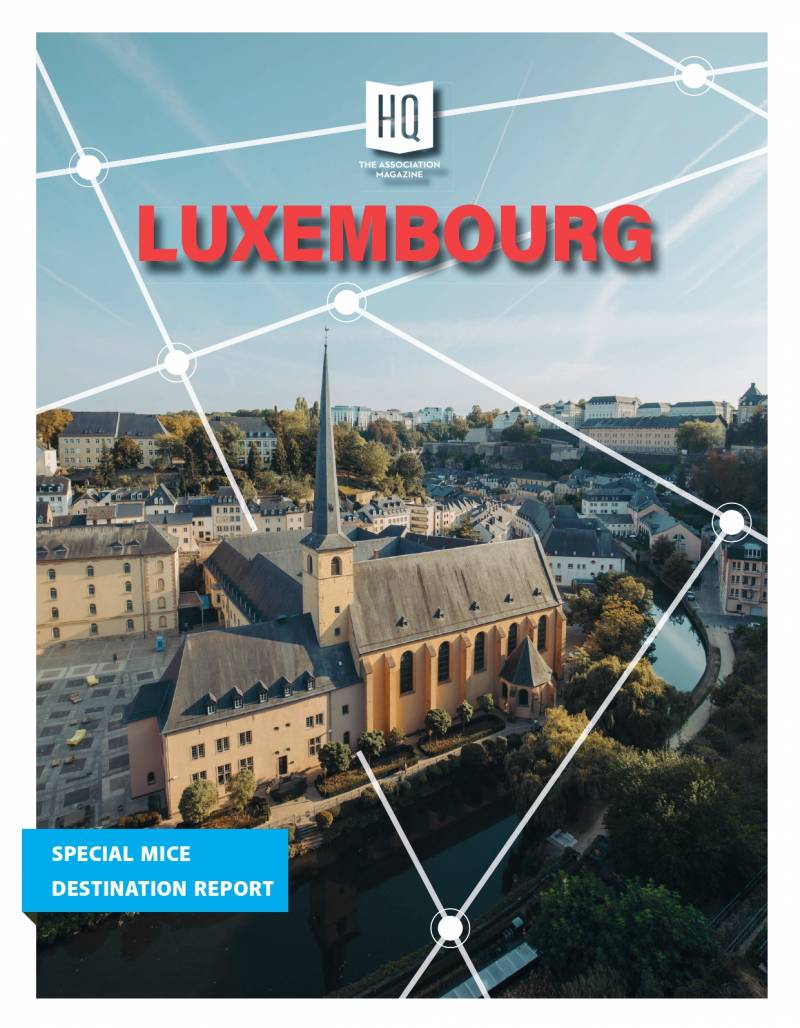 Summary:
Nestled between Germany, France and Belgium, Luxembourg has made a name for itself as one of the world’s most attractive event destinations. With an area of just 2,586km2, Luxembourg is one of the tiniest countries in Europe, which makes the distances between venues, hotels and leisure spots very short and convenient.
A multicultural country by tradition, Luxembourg has a cosmopolitan character, welcoming around 170 different nationalities, and a cultural diversity that is reflected in the languages you hear on the streets, in its avant-garde restaurant scene as well as in the arts and leisure sector.
With its international flair and cosmopolitan vibe, Luxembourg has over the years accumulated a wealth of experience in welcoming companies and associations from all over the world, making it the ideal place for organising meetings. So how is this small European destination shaping its future with business events in mind?
Find out in this guidebook updates on Luxembourg's accommodation and meeting spaces, legacy events, industrial identification of the region and a detailed description of its regions:
HQ #111 / How Event Tech is changing the world we live in?
Cover Image: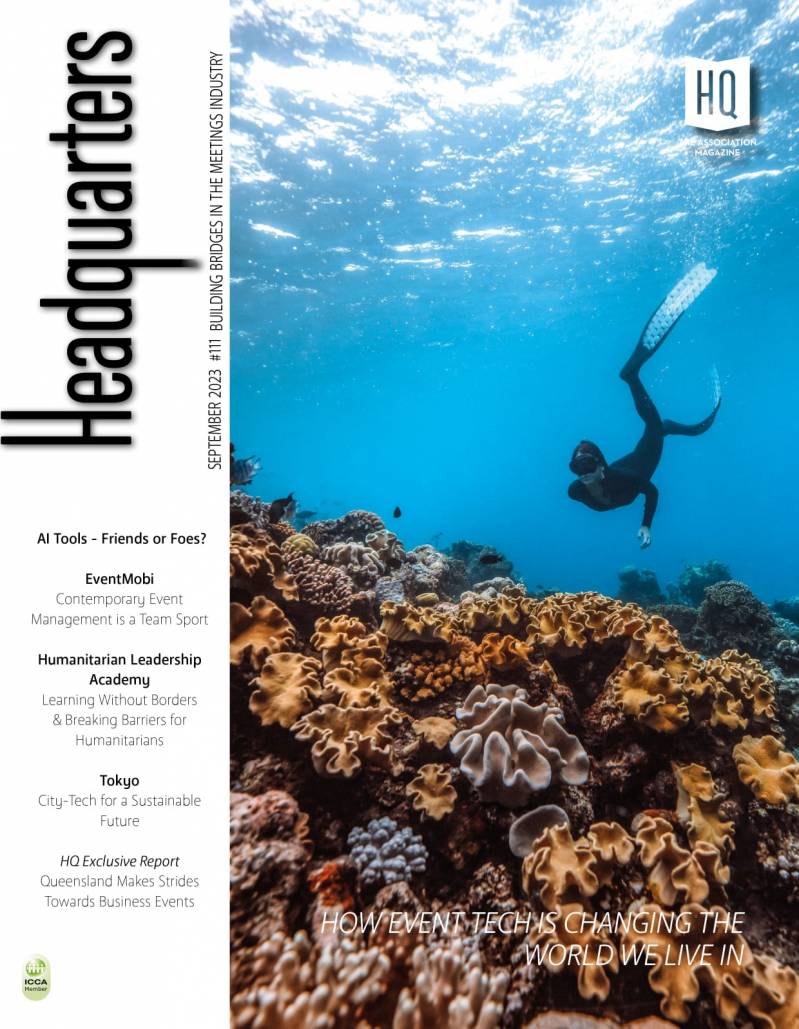 Summary:
The last three years have undoubtedly instilled a steep learning curve in the world of meetings and events. At the height of the pandemic, virtual events became the new normal and organisers relied on event technology to create more effective online strategies to deeply involve attendees and complement their programmes with the hybrid element.
However, as time went by, it became clear that this vision didn't fully convince delegates, planners and sponsors, in certain areas especially when engagement and day-to-day work was one of the main requirements - the dream of seamless online networking turned out to be less successful than expected, and digital interactions have not lived up to expectations.
As an association, the amazing thing is that you can draw people who care about a specific issue or cause to come together around an initiative or impact and create that experience personally. This makes it possible to forge very close ties, create networks and share a lot of education. All these event tech tools are here to help you expand your mission and purpose, broaden the scope of action, and innovate in areas why our operations were really rusty.
Take, for example, the Kaya digital learning platform, developed by the Humanitarian Leadership Academy and born out of the need to strengthen the skills of humanitarians worldwide to respond directly to crises in their localities. Or the 9th Round Table of the Asia-Pacific Associations of the UIA, held in Tokyo, presenting a unique demonstration of new robotic telepresence avatars, which were an effective solution for managing international conferences in a hybrid format.
In this issue we interview DOT Europe, representing companies offering products and services on the Internet at European level, and taking part in the main political debates affecting the digital sector and an innovative, open and secure Internet for citizens and organisations. We also spoke to Bob Vaez, CEO and founder of EventMobi, one of the largest event software providers on the market, which has focussed on creating event applications that enable digital interaction, and a do-it-yourself approach to managing hybrid planning.
And why not also read an essay by our HQ editor, Jesús Guerrero Chacón, delving into the twilight and unpredictable world of artificial intelligence as a transformative force for professional associations and events? That's right, this issue of HQ on Tech & Education explores the world of technology between AI, hybridity, data management, cybersecurity and the ethical use of these powerful tools. Stick around...
Live URL:https://www.flipsnack.com/8B6DFADEFB5/hq-111-how-event-tech-is-changing-the-world-we-live-in.htmlHQ #110 / Where do we stand on Diversity, Equity and Inclusion?
Cover Image: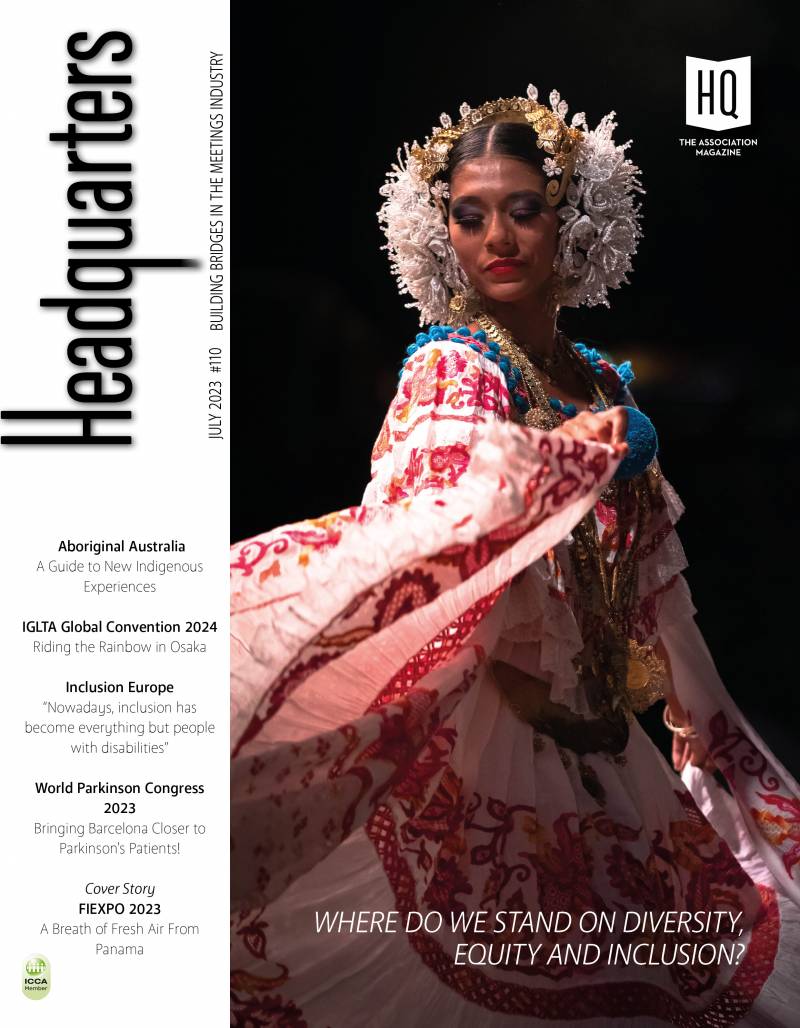 Summary:
Today, associations increasingly wish to recognise the strategic importance of Diversity, Equity and Inclusion (DEI) as a management discipline, working to incorporate a wide range of demographic groups into their staff and Boards. The major challenge currently facing global associations is not about practicalities - it is about values, and it is impacting them on several levels.
Firstly, having a clear values framework is a "minimum level of service" if an association wants to attract members belonging to any generation younger than the millennial generation. Secondly, having a value framework in place is one thing, defining the DEI impact for the association and its members is another.
Diversity is about the kinds of differences we can experience with each other. The visible ones (ethnicity, binary gender, age) and the invisible ones (non-binary gender, religion, culture, beliefs, etc.); it also concerns the mix of differences between people: demographic (age, religion, gender, sexual diversity), physical abilities, as well as differences in character, level of education, areas of expertise, organisational culture, etc. In short, diversity concerns all the differences between people.
Take, for example, our ‘Association Profile’ Inclusion Europe − an association that fights for equal rights and the full inclusion of people with intellectual disabilities and their families in the European ecosystem. The main issues they grapple with continue to be education, accessibility, voting rights, employment and health care, as well as the right to decide and non-discrimination.
Or the World Parkinson Congress held in Barcelona which was a shining example of how an event can educate society and train frontline staff to accommodate delegates with Parkinson’s disease. Or even Osaka, which will become the first city in Asia to host the IGLTA Global Convention 2024, demonstrating a leadership position in the inclusion of the LGBTQ+ community and a commitment to discrimination-free travel spaces and experiences.
In this issue we find three Australian convention centres explaining how they have adapted their services and event proposals to the needs of their First Nations and Aboriginal culture, while our association friend David de Alves describes what he saw at Sydney's Worldpride Human Rights Conference, which connected people from many walks of life and provided spaces where differences dissipate and opportunities arise.
Diversity is an important consideration in the workplace as it helps improve creativity, innovation, and cultivate problem-solving abilities, and can help to create a more inclusive work environment. At Headquarters, we will continue to lead the conversation, ensuring that inclusion remains at the heart of the associations' focus, highlighting the great value we see in opening up spaces for all, which ultimately has an impact on society as a whole.
Live URL:https://bit.ly/3rhuVODSarawak Special MICE Destination Report
Cover Image: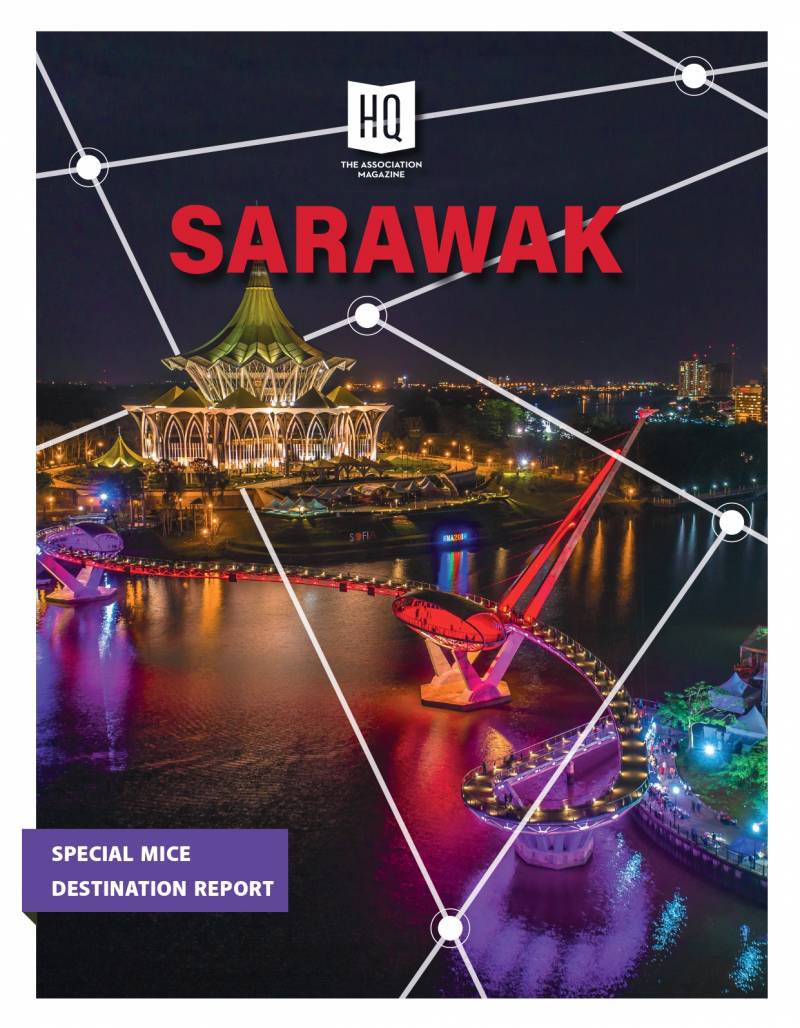 Summary:Located on the island of Borneo, Sarawak is the largest state in Malaysia and remains in 2023 a leading choice for convention and exhibition organisers from around the world due to its vast partnerships, strategic research and development areas, and state-of-the-art meeting facilities.The destination also boasts of its extensive business reputation and international hospitality surrounded by a breathtaking environment that makes it perfect for incentive travel. Sarawak's capital, Kuching, is the seat of the Sarawak Government and is the economic epicentre of the state; while other cities such as Sibu, Bintulu and Miri also serve as hubs for business events.
Read more about Sarawak's characteristics as a must-visit MICE destination, how they overcame the downturn in event gatherings during and after COVID-19 and what steps they have taken for the post-pandemic resumption of events.
Discover in this guidebook updates on Sarawak's accommodation and meeting spaces, legacy standards, the region's industrial ID and sustainability measures.
HQ #109 / Sustainable Development Through Circularity
Cover Image: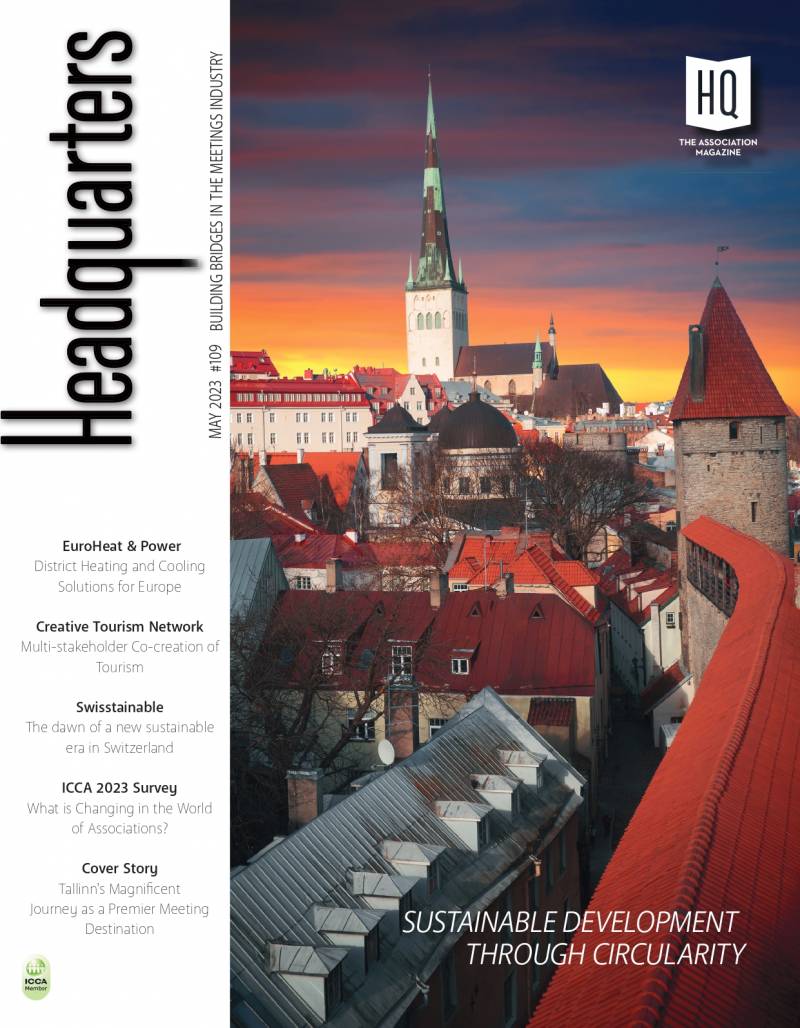 Summary:
Everything grows, everything changes, and so can everything survive; this is also the case for the values that preside over a society. Even if they follow a constant pattern, the changes that occur in a society are usually very slow. For starters, to assume that “sustainability” means the same as “environmentalism” may come in good faith but couldn't be more wrong. Ask 20 people on the street if they have heard of or know what 'regeneration' or 'circularity' means, and we think you would be amazed at the answers!
Sustainable development rests on three fundamental pillars − social, economic and environmental − which interact with each other, often influence the outcomes of each and undoubtedly move contiguously towards the same desired impacts – a circular economy. It is clear that a more expressive commitment to environmental sustainability is emerging, not only among delegates and travellers, but throughout the industry chain and association network.
However, the path that leads to a sustainable initiative can include unforeseen but truly interesting shortcuts. On our trip to Tallinn last month, we were able to see how the community and local authorities have reclaimed old Soviet factories to transform them into multi-purpose precincts, small business blocks and museums. What could be more socially sustainable than this?
We could also see that some of the major Swiss convention centres are making sure through their national Swisstainable programme that supply and first services are purchased from local and environmentally responsible companies. Isn't this an excellent proof of economic sustainability?
As one of our interviewees from Kenes this issue puts it, "when we currently hear about sustainability, attention seems to focus only or mainly on green issues such as recycling, carbon footprint and waste management. However, the topic of sustainability goes beyond the green discourse and encompasses other objectives such as gender equality, responsible consumption and production, quality education and health and well-being."
In the sphere of associations, the ICCA 2023 survey reveals that the majority of respondents (83%) express a trend towards more sustainable events in their requests for proposals, even if lack of funding, resources, in-depth knowledge and buy-in from boards limit this steady path. Either way, MICE requirements are increasing in terms of sustainability and associations that rely on them going away will pay dearly by 2030!
 Live URL:https://bit.ly/44PDT58
HQ #108 / Association Event Legacies
Cover Image: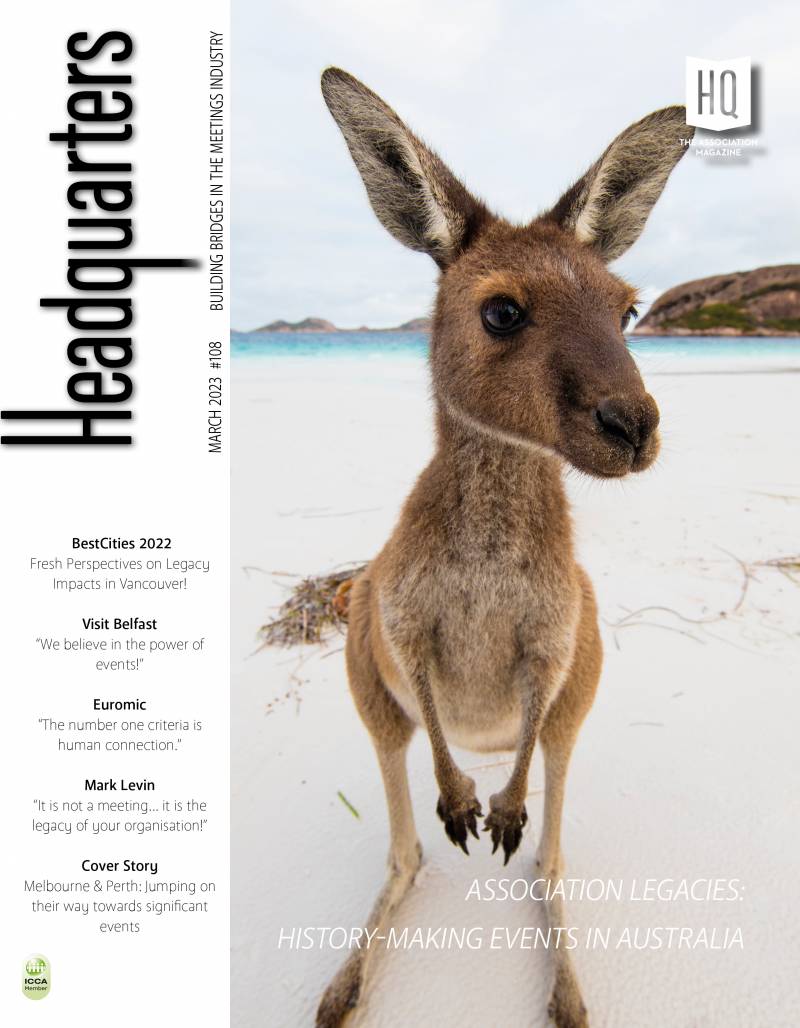 Summary:What clear definition would each of us give to event "legacy"? A congress can provide an important contribution from a social perspective, but these effects are often more indirect in the long term. How do we ascertain and measure them in relation to the previous work done at a conference?What we have been reporting for our HQ readers since the beginning of this new cycle, is what distinguishes one destination from another, what are the characteristics of its ecosystems and the intellectual baggage of the city for the benefit of a conference! In turn, what approach and direction should the association take to incorporate and impact the local dimension of its event!Once these questions have been answered, the realisation of these legacies and social impacts will have a big say in the grand scheme of your events calendar. In this first 2023 issue of HQ Magazine, we tell the story of BestCities 2022 in Vancouver with sustainability as the deciding fact of their operations, asked the Hamburg Tourism Board why they bid for the upcoming International Association of Public Transport (UITP) Summits, and reflect on leadership and diversity with the Committee for European Construction Equipment.We also dug into how Belfast, Melbourne, Perth and Washington DC view the scientific and social layers of their hosted events, and talked to Euromic about the role of Destination management companies in this transition to a promising future.Don't miss all these stories and the different views of our regular contributors on the involvement of their meetings beyond the convention centre and how associations bring the world together.
Download our physical edition right now or click the button below to access our digital version!Live URL:https://www.flipsnack.com/8B6DFADEFB5/hq-108-feb-for-web/full-view.htmlHQ #107 / Funding & Sponsorship
Cover Image: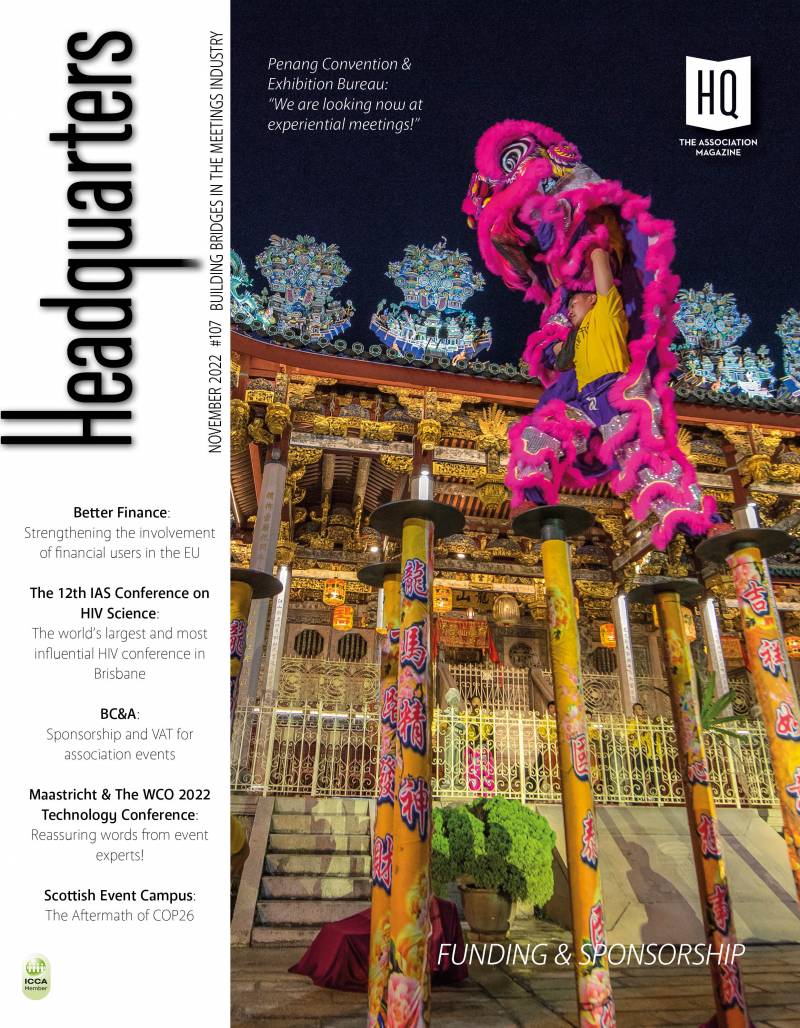 Summary:
Several international studies show that business travellers generally spend on average three times more than an international tourist, and also stay longer than the average tourist. It is no wonder that most governments want a piece of this action and move their resources strategically towards association campaigns and bidding for large congresses.
As we will see on the following pages from the pen of our contributors, event sponsorship is a great way for associations to receive support from companies and to score valuable partnerships in terms of funds and publicity. There are various types of event sponsorship that you can choose for your business. These include financial sponsorships, in-kind sponsorships, media event sponsorships, and influencer and content creator sponsorships.
In this latest 2022 edition of Headquarters, we decided to break down the concepts, terms and objectives of funding an association event in 2023 and explore new ways of sponsorship in the MICE industry. We set our eyes on two focus events taking place next year, interviewed the Brussels-based non-governmental organisation, the European Federation of Investors and Financial Services Users, and invited the consultancy firm BC&A to explain VAT taxation for sponsors.We also went to find out how Hungary, Penang and Maastricht have positioned themselves in the events and meetings industry and spoke to Sydney and Glasgow convention centres about new trends and predicaments in events organisation. Don’t miss all these stories and the different points of view of our regular contributors on new revenue streams for association and engagement for sponsors.Download our physical edition right now or click the button below to access our digital version!
Live URL:http://bit.ly/3tXB9S4Singapore MICE Destination Report
Cover Image: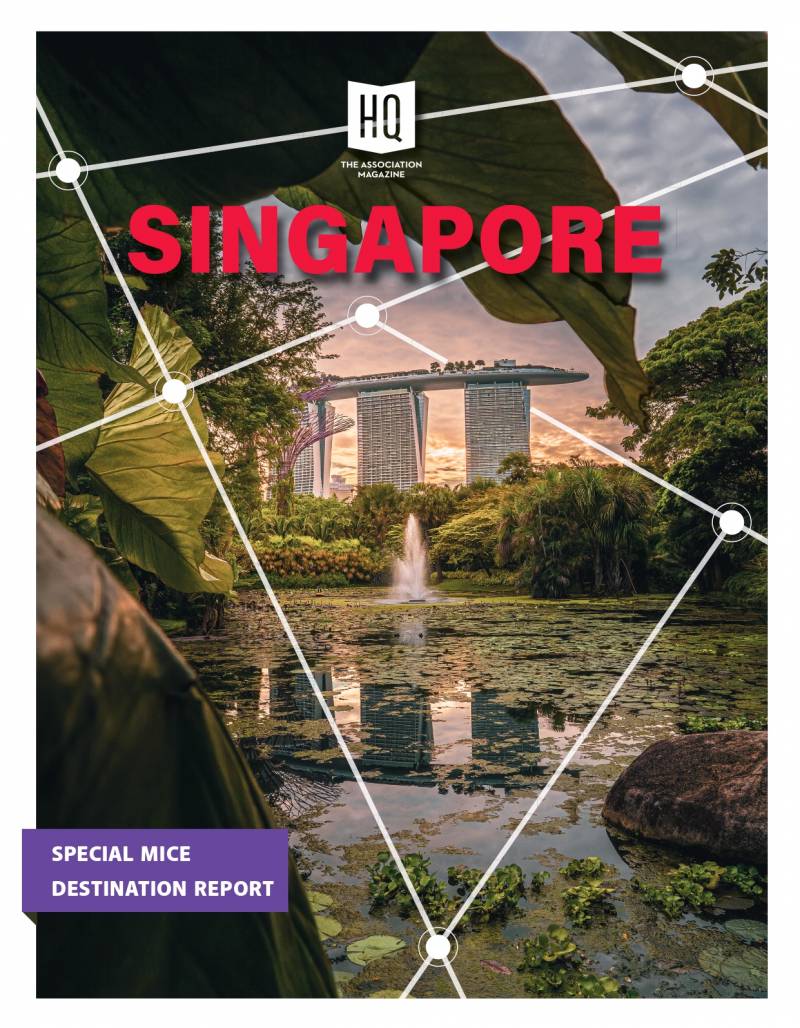 Summary:
Singapore’s astonishing breakthrough tells the story of a once sleepy fishing village that has defied the odds to become a world-class metropolis at the forefront of the MICE industry.
With its innovative business environment and vibrant multinational culture, Singapore stands out as a leading Global-Asia node for MICE and business, drawing on an extensive network of human capital, suppliers, innovation, technology and ideas to host world-class business events.
Singapore’s collective efforts to maintain its position as one of the safest cities in the world reveal a firm commitment to cyber-security, social stability, health, modern infrastructure and personal safety. Over the decades, the country has earned a global reputation for delivering high-quality events and for generating meaningful conversations.
Guarantees that allow event organisers and planners to focus solely on the success of their event with peace of mind.
Discover in this guidebook updates on Singapore accommodation and meeting spaces, hybrid platforms, the city's industrial ID and sustainability tips.
Live URL:https://bit.ly/HQSTBSUP2022Seoul Special MICE Destination Report
Cover Image: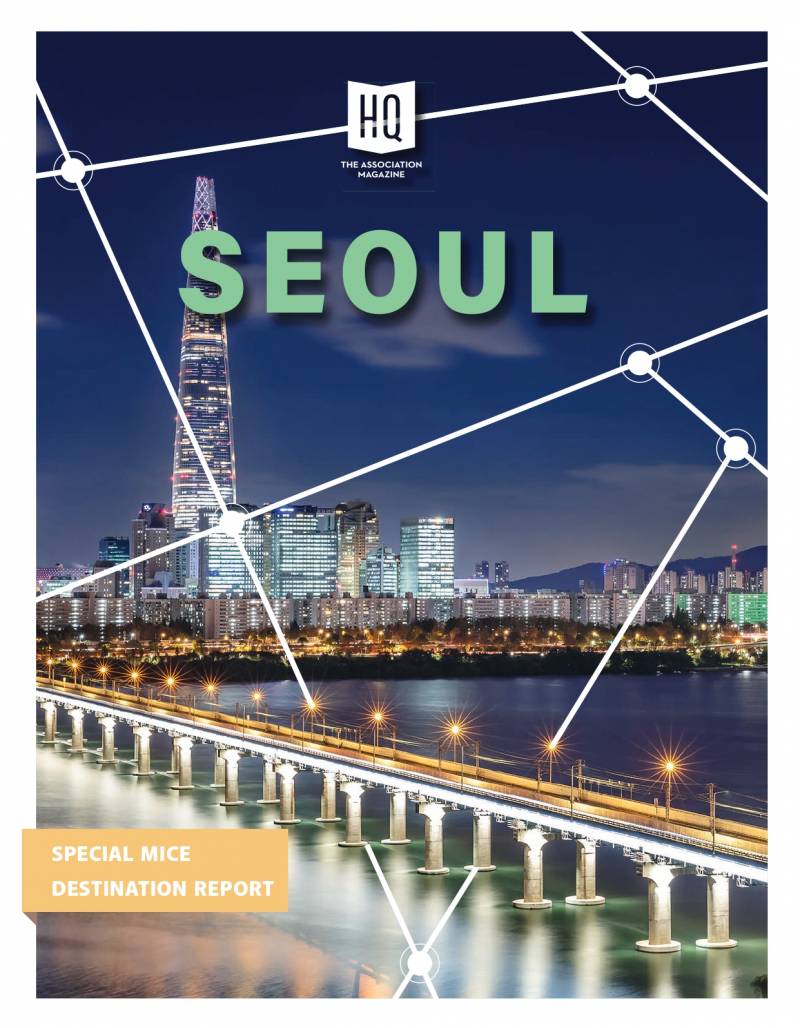 Summary:
Throughout the pandemic, the city of Seoul remained active and committed to supporting its local industry partners and overall environment. The South Korean capital has flourished over the years as an East Asian cultural reference with first-class architecture, renowned museums and an influential art scene making it a model for many international cities.
Seoul Convention Bureau (SCB) has stepped up to the plate with a wide range of resources aimed at offering comprehensive assistance to events hosted in the Korean capital, from cross-cutting event platforms to cutting-edge team building programmes.
SCB together with the Seoul MICE Alliance also presents in this supplement its revamped version of PLUS SEOUL 2022, a customised business event experience that aims to bring greater satisfaction and fulfilment to event organisers.
Discover in this guidebook updates on Seoul accommodation, alternative hybrid platforms, the city's industrial ID and wellness and health recommendations.
Live URL:https://bit.ly/HQSTO2022HQ #106 / Cybersecurity & Data
Cover Image: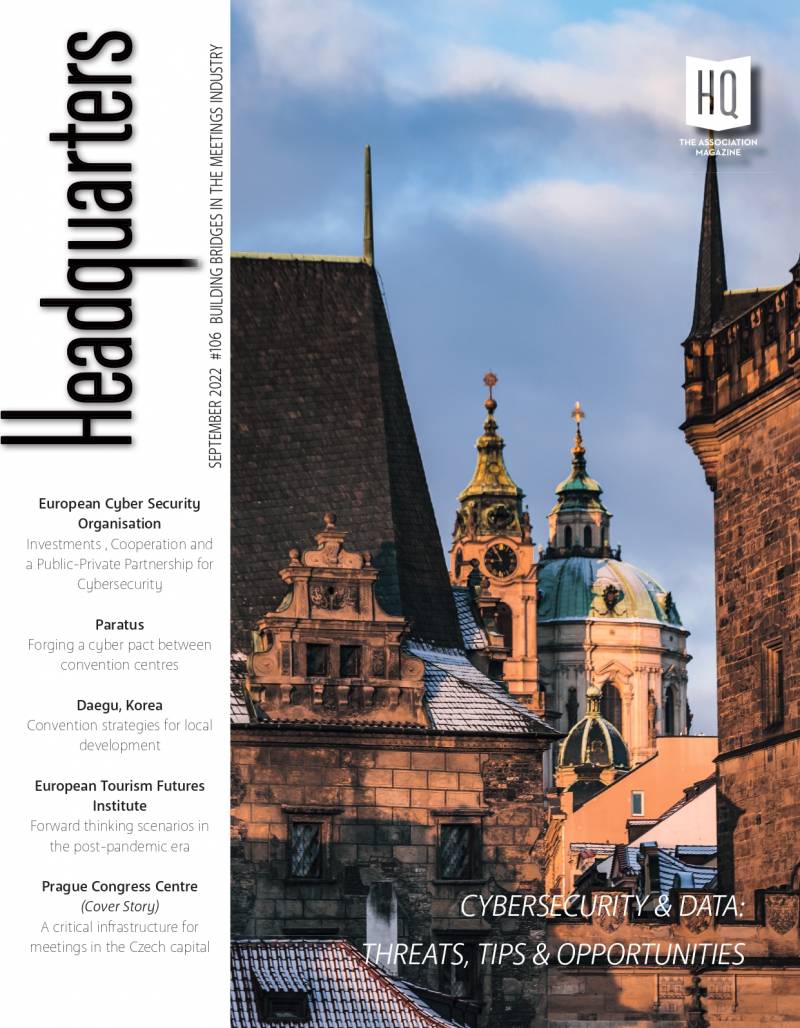 Summary:
The word “cyber” comes from the Greek word “kubernétēs” meaning helmsman, governor, pilot or rudder. In the cyber domain, a (cyber) system can be a computer network or a human body. Cybernetics is about communication and how information circulates in a system.
Most of the initial notions we had about the arc of cybersecurity and data protection in the events industry could be perfectly dismantled at the close of the editorship of this September’s edition. That’s why we went back to the classroom, did our homework, and went to talk to some experts.
For this edition of HQ #106 we have brought together four interviews to cover the different angles of the subject: Luigi Rebuffi, secretary-general of ECSO; cyber-security expert Robert McClure, managing director of Sequrest Paratus OÜ; tech entrepreneur Ohad Twig, CEO & co-founder of Booth Guru; and Stefan Hartman, researcher of future scenarios at the European Tourism Futures Institute.
Cyber-risk incidents can have operational, financial, reputational and strategic consequences for that organisation, and are particularly severe when it operates on critical infrastructure − prompting its leaders and CISOs to improve existing measures, and turning the tables in favour of cybersecurity and risk mitigation strategies.
The proliferation of big data, on the other hand, is a subject where our interviewees are divided on the current monetisation − simply having information is not enough to use it effectively − but who agree on its incredible potential and competitive edge for global destinations to transform the fortunes of their businesses, events and communities.
Don’t miss all these stories and the different points of view of our contributors.
Download our physical edition right now or click the button below to access our digital version!Live URL:https://bit.ly/3xVXullHQ #105 / Partnerships for Growth
Cover Image: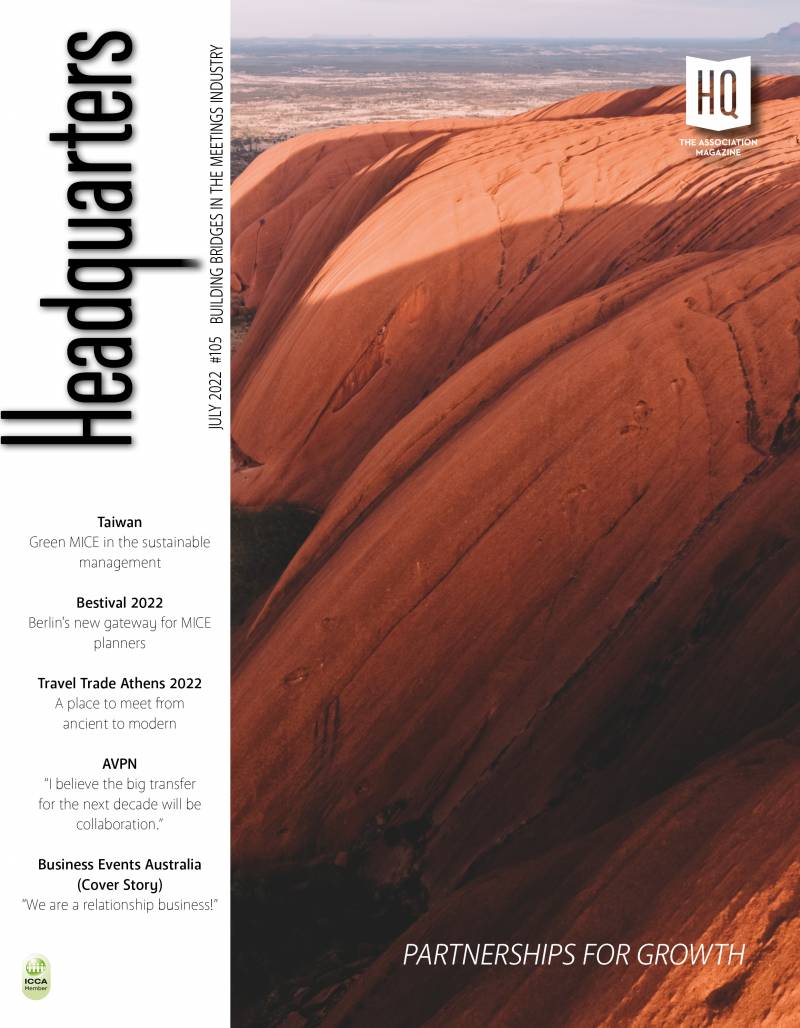 Summary:
In this renewed new world for the global meetings industry it is time to reconnect and wake up to the new trends and services that partners have to offer. We are now at the point where partnerships have to be redefined due to unexpected circumstances: pandemics, war and food shortages.
Business events are powerful platforms for real change, cross-sector collaborations, greater community engagement, and better policy development with long-term and positive benefits. We need to ask ourselves again who we can consider as potential partners. If the expectations of planners, organisers and delegates have evolved rapidly as the industry recovers and events call for other programmatic solutions, then it will be time to listen first-hand to what associations have to say in their RFPs.
This HQ #105 brings you several 'Partnerships for Growth' stories, expert interviews and actions taken by destinations at the top of this agenda. In this month's HQ Essential, we talk to Caroline McLaughlin about the role of the AVPN and we went to Budapest to attend the annual AIPC conference. We visited conference destinations that are scoring points with their local networks, such as Athens, Sarawak or Australia. There is also no shortage of strong opinions from our partners with Mark Levin's perspective on building partnerships, going local with the World PCO Alliance and positive change and strategic partnerships from the pen of Martin Boyle of IAPCO.
Taking a more competitive outlook ultimately leads to more effective collaboration. If an association can truly change a destination’s industry forever, a convention bureau can also significantly influence an association’s thought process. So, don't be afraid to partner up!
Download our physical edition right now or click the button below to access our digital version!
Live URL:https://bit.ly/3bdJPOnHQ #104 / Sustainable Events
Cover Image: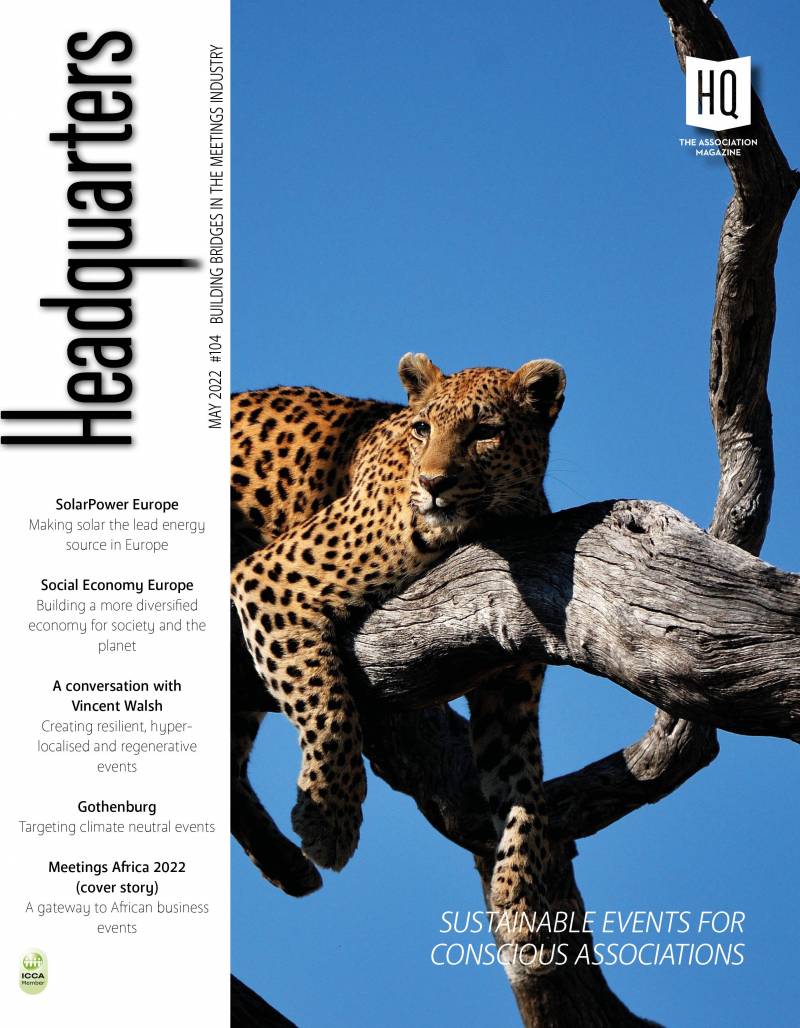 Summary:
While the pandemic has forced us to work from home and constant travel has been reduced to the bare essentials, sustainability has taken on a new life beyond footnotes. This significant reduction in the carbon footprint has coincided with a new sense of corporate responsibility towards the sustainability of events, business travel and association ethics.
Sustainability for events means taking action to preserve our natural environment, promoting a healthy and inclusive society and supporting a thriving economy. Making events sustainable is essential for success in today's meetings and conferences industry, as it has become increasingly important as an evaluation criterion for meeting organisers, DMCs and venues as part of the bid proposal.
This HQ #104 brings you several concrete examples of environmental action, interviews with experts and initiatives carried out by destinations at the top of this agenda. In this month's HQ Essential we talk to SolarPower Europe and Social Economy Europe about these ideas from the associations' perspective. We visit conference destinations susceptible to these measures such as South Africa, Thailand or the Austrian region of Tirol. There is also no shortage of strong views from our partners on lessons from COP26 (AIPC), viable models for associations (Kenes) and positive and lasting change through events (GDS Movement).
How to articulate destination marketing with sustainable features applied by hotels, convention centres or restaurants? How to integrate environmental concepts in associations and how to convince members that profit and sustainability can go hand in hand? How can industry leaders and political authorities support and strengthen services and products that promote, vis-à-vis, the ecology and sustainable development of their cities? See the answer to these and more questions on the following pages.
Download our physical edition right now or click the button below to access our digital version!
Live URL:https://bit.ly/39KuHXsHQ #103 / Event Legacies
Cover Image: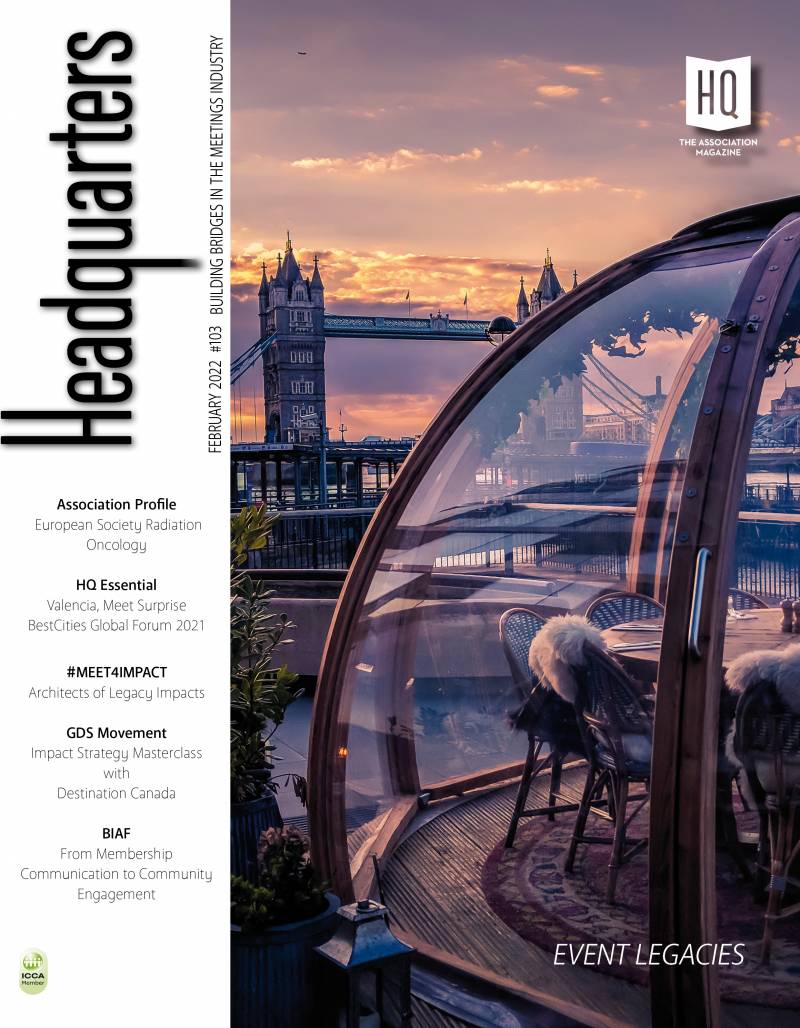 Summary:In the wake of the various structural and conjunctural transformations that the international community of associations will have to accommodate in its post-pandemic framework, 2022 is of particular importance for adjusting a new advocacy of social legacies and impacts for the meetings industry.We see a major reversal in the importance that congresses can have for society - whereas conferences used to be an important source of prestige and income, we are now seeing a shift towards more intrinsic values. For several years now, our activities have been responsible for economic and social positive outcomes that have rarely been measured, construed or even recognised.“Why is this congress taking place here?” is a perfectly fair question to ask. “What kind of legacy do I want to build with our annual event?” should be a mandatory thought for any association.
In this first edition of the year, we dive headlong into the topic of the legacies of events and the intellectual, social and economic heritage they can leave behind in the long term. In our HQ essential, we talk in detail about the projects and tools displayed at BestCities Global Forum 2021 and highlight the work of #MEET4IMPACT - also in conjunction with VisitFlanders - and the European Society Radiation Oncology (ESTRO).In the destination section, we showcase the last months of the pandemic in Iceland, Finland's congress heroes and the 100th anniversary of Messe Wien. Also don't miss our partners' solid insights around topics such as talent attraction (AIPC), digital nomads (ECM) and the impact strategy of Destination Canada by GDS Movement.Download our physical edition right now or click the button below to access our digital version!Live URL:https://bit.ly/3gULyHkHQ #102 - November 2021
Cover Image: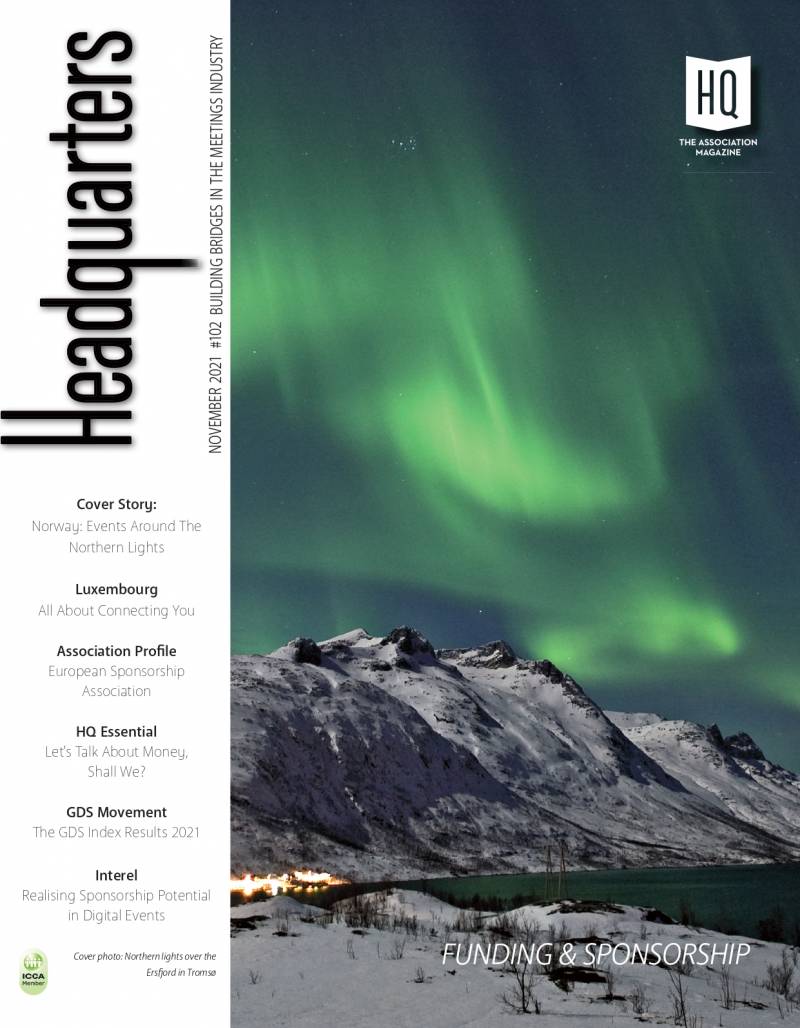 Summary:
2021 was a year of many apprehensions, inquiries, and studies, but it was also quite enlightening with regard to such hot topics as sustainability, digitalisation, and the legacy of the meetings. The coming year will be quite challenging and a test bed for many of the findings that have emerged during these months, even if security and physical meetings measures remain unscathed.
More than a chance to start over from the scratch, what lies ahead points to a much broader discussion about an innovative business model that will affect associations and destinations. How will we co-opt new financing schemes to feed this supply chain? Will destinations be willing to give up their old sales strategies? Are associations prepared to offer new services and integrated solutions to their membership?
These are the questions we try to address in our HQ #102 issue partially dedicated to the financing and sponsorship of the global events industry. Our cover story features an interview with Visit Norway about the efforts and crisis management that have taken place in the Scandinavian country since the pandemic began. We also talk to the general manager of the Kuala Lumpur Convention Centre about the importance of lobbying for the industry's value and its benefits to the local community.
In the chapter for associations, we share variations in the sponsorship industry and the impact of technology companies with the European Sponsorship Association, and new opportunities for live marketing and event services with the giant VOK DAMS. Don't miss also the regular insights from our partners (Interel, Kenes, ECM, Mark Levin, etc.) and our stories from around the world this time taking us to the city of Porto and North of Portugal.
Download our physical edition right now or click the button below to access our digital version!
Live URL:https://www.flipsnack.com/8B6DFADEFB5/hq-102-funding-and-sponsorship.html
Recently Posted








About Us
Supported by the Union of International Associations (UIA), the International Association of Professional Congress Organisers (IAPCO) and the Interel Group, the global public affairs and association management consultancy, Headquarters Magazines serve the needs of international associations organising worldwide congresses.