Cities rarely transform overnight. More often, they evolve quietly, through long-term decisions about mobility, education, public space, innovation and the communities they aspire to build. Business events may not initiate those changes, but they incentivise and reveal them. Few countries illustrate this shift more convincingly than Poland, where a growing number of regional cities are using meetings not simply to attract visitors, but to reinforce broader ambitions for economic development, sustainability and civic identity.
This was the underlying message behind Spotlight on Poland and the GDS-Forum 2026.Author: Manuel A. Fernandes, HQ Magazine Manager
Last year, when I spoke with the Head of the Poland Convention Bureau, Aneta Książek, for a lengthy HQ interview, one question centred on the country's approach to decentralising its meetings industry. As Poland's international profile continues to rise, how could the benefits of that growth be distributed beyond Warsaw, Kraków and the country's most established destinations? Her answer was unequivocal: “In recent years, we have seen a clear rise in the importance of what we call ‘second-tier’ and ‘third-tier’ cities in the meetings industry. Event planners and participants are increasingly searching for fresh, non-traditional destinations; places that surprise with their authenticity, unique character, and fresh approach to organising events (…) For us, this growing participation of regional cities in international rankings reflects not only the increasing appeal of these locations but also the success of our broader strategy to promote Poland as a multi-dimensional destination.”
Recent ICCA rankings suggest that strategy is paying dividends. Poland retained its place among the world's Top 20 destinations for international association meetings in 2024, hosting 191 ICCA-qualified events and ranking 12th in Europe. While Warsaw and Kraków continue to lead nationally, the data also points to a broader geographical spread. Poznań consolidated its position as Poland's fifth-ranked meetings destination, hosting ten qualifying international association meetings, while Szczecin's inclusion in the rankings reflects the growing visibility of emerging regional cities. Together, they illustrate how Poland's meetings ecosystem is becoming progressively diverse, with distinctive urban identities and specialised knowledge economies complementing the country's established gateways.
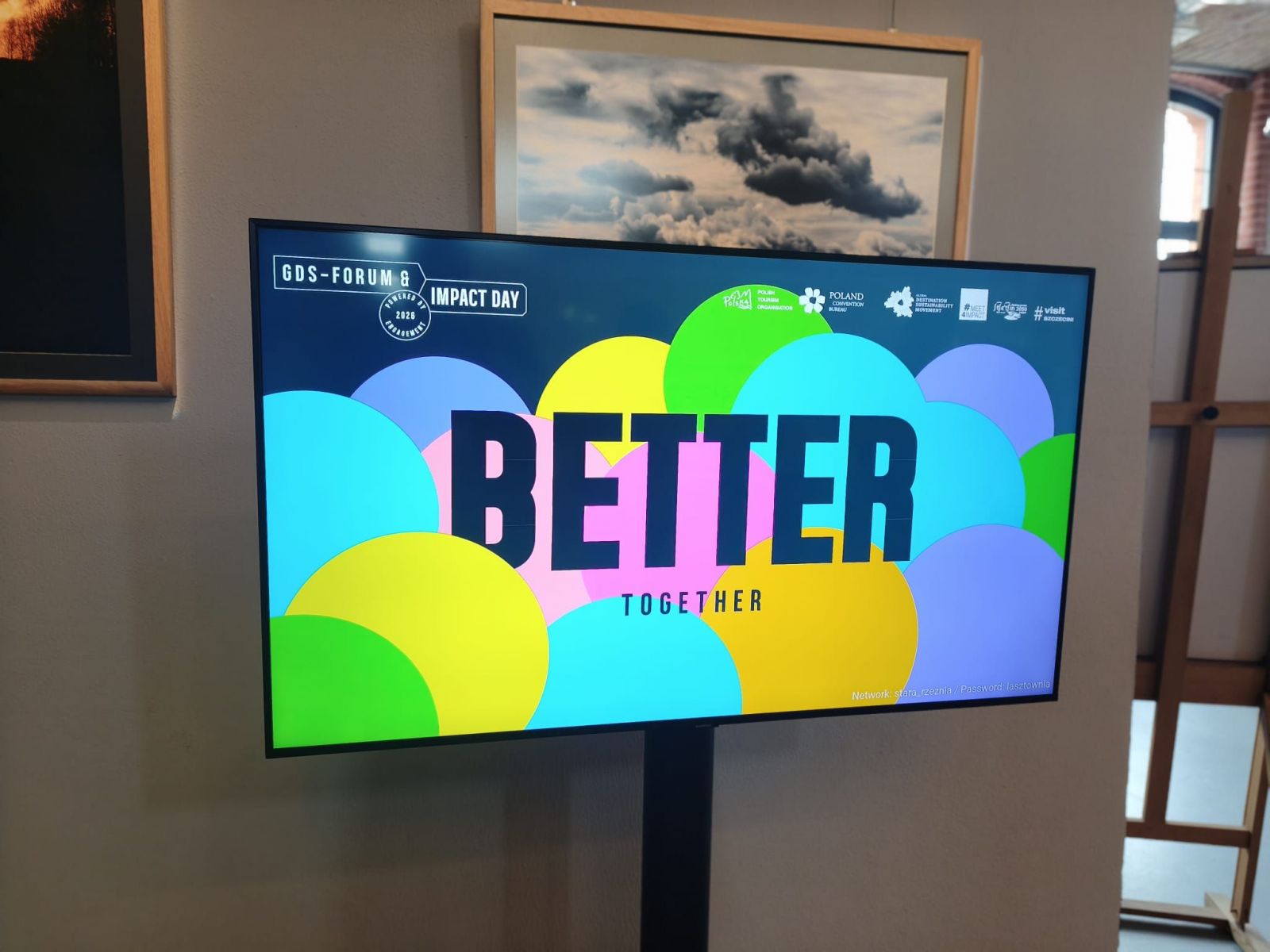
It was against this backdrop that Headquarters travelled to both cities in June for two events that, although different in focus, explored remarkably similar questions. Spotlight on Poland in Poznań examined how their national destinations can create more relevant, accessible and participant-centred events. Days later, in Szczecin, the GDS Forum & Impact Day steered the conversation towards stewardship, sustainability and the long-term relationship between events and the communities that host them (in a long trajectory that HQ has been chronicling over the years). Together, they offered a revealing snapshot of a country whose meetings industry is evolving alongside a broader story of urban and economic transformation.
.jpeg) Few Polish cities embody this evolution as much as Poznań. Often described as the cradle of modern Poland, the city bears centuries of history etched into the walls of its Old Town, Cathedral Island and the Imperial Castle. Infected by its past and as a testament to consistency, what impresses most today is its business dynamism and sustained growth, captured in places such as Concordia Design Poznań or the largest conference centre in Central and Eastern Europe, the Poznań Event Hub. The city exudes a sense of prosperity, confidence and self-assurance, with spacious public areas, efficient transport, thriving universities and a strong entrepreneurial culture, creating one of the most liveable urban environments in Poland. For more than a century, Poznań has hosted trade fairs and exhibitions, nurturing a business culture with international gatherings that remains visible today. This balance between economic dynamism and quality of life provided the ideal setting for ‘Spotlight on Poland’.
Few Polish cities embody this evolution as much as Poznań. Often described as the cradle of modern Poland, the city bears centuries of history etched into the walls of its Old Town, Cathedral Island and the Imperial Castle. Infected by its past and as a testament to consistency, what impresses most today is its business dynamism and sustained growth, captured in places such as Concordia Design Poznań or the largest conference centre in Central and Eastern Europe, the Poznań Event Hub. The city exudes a sense of prosperity, confidence and self-assurance, with spacious public areas, efficient transport, thriving universities and a strong entrepreneurial culture, creating one of the most liveable urban environments in Poland. For more than a century, Poznań has hosted trade fairs and exhibitions, nurturing a business culture with international gatherings that remains visible today. This balance between economic dynamism and quality of life provided the ideal setting for ‘Spotlight on Poland’.
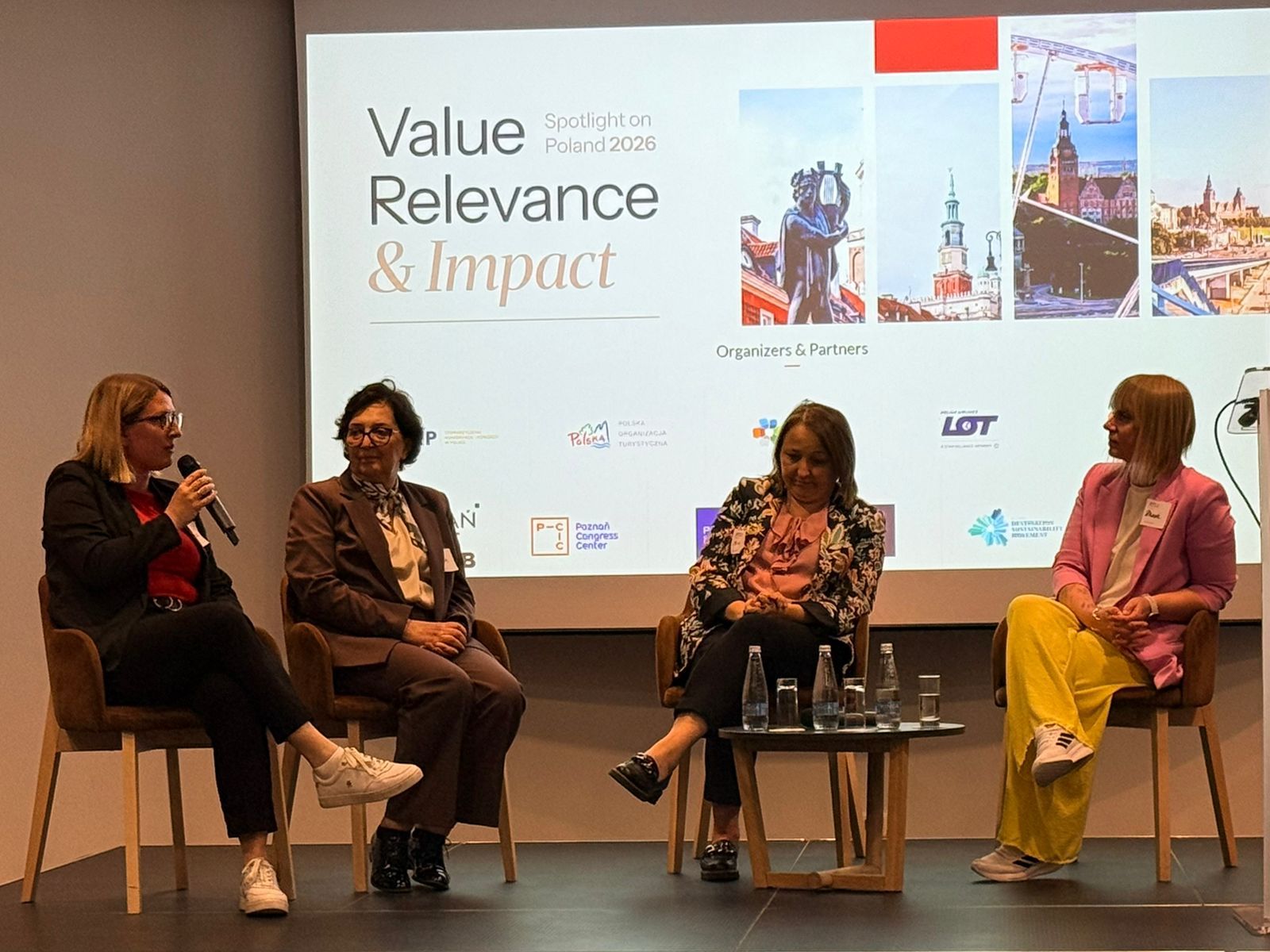
The conference ran on four main topics: impact, relevance, accessibility and participant-centred design – concepts that are often debated within the conference sector, but whose practical application often remains difficult to achieve. Accessibility, for example, is often reduced to venue specifications or technical requirements; however, in Poznań, it begins long before delegates enter a conference room, through urban mobility, connectivity and the ease with which visitors can engage with a destination. Poland’s ongoing investment in public transport and urban regeneration reflects precisely this broader understanding. Made Raie’s opening speech perfectly captured the spirit of ‘Spotlight on Poland’ (check out our HQ conversation with her here). Challenging the sector’s traditional obsession with attendance figures, she invited delegates to consider a different question: if the number of participants is not the metric that leaves a legacy in a destination, then what is? Her answer highlighted the social, intellectual and community value that meetings can generate long after delegates have returned home and (especially in this case) for the host city. Poznań has benefited from this powerful combination of strengths: academic excellence, research capacity and a long-standing culture of knowledge exchange.
Yet, the city is careful not to define itself solely through business. During our conversation, Jan Mazurczak, CEO of the Poznań Convention Bureau, repeatedly reverted to a theme that has become central to many destination debates: balance. Unlike many destinations struggling with overtourism, Poznań continues to maintain a healthy relationship between residents and visitors. “If you visit the Old Market Square or any of the city's popular restaurants and cafés, you will find tourists and residents sharing the same spaces. We have not lost our local identity, and that is something we value greatly.”
One concrete example is Pyrkon, one of Europe's largest fantasy festivals. Far more than a convention, the event spills into the urban fabric, filling streets, restaurants and public spaces with participants. Rather than isolating itself from the city, the festival becomes an integral part of it, encouraging residents to immerse themselves in the atmosphere and shape the overall experience. “For us, this is about much more than aesthetics. We want to create an environment where delegates can enjoy their time beyond the conference venue itself, whether before the event, between sessions or after the programme has concluded.” This distinction is important. As destinations around the world seek ways to ensure that tourism and events contribute positively to local life, Pyrkon offers a real-world template of how successful economies are often built on coexistence.
The city's meetings strategy reflects a similar maturity. For many years, Poland's appeal was associated with value for money. While affordability remains important, destination leaders across the country gradually acknowledge that the conversation has changed. As Mazurczak observed, “We are no longer perceived as an exceptionally low-cost destination, and that is an important shift. Today, our focus is not on competing through price alone but on delivering high-quality experiences, strong service standards and excellent value for both time and investment.” In many ways, that evolution mirrors Poland's broader development. The country no longer needs to introduce itself as an emerging destination. Instead, it is refining its identity and articulating what kind of destination it wants to become. “Our task is not to invent a story for Poznań, but to communicate the one the city already has.”
 The train journey from Poznań to Szczecin provided an unexpected metaphor for this transition. Travelling through western Poland reveals a serene, flat landscape untouched by the hustle and bustle and socio-economic character of its major cities. However, the destination at the end of the line tells a markedly different story. For whilst Poznań represents a certain continuity, Szczecin represents reinvention. Located close to the German border and shaped by successive waves of migration following the Second World War, Szczecin occupies a unique position within Poland's strategic roadmap. Unlike cities whose identity emerged through centuries of uninterrupted development, Szczecin's modern character was assembled from multiple histories, voices and communities in a resilient and anachronistic way. That legacy remains visible today.
Residents often describe the city as a place built by people who chose it, rather than one they inherited. Families arrived from different regions of Poland and from beyond its borders, creating a shared identity rooted in openness and adaptability. That may explain why discussions about sustainability and long-term transformation seem particularly authentic here. The city hosted the GDS Forum & Impact Day, (an event that HQ has been promoting and supporting for several years) which has been dedicated to exploring how destinations can generate positive environmental, social and economic outcomes. For this 2026 edition, Szczecin was more than just a host; it served as a living case study.
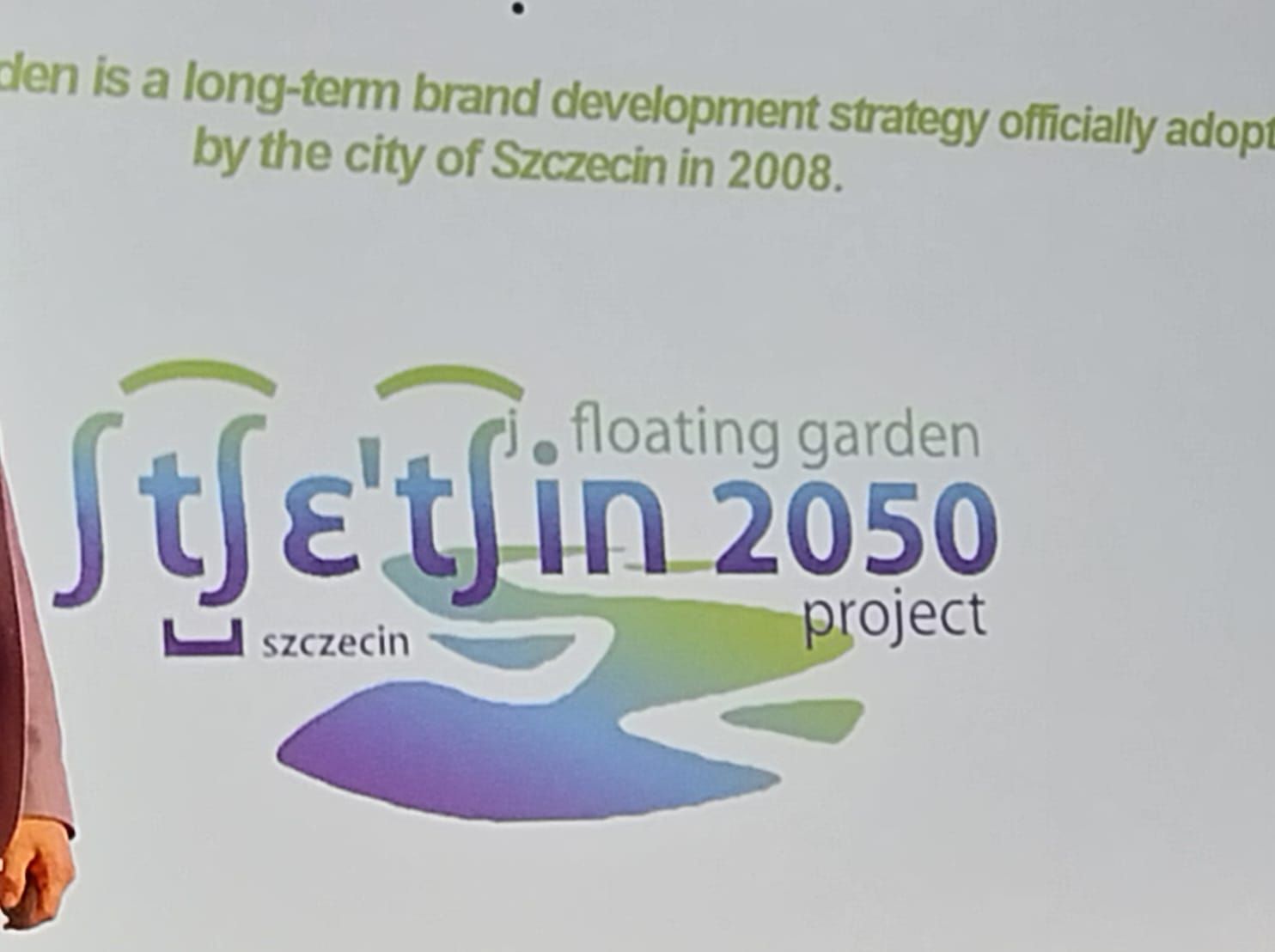
Much of the city’s contemporary identity can be traced back to ‘Floating Garden 2050’, a long-term vision conceived not as a tourism campaign, but as a genuine commitment to a green future and a new complexion for the city. Launched in 2008, the strategy aimed to raise Szczecin’s unique profile, improve its quality of life and guide its economic development through sustainability and innovation. Its origins lie in the success of the Tall Ships Races, an annual series of maritime events for sailing training vessels, which led city officials to reconsider what truly set this city apart from other Polish destinations. As Leopold Korytkowski, Director of Tourism and Events at Żegluga Szczecińska Turystyka i Wydarzenia, told us, the turning point came when the city’s former mayor viewed Szczecin from above. “The decisive factor was the view of Szczecin from the sky,” he said. “The aerial images revealed that almost 70% of the city consisted of water, parks and forests. This is our greatest asset.”
That simple realisation became the cornerstone of a policy that continues to influence everything from waterfront regeneration and mobility to economic diversification and talent attraction. Like many other European cities, Szczecin understands that its future competitiveness depends not only on attracting visitors, but on their everyday people. “We have to rethink our city strategies around talent and urban development. We want to give power to the people, power to the youth, and help them create the city they want to live in.” Indeed, local leaders spoke openly about the challenge of retaining graduates and attracting skilled professionals. The response has been to invest in sectors capable of shaping the city's next chapter: offshore wind, green energy, maritime innovation and sustainable transport.
These ambitions are gradually reshaping Szczecin's economic identity while creating opportunities for the meetings industry to align with local expertise. “We cannot organise an event for more than 2,000 people; we don’t yet have the capacity for that. However, four or five venues spread across the city could create something far more memorable. The city is not changing because of tourism. Tourism is following the changes already happening in the city," says Korytkowski. That distinction is important. Rather than driving urban development, meetings and visitor activity are becoming part of a broader transformation rooted in sustainability, innovation and talent attraction.
Szczecin may not possess a dedicated convention centre on the scale of larger destinations, but it compensates with character and adaptability of venues such as Stara Rzeźnia. Once the city’s municipal slaughterhouse, this impressive 19th-century industrial building has been carefully restored to become a multi-purpose venue for conferences, exhibitions and forums such as this GDS event. That relationship between place and purpose formed one of the recurring discussions of the Impact Day. For years, destinations measured success through visitor numbers, room nights and economic impact. Those metrics remain important, yet a more nuanced conversation is emerging. “When the ‘Floating Garden’ horizon was set for 2050, people laughed because it seemed like such a distant and unattainable goal. But if we look back today, everything is falling into place,” adds Korytkowski. “Events like this GDS-Forum take you out of your comfort zone and make you think outside the box.”
Seen through this lens, Poznań and Szczecin appear less like contrasting destinations and more like complementary expressions of the same national trajectory. One draws strength from history, economic maturity and established institutions. The other looks towards reinvention, sustainability and future industries. One hosted conversations about relevance and participant-centred design. The other explored stewardship and impact. Both, however, point towards the same conclusion. The next phase of Poland's meetings industry will not be defined by how many events it attracts. It will be defined by how effectively those events contribute to the places that host them. That may ultimately prove to be the country's most significant advantage.

Powered by Meeting Media Company, publisher of Headquarters Magazine (HQ) – a leading international publication based in Brussels, serving the global MICE industry and association community.
Since its founding in 1992, Meeting Media Group, publisher of Headquarters Magazine (HQ), has been a trusted guide and voice for associations and the global MICE (Meetings, Incentives, Conferences, and Exhibitions) industry.