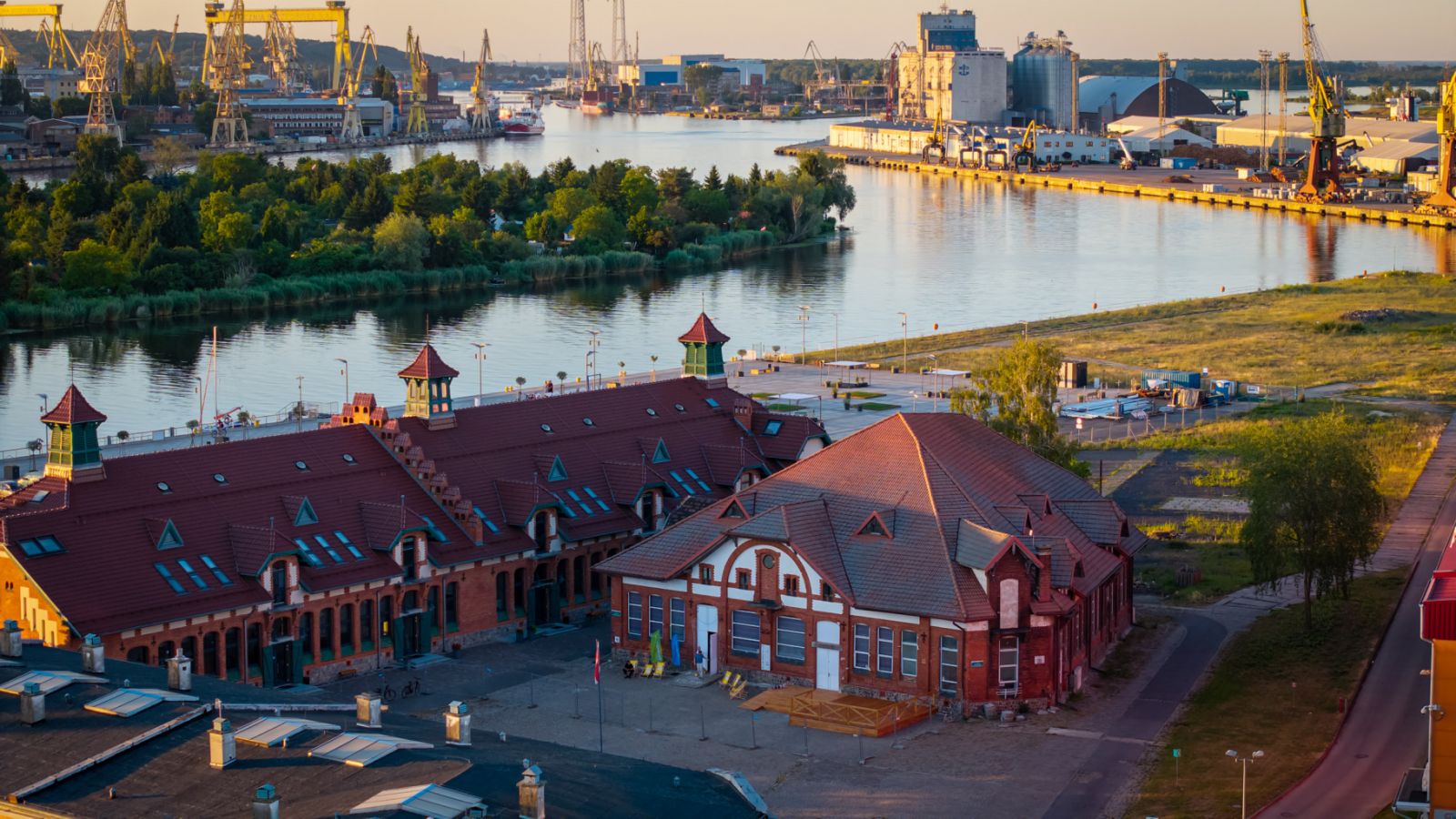
The city of Szczecin in Poland
The Global Destination Sustainability (GDS)-Forum and its dedicated Impact Day in Szczecin will bring together destinations, associations, and industry leaders to explore how business events can move beyond traditional metrics and become catalysts for meaningful social, economic, and territorial change. While the broader Forum focuses on regenerative tourism and sustainability through a highly participatory format of workshops and peer learning, the Impact Day introduces a complementary layer: a structured, applied environment where impact is designed, tested, and reflected upon in real time with the host city.
At the centre of this approach is #MEET4IMPACT, the agency responsible for delivering the Impact Day and contributing to the wider GDS programme. Working closely within a tightly connected ecosystem that includes the GDS-Movement, the team plays a bridging role between destinations and associations, bringing frameworks, tools, and facilitation methods that help translate the often abstract concept of “impact” into practical, measurable action. In Szczecin, this will include thematic streams, participatory sessions, and a direct engagement with the city’s own stakeholders — starting with an open articulation of its initial ambitions and returning to them throughout the programme to assess what has been achieved.
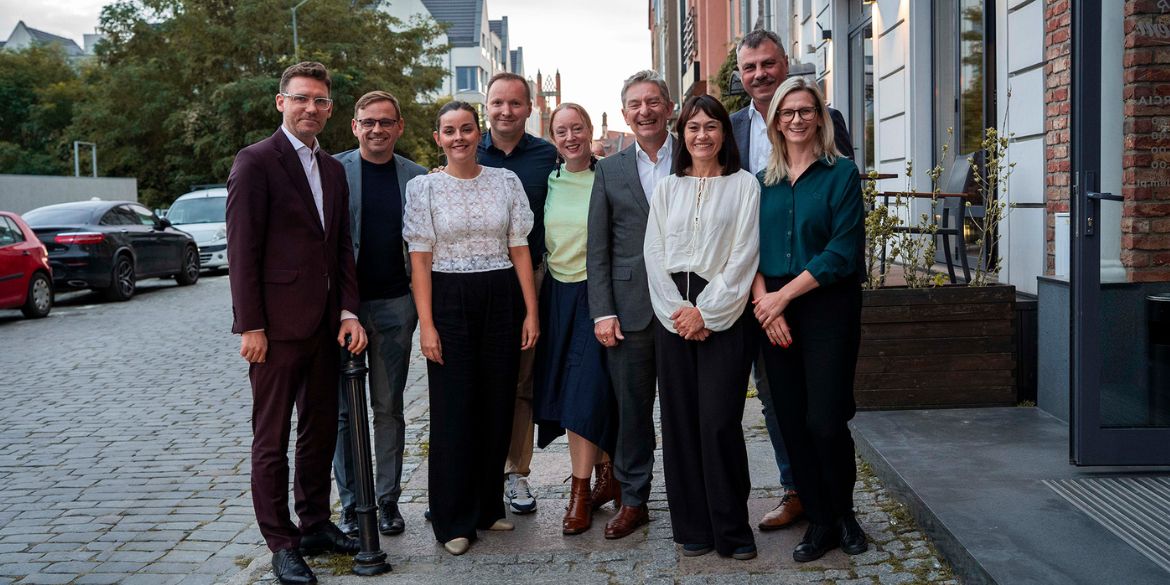
In this conversation, Made Raie (right side), Associate Social Impact Consultant at #MEET4IMPACT, reflects on her journey from the Tallinn Convention Bureau to her current role, where she focuses on impact measurement, legacy frameworks, and stakeholder engagement across Europe. Drawing on more than a decade of experience in the meetings and destination industry, she explores how DMOs and convention bureaux are being redefined as connectors and facilitators of ecosystems, why “impact washing” is becoming a growing concern, and how destinations can move from simply hosting events to intentionally shaping their long-term value for communities.
A conversation with HQ Magazine Manager, Manuel A. Fernandes:
Our core responsibility is the Impact Day, that's what we're directly delivering. But our involvement doesn't stop there. Genevieve (Leclerc) and Linda (Garzón Rocha) will be on site throughout the GDS-Forum, actively participating in discussions and activities of the event. Genevieve and Guy (Bigwood) are also involved in facilitating the ceremony itself, which reflects how closely aligned our work is across the full programme.
We are fully aware of each other's work, closely aligned in terms of purpose and direction, while still maintaining distinct strands of delivery within the overall structure.
On my side, I'll be joining in Poznań for the Spotlight on Poland session, and there will also be a dedicated stage moment for #MEET4IMPACT as part of the forum programme.
So, in short, we are responsible for Impact Day, and we contribute to the broader forum through our joint initiative and presence.
What we have observed through our work is that once a destination becomes more mindful of its environmental footprint and actively seeks to improve that dimension, it naturally becomes more open to exploring the social impact side as well. Once that conversation begins, it tends to evolve quite organically into a broader understanding of regeneration as a holistic process.
It's less about separate strands and more about a continuum – a full regenerative journey where environmental and social dimensions are increasingly seen as interconnected.
As two organisations, we operate very much within the same ecosystem, supporting each other in a practical and complementary way, particularly in the context of the GDS-Forum and its wider objectives.
I would certainly hope so. Having worked with the Tallinn Convention Bureau for almost 13 years, I saw legacy and impact conversations begin to emerge more than a decade ago. Even then, it was already clear to many of us that business events are about much more than delegate numbers or logistical metrics. They are, fundamentally, about what is left behind: the relationships built, the ideas exchanged, the engagement moments created.
Over time, destinations like Copenhagen, Gothenburg, and Montréal have demonstrated that impact can actually be measured and made tangible. What once felt theoretical is becoming increasingly practical.
When I joined #MEET4IMPACT (and even before that, when I was already planning to collaborate with them while still in Tallinn) it became clear to me that this isn't an impossible ambition. It's very doable, provided you have the right methodologies and frameworks. I can attest that my team has put in a great deal of work to developing exactly that.
That said, just as we've seen with sustainability, "impact washing" is emerging, and we are very mindful of it. A significant part of our work is therefore educational: helping destinations, associations, and event professionals understand what meaningful impact actually looks like and how it can be created and measured in practice.
Ultimately, while consultants also need to eat, what I've learned is that our real purpose is to empower the industry – to transfer knowledge, tools, and skills so that destinations and organisations can eventually design and measure impact independently. Our ambition is to reach as many destinations, associations, and event planners as possible, so that impact thinking becomes a standard way of working rather than a niche approach. It is, at its core, mission-driven work.
Honestly, I never fully got to develop that work. I was made redundant before it could take shape, even though it was something I had already begun to explore.
Working within a small Convention Bureau (we were only two people) I had started looking at how events could generate tangible impact beyond the traditional scope of destination marketing. My intention was to foster connections, initiate side projects, and support activities that could leave something more meaningful and measurable behind.
But at the time, the primary expectation was still very much focused on delivering events and attracting meetings to the city. Ideas I was trying to introduce would often lose momentum, partly because the broader understanding of impact was still quite limited. There were several occasions where I felt certain events could have delivered so much more for the destination, if there had been a shared framework and a clearer common understanding of what impact actually means.
That experience really reinforced for me the importance of education, clarity, and shared frameworks to move from intention to implementation.
It's worth noting that Tallinn did go on to host relevant conferences. For example in 2023, when it was the European Green Capital, including initiatives like the Green Destinations Conference. But as I mentioned, my actual collaboration with #MEET4IMPACT only came later, in my current role.
Having been here for a few months and observed the work more closely from the inside, I've seen that impact delivery takes very different forms depending on the destination and its level of maturity. There is no single model.
In most cases, destinations that want to advance actively seek out support – either by funding a structured approach or by co-creating frameworks themselves. When that happens, we bring tools and experience to facilitate the process: bringing stakeholders together, initiating the conversation, and ensuring alignment around common definitions and objectives. Our role is to facilitate and guide, but not to own the process. The goal is for destinations and stakeholders to take ownership themselves – of both the methodology and the commitment behind it.
There's also a pathway initiated by associations or event organisers, who approach us directly wanting to embed impact and community engagement into a specific event. That often requires a more hands-on approach on the ground: mapping stakeholders, aligning expectations, and ensuring everyone shares a common understanding of what impact means in that specific context.
Yes. Ideally, some destinations would already be prepared and mature enough that external intervention is minimal. In some cases, this is already the case, such as in Copenhagen, where the existing legacy structures mean that only certain events require additional support.
But as you say, not every destination reaches that level, which makes prioritisation essential. Designing, delivering, and measuring impact is resource-intensive; it has to be applied where it can generate the most meaningful value.
To help address this, we've also developed ImpactAIQ, created in collaboration with Gevme, which we're particularly proud of. It's designed to simplify both the planning and measurement of impact, making it more accessible and scalable across the industry.
The GDS-Forum is very much a hands-on environment, and Impact Day builds on that ethos while also incorporating some more traditional conference elements.
In Szczecin, Impact Day is organised around three main thematic streams and five sessions in total: youth and civic engagement; financing and subsidies; and industry and sectoral development. These are deliberately designed to be highly participatory, with session leads facilitating discussion in a way that encourages active contribution, idea-sharing, and practical input from participants.
The sectoral development stream in particular has been structured to place Szczecin and its local stakeholders at the centre of the conversation. The morning also includes a more traditional plenary format with keynote speakers, but again with a strong emphasis on positioning Szczecin as the anchor point, allowing local actors to present their work and then using that as a basis to expand the dialogue.
The intention is that by the end of the day, participants from Szczecin feel that the collective intelligence in the room has been used in a way that directly benefits them, providing concrete ideas, perspectives, and inspiration on how to move forward.
Yes, but also those that are still in a more developmental stage. There's always room for improvement.
We begin the day by putting the city of Szczecin on stage and asking them to articulate why they chose to host this event and what their goals are, making their impact intentions explicit from the outset. We can then return to those goals later and assess what is actually been achieved.
Local stakeholders will present their work, and we will collectively explore what more can be done beyond what's already in place. They will share openly what has worked well, what hasn't, and what lessons can be drawn from that. The intention is to foster a genuinely honest conversation, not one focused solely on the highlights.
My goal is to create an environment where discussion feels constructive and real, and where people feel comfortable enough to contribute freely. By the end, I want participants to feel relaxed, engaged, and willing to share.
Impact Day does differ slightly from the broader GDS-Forum experience. The preceding days are intense with fast-paced brainstorming and multiple parallel discussions. There is real value in shifting into a slightly more reflective and conversational rhythm. It is not about slowing down for its own sake, but about creating space for the kind of grounded dialogue where things get resolved and clarified. My hope is that when participants leave the room, they leave with ideas they can carry forward into practice.
The fact that every destination is different is what makes this work both exciting and rewarding. If they all faced the same challenges and operated the same way, a one-size-fits-all approach might work. But that's not the reality.
Each destination brings its own context, its own stakeholder ecosystem, and often very different reasons for engaging in this work. So, I would not describe it as difficult, rather a meaningful challenge. We have the tools and methodologies in place, so building a framework is not the core issue, though it can take more time depending on a destination's level of readiness.
Scale is also a key factor. Working with an entire country like Poland requires a very different approach than working with a single city like Szczecin. The same applies depending on whether the engagement is initiated by a national body, a city bureau, or an association. Each entry point shapes the process differently.
That said, there is significant value in cross-learning. By openly sharing case studies, research, and practical experience, we can help the industry move toward a more aligned understanding of what works. Some principles are genuinely transferable – certain best practices can be adapted across contexts, even when the overall frameworks remain tailored. The goal is not standardisation, but shared learning and continuous improvement.
In an ideal scenario, these conversations would always be initiated from the top, meaning decision-makers are already sufficiently informed and understand the need for more strategic, long-term approaches to hosting and leveraging events.
In reality, change more often emerges from the grassroots and gradually works its way upward. That was also the case in Tallinn. The operational awareness was there, but gaining political buy-in was harder. It requires time, education, and sustained alignment around both the value and the necessity of this approach.
Once that alignment is achieved, with politicians, funding bodies, and senior decision-makers fully engaged, they naturally become part of the conversation at a strategic level. That is essential, because ultimately they are the ones shaping long-term vision and direction. We actively try to bring those stakeholders to the table as early as possible, but in practice, reaching and engaging them remains one of the more complex aspects of the process.
This is also where #MEET4IMPACT plays a broader role. We work not only with destination representatives, but with industries, stakeholders, and senior decision-makers, with a strong focus on education and alignment. The goal is to equip those who are already engaged with the tools, language, and frameworks they need to bring higher-level decision-makers into the process in a meaningful way.
It all comes down to intentional design. Once you genuinely want to create impact and have the right frameworks in place, the risk of washing decreases because there is a greater level of awareness and rigour in how these concepts are applied.
The risk is very real, however, when terms like "impact" or "co-creation" are used without a shared understanding of what they actually mean. Impact is, in many ways, a fluid concept. Even this conversation we are having right now is a form of impact – you are influencing me through your questions, and I am influencing you through my responses. But at some point, you have to step back and distinguish between natural human interaction and deliberately designed event impact.
Our approach typically starts with the end goal: what is it that you actually want to achieve? From there, we work backwards to identify the specific activities that can realistically lead to those outcomes. It is a useful structure, but also a demanding intellectual exercise. In practice, it can sometimes create confusion or even paralysis when stakeholders try to define impact too broadly.
At the same time, as the concept becomes more mainstream, there is a degree of fatigue emerging around it. Some are using it as a commercial differentiator without sufficient methodology or data behind it. On the other side, there are destinations and associations that are simply moving from one wave of expectations to another – from sustainability requirements, risk management, to impact and legacy – and can feel overwhelmed by the constant introduction of new frameworks and terminology. This is where clarity, structure, and education become essential.
Yes, I do. Destinations operate under very different governance models – some more top-down, others more decentralised – and that shapes how they approach change. In some cases, organisations simply aren't ready for these conversations, or don't feel they are in a position to prioritise them. You hear things like: "We're not there yet," or "We have other, more immediate challenges"... and that's entirely understandable.
Since 2020, the industry, and the world more broadly, has been in a near-constant state of disruption. Many people are simply tired. There is a real fatigue around being told that what they are currently doing isn't enough, or that they need to continuously adapt to new frameworks and expectations.
This was very present in conversations I had at IMEX. Walking the show without being tied to a booth this time allowed for many more informal exchanges, and it became very clear how varied the levels of readiness are. Some destinations are dealing with significant budget constraints following political changes. Others are uncertain about leadership continuity due to elections or government transitions, which makes long-term commitment difficult. The response is often simply: "We can't commit to anything right now." At the same time, there are destinations that have secured additional funding and are actively looking to engage in more advanced conversations.
From a business development perspective, it's essential to remain highly aware of these different realities. This is fundamentally a people-to-people industry. The key is not to push destinations into processes they're not ready for, but to meet them where they are and support their progression at a realistic pace.
That pressure hasn't gone away, and I don't think it will. The expectation for simple, digestible numbers remains very strong. Part of the challenge is that many convention bureaux sit within tourism structures and are evaluated using the same traditional indicators, like headcounts, bed nights, calculated economic impact. If the ROI looks positive, that is often considered sufficient. It's a structural issue, and it shapes what gets prioritised.
This is why understanding where each destination stands and their level of readiness is absolutely critical. It's also why maintaining honest, open conversations matters, particularly when introducing more complex ideas like stewardship, transformation, and long-term impact. In some cases, it simply means helping a destination articulate the value of this work in a way that lets them bring others on board internally.
Progress in this space is rarely linear. It can take years to build the necessary alignment, especially where political leadership changes frequently. If conditions had remained similar to 2019, the conversation around impact might look very different today. But given how rapidly the global context has changed, the industry is evolving under constant pressure and adjustment. That is the reality we're operating in.
I do think so. In this rapidly changing environment, DMOs are under real pressure to redefine and reposition themselves, and to clearly articulate why they exist and what value they bring.
Simply disseminating information is no longer sufficient. With AI able to generate and surface vast amounts of information almost instantly, traditional informational roles are becoming less relevant. Their future value lies in positioning themselves as core connectors; organisations that facilitate meaningful human and professional relationships across ecosystems. If they fail to do that, DMOs and convention bureaux risk losing their central role in the conversation altogether. At this point, many of them are already in a process of reflection, trying to define their purpose and justify their continued relevance.
We are also operating in what could be described as a post-truth environment, where information overload makes it increasingly difficult to distinguish what is reliable. In that context, trust becomes a critical currency. In a world saturated with automated tools and AI-generated contact lists, knowing a real person within a destination – i.e. having met them at IMEX and nurturing a relationship – creates a level of reliability and accountability that digital channels alone cannot replicate. When you reach out to a real person, you have a greater degree of confidence to receive accurate information and forge genuine connections.
This applies directly to impact creation. Once an event is being developed within a destination, the question becomes: how do you ensure access to the right people and the right networks? The real value is in trusted human connection, not purely digital discovery.
During my time in Tallinn, I saw my role very much in that light, as someone working in the space of inspiration and enablement. I was often the connector, the “glue” within the ecosystem, helping to bring people together and initiate conversations that wouldn't otherwise happen. Whether explicitly recognised or not, I believe that is ultimately the core value of destinations: not just providing information, but enabling meaningful human connection.
Powered by Meeting Media Company, publisher of Headquarters Magazine (HQ) – a leading international publication based in Brussels, serving the global MICE industry and association community.
Since its founding in 1992, Meeting Media Group, publisher of Headquarters Magazine (HQ), has been a trusted guide and voice for associations and the global MICE (Meetings, Incentives, Conferences, and Exhibitions) industry.