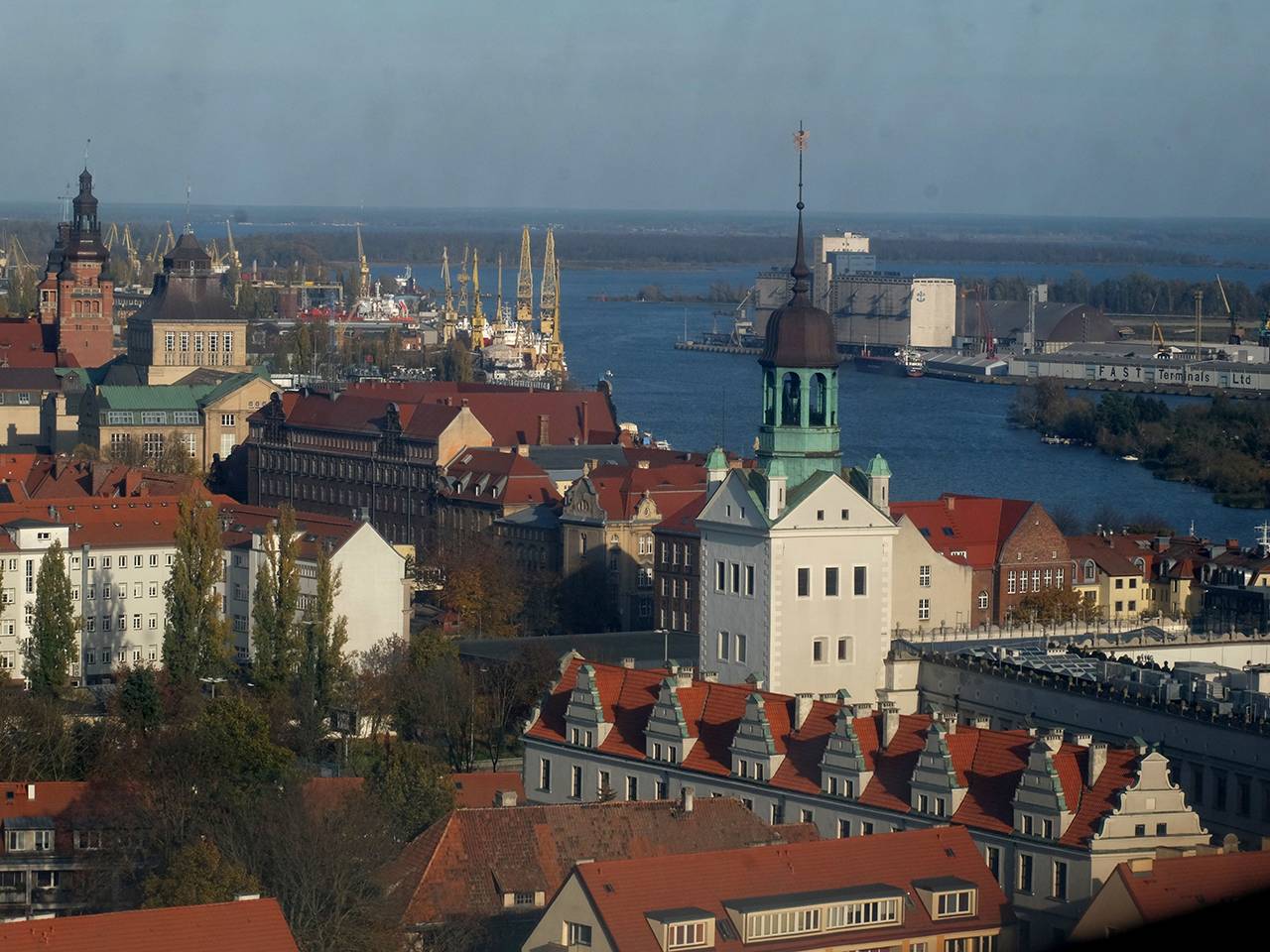
The Castle of the Dukes of Pomerania and the River Oder in Szczecin, Poland.
At the last IMEX Frankfurt, there was widespread talk that the corporate events sector is entering a post-commitment phase with regard to sustainability, with frameworks, certifications and commitments now in place. However, the real test now lies in implementation and credibility, and in that regard the crucial question to ask is: is this actually being done?
The GDS-Movement works across destinations, organisers and wider industry stakeholders to translate sustainability, impact and regenerative economy principles into practice. At its core, it sits at the intersection of measurement, behaviour change and system-wide collaboration, challenging the sector to move beyond well-intentioned narratives and towards credible, accountable action that can be tested, shared and scaled.
In the following conversation, Guy Bigwood, Chief Executive Officer and Chief Changemaker of the GDS-Movement, reflects on the shift from sustainability to regeneration, the fragmentation and convergence of standards, the politics of destination success, and whether the industry is truly delivering transformation or still largely operating at the level of narrative, with our HQ Magazine Manager, Manuel A. Fernandes
This interview is part of a series of conversations in the run-up to the GDS-Forum and Impact Day, taking place from 16–18 June 2026 in Szczecin, Poland. The series opened with an interview with Made Raie, CEO of #MEET4IMPACT, and continues with leading voices shaping the future of business events, destination management and systems transformation.
I think there are a few dimensions to that. We are certainly in a challenging moment in many places when it comes to sustainability and for destinations more broadly. To set the context, we are essentially creating what I would describe as a “festival of sustainability” here in Szczecin this week.
It is important to understand that we are approaching this very differently from a traditional conference. We are not simply taking an existing format and replicating it, as you might see elsewhere. Instead, we are treating this as a broader impact project, asking how we can use the act of convening, and working with local partners, to support and accelerate Szczecin’s transition towards regeneration and more sustainable tourism. That is really the mission and the impact objective: it spans youth empowerment, destination attractiveness, and local capacity-building, all with very clear outcomes in mind.
As part of that, we have structured a sequence of interconnected elements: a Youth Day, followed by a Youth Forum, then the GDS-Forum itself, followed by an Impact Day, and finally a Local Supplier Forum. Each of these has its own specific focus and objectives, but they are deliberately designed to work together as part of a wider ecosystem of engagement.
The GDS-Forum is designed to serve a different purpose. I think working on destination sustainability is inherently challenging. Budgets are tight, and in many respects, a lot of destinations have already addressed the easier, more visible aspects of sustainability. The more complex, systemic transformation still lies ahead, and that is not something any destination can achieve in isolation. Whether at city, regional or national level, and even between competing destinations, it requires collaboration. That is why the “Better Together” theme feels particularly relevant this year. In a context where there is, in many ways, a tendency towards fragmentation and divergence, the idea of coming together to work collectively on these challenges becomes especially powerful.
The second point is that many conferences remain quite superficial in the depth of the content and conversations. There is often a series of case studies presented in quick succession, but very little time or space to engage properly with the underlying issues. The intention with the GDS-Forum, and the broader format we have developed, is precisely to go beyond that surface level and create the conditions for deeper, more meaningful work.
You’ve been with us before, haven’t you?
So you know the concept of having no keynotes. We sometimes joke about it as a “no PowerPoint” rule, because the idea is really to get people thinking differently. So smaller conversations around subjects that may be your own challenges, your own issues. Through years of feedback, we've found that this format helps people break out of established ways of thinking and collaborate in a more meaningful way.
In Szczecin, for example, we're exploring questions such as: How do you develop a climate strategy? How do you create an impact strategy for the business events sector? How do you communicate sustainability at a time of growing scepticism? These are the kinds of issues that will be debated, explored and challenged throughout the Forum. There is also a strong practical element. People share what has worked, what hasn't, and how programmes can be improved. A lot of the value comes from that honest exchange of experience.
We're also working closely with the Global Sustainable Tourism Council (GSTC), which is currently revising its standards for sustainable destinations. The Forum provides a unique opportunity to bring destinations together and contribute directly to that process. Perhaps the most exciting aspect, however, is that not everything is predetermined. The Forum is designed to create the conditions for unexpected outcomes. New ideas, collaborations and solutions often emerge from the conversations themselves, and that's exactly what we're hoping to encourage.
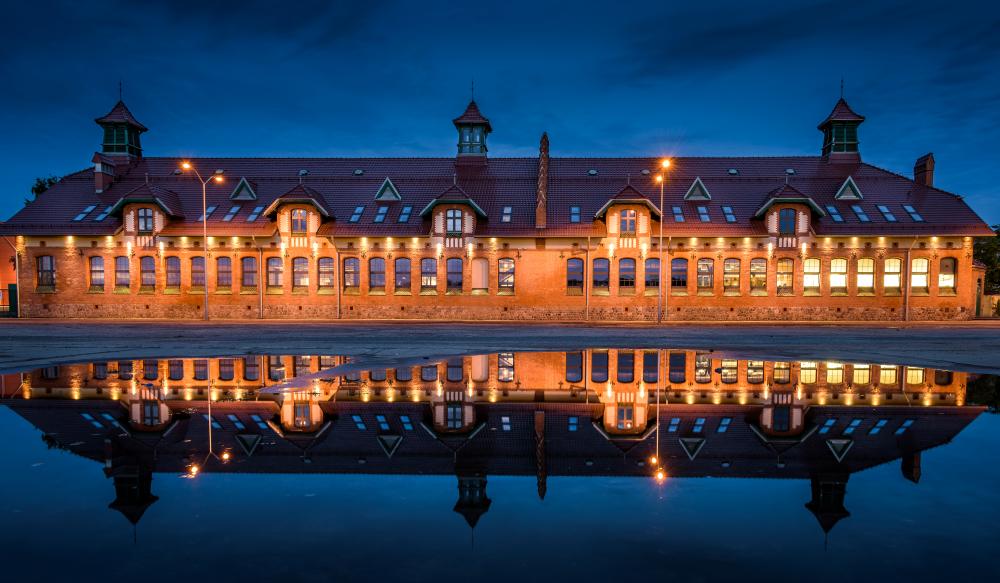
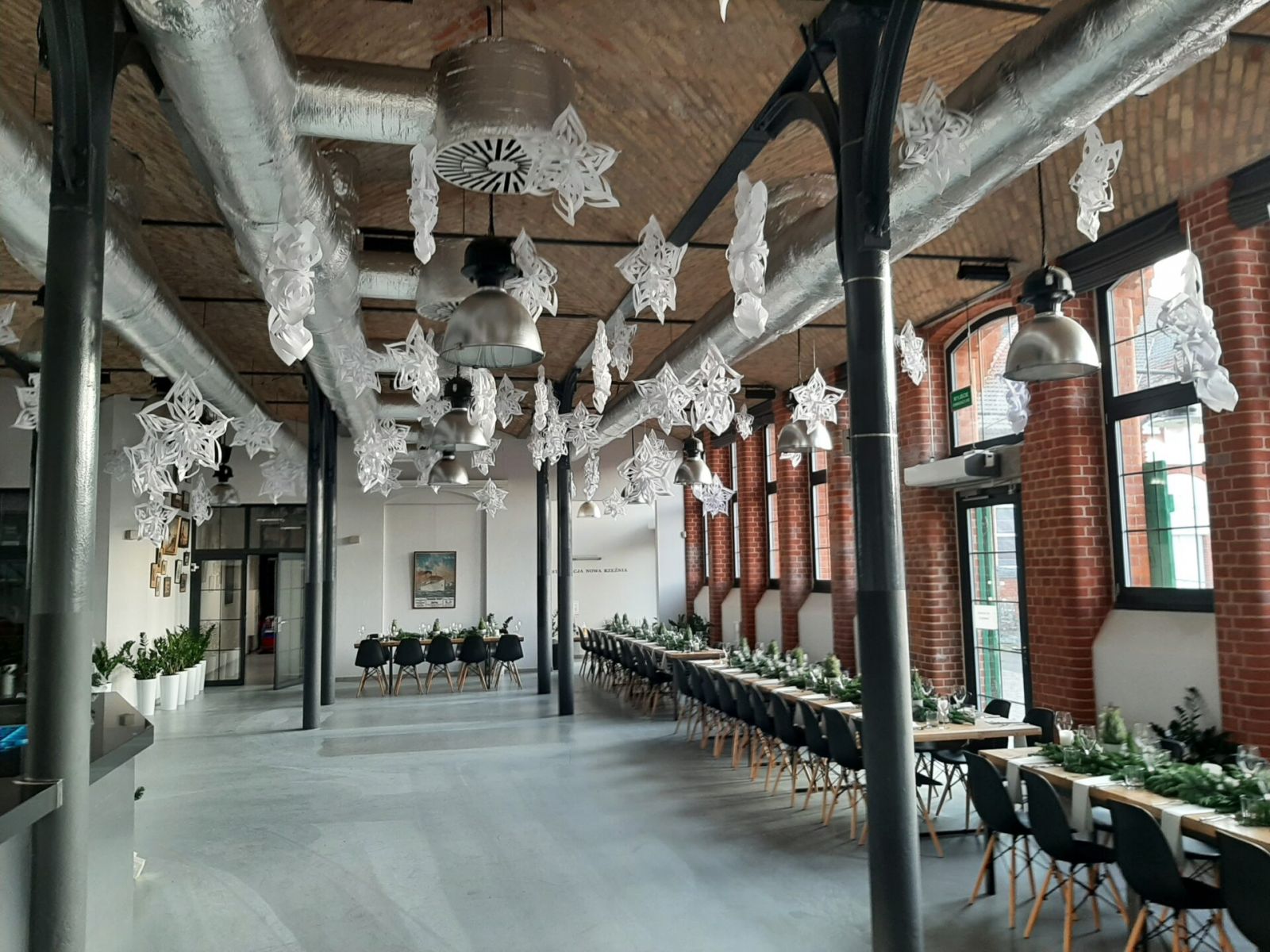
The Stara Rzeźnia Euro-Region Cultural Centre, which will host the Forum © Szczecin Convention Bureau
You've touched on exactly the reasons why Szczecin is such an interesting host destination. The city first joined the GDS-Index because it wanted to accelerate its sustainability journey and saw the programme as a way of learning and improving. In a relatively short period of time, it has gone from having very limited sustainability structures in place to actively engaging with some of the world's leading experts and destinations. They've really gone from zero to hero, and helped us fast track our sustainability programme.
The second part of the story is the city's transformation. Szczecin was historically a major shipbuilding centre, but as that industry declined, it began reinventing itself around renewable energy. The region has become increasingly attractive for wind energy manufacturing, with companies relocating production and supply chains to Poland. As a result, Szczecin is now developing into one of Europe's fastest-growing renewable energy and logistics hubs.
The venue itself reflects that transition. The Forum will take place in the former docklands, where industrial buildings have been regenerated through private investment and turned into offices, community spaces and cultural venues. One of the neighbouring buildings is a former slaughterhouse, which is perhaps an ironic setting for a sustainability event with a strong focus on plant-based food. But to me, that's exactly what regeneration is about: finding new purpose in existing places.
By bringing the Forum to Szczecin, we hope to support that journey, helping the city strengthen its sustainability ambitions, refine its tourism strategy and continue developing as a business events destination.
Absolutely. One of the most interesting examples comes from Szczecin itself. At the Forum, the destination will present its regenerative food tourism programme, which is linked to the region's agricultural sector.
What makes the project interesting is that it goes beyond tourism. It explores how the visitor economy can help drive change in other systems by creating demand for more sustainable and regenerative products, experiences and supply chains. In that sense, it is not simply about improving tourism; it is about influencing the wider agricultural system.
That is the kind of systemic change we are increasingly interested in. Whether the issue is agriculture, housing, transport or energy, the question is always the same: what role can our industry play in accelerating positive transformation beyond its own boundaries?
That thinking also underpins some of our recent work with the University of Exeter and a number of industry initiatives focused on systems change. Increasingly, the challenge is not how to make tourism slightly more sustainable, but how to use it as a catalyst for broader societal transformation.
Exactly. We often talk about systemic change as if it were a straightforward process, but systems do not work that way. Change one element and it inevitably affects something else.
The challenge is that every intervention creates both opportunities and consequences. The question is not simply how to create positive change, but how to understand, anticipate and manage those ripple effects across the system.
We're still at the beginning of that journey. How do we model those relationships? How do we learn from them? And how do we make better decisions when every action has implications elsewhere? Those are some of the questions we're increasingly trying to explore.
I think there is definitely an element of regenerative washing as well. Today, everything seems to be described as regenerative. It's quite interesting because, when I wrote The Regenerative Revolution white paper for IMEX a few years ago, the term was barely used. People questioned it, challenged it and, in some cases, made a mockery about that idea. Now, it's become part of the industry's everyday vocabulary.
The risk, of course, is that the term becomes overused and loses its meaning. Personally, I'm not even sure that truly regenerative tourism is always achievable. What I do believe is that we can become more sustainable and more regenerative than we are today. That's ultimately what we're trying to catalyse: real progress, rather than simply a change in language.
It depends on the type of event. If you're a corporation organising a sales conference, the responsibility is fairly clear. If you're running a trade show, the boundaries become much more complex. Is the responsibility yours, or does it sit with exhibitors and attendees? These are exactly the questions the industry is currently trying to address through emerging standards on carbon accounting and carbon responsibility. That's why the work being done by JMIC, Net Zero Carbon Events and others is so important.
My view, however, is very straightforward: even if an impact is not entirely your responsibility, it should still be reported. Transparency has to come first. How you choose to address those emissions is a separate question and may require different strategies and partnerships. But if aviation is a material part of an event's footprint, excluding it from reporting is neither transparent nor honest. It runs counter to the precautionary principle that underpins good environmental accounting. At the very least, organisations should be willing to acknowledge the full impact of their events before deciding how responsibility for that impact is shared.
Yes, to some extent. I think our industry has always been quite good at protecting itself and focusing on the easier issues. As I often say, there's still far too much attention on the straws.
Real change requires us to tackle the bigger, more complex challenges, and we're still some way from that. Having said that, there are examples of genuine progress and meaningful transformation taking place across the sector. Is it enough? No. Are we moving in the right direction? Absolutely. Could we move faster? Without question.
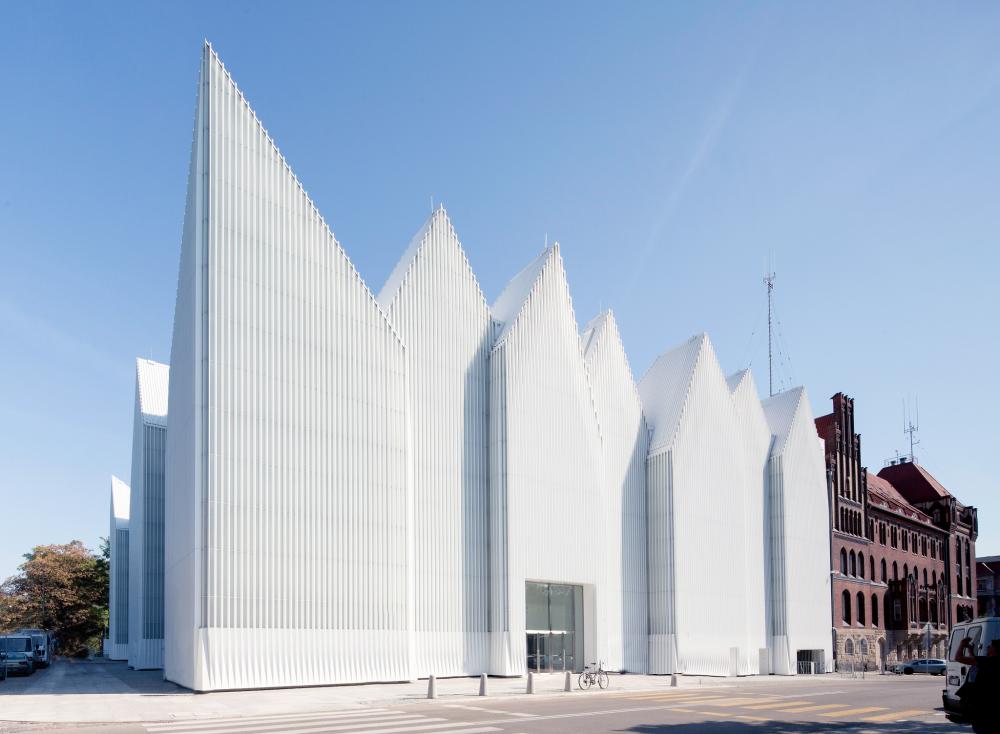
The Szczecin Philharmonic in Poland, where the 2026 GDS-Awards will take place © Szczecin Convention Bureau
I think it absolutely has to be. There are many destinations doing excellent work in challenging the system and trying to lead change. However, I don’t think the wider ecosystem is moving at the same pace.
The private sector, particularly larger hotel groups and venues, is responding where there is a clear economic incentive. When it comes to organisers, especially in the events space, I don’t think the response is strong enough. Many believe they are doing more than they actually are, and there is still a disconnect between ambition, cost expectations and delivery. That gap is something the industry will have to confront more directly.
I guess part of the problem is that we’ve told ourselves a story that sustainability is always more expensive and more complicated than it actually is. That may have been true in the past, but it is increasingly less so. In many cases, simple shifts are now cost-neutral or even cheaper, whether it’s local sourcing, seasonal food, or even basic materials like signage.
We need to move away from that binary thinking. The real shift now is about resilience. Destinations and businesses that invest in their own energy systems, local supply chains and circular approaches are becoming more competitive, not less. Sustainability, resilience and competitive advantage are now deeply interconnected. Some destinations, such as Helsinki or Copenhagen, already understand that, but many still measure success in purely volume-based terms, rather than in terms of long-term resilience.
I think so, but it depends on how it is done. What we are already seeing in some places, like parts of coastal Portugal, is that renewable energy is not just being deployed, but is actively powering industrial ecosystems. That is a real structural shift.
At the same time, there are more complex trade-offs emerging. In parts of the UK, land that once produced food is now shifting towards vineyards driven by climate change and market dynamics. It creates high-value production, but it also raises a question about long-term food resilience and security. We were reminded of that very clearly during COVID, when supply chains were disrupted, and suddenly the fragility of highly globalised systems became visible.
So, as you said, the issue is not simply whether localisation is better, but whether systems are resilient. And in many cases, circular approaches – particularly around food and local sourcing – are increasingly being seen not just as an environmental choice, but as a strategic and economic advantage. I think what has changed is timing. There is now both the capability and, in many places, the appetite to do this properly. I’ve seen it myself, and even when previous attempts struggled, suddenly the conversation lands differently today because the economics, the urgency, and the understanding have all shifted.
There is no longer necessarily a “green premium” in the way there used to be. In some cases, these solutions are simply better and cheaper. That is what makes this moment interesting.
We have a golden rule in our consulting work on events: we are not allowed to increase the overall budget. That is a non-negotiable principle in every project we deliver. In most cases, that constraint actually drives efficiency. The only situation where additional cost might arise is if clients choose to invest in offsetting or in specific regenerative initiatives on top of the core delivery.
Operationally, however, sustainability should not automatically mean higher cost. In many instances, it leads to savings whether through smarter logistics, reduced waste, or more local sourcing. When it is done well, it can be at least cost-neutral, and sometimes even a net benefit. The key point is that this is not an either-or equation. It is not about choosing between sustainability and quality, or between sustainability and cost. It is about making trade-offs within a defined budget, as we already do in any event design process.
We need to look at the underlying forces shaping this space. On the one hand, destinations and organisations are under increasing financial pressure, with limited budgets to engage with an ever-growing number of initiatives. On the other, there is rising scepticism, concerns around greenwashing, and a clear demand for credibility and verification.
That is why governments are now stepping in. Across different regions – from EU legislation such as the Empowering Consumers for the Green Transition (EmpCo), to the Bill C-59 in Canada – we are seeing the same direction of travel: if you make a sustainability claim, you must be able to evidence it.
We explored this in the recent white paper we developed with the European Travel Commission and NECSTouR called Proof Not Promises. The core idea is simple: it is no longer enough to make claims, organisations need to demonstrate what sits behind them in practical, measurable terms.
This is a major shift for our industry, even if it is not yet fully understood. It effectively raises the bar for what counts as a legitimate claim and pushes everything towards recognised standards.
Precisely. What we are starting to see is a shift from divergence to convergence. For example, there is ongoing work to merge the Events Industry Council (EIC) and Net Zero Carbon Events guidelines into a single, more unified standard. I am one of the co-chairs of that process, and the intention is clear: simplification and alignment rather than further fragmentation.
At the same time, the EU is moving towards limiting the proliferation of new certification schemes, and instead focusing on ensuring that existing ones are credible, consistent and performing at the right level. That pressure is only going to increase. If you look at other sectors, such as forestry, you already see this model in place. There are essentially two dominant certifications — FSC and PEFC — which provide clarity and comparability. In our space, we are dealing with more than 200 different schemes across events and tourism, which is simply not “sustainable.”
Organisations like GSTC are also playing a key role here, helping to set global baselines that influence destinations, hotels and venues. At IMEX I also facilitated a meeting between the JMIC and the EIC Boards to explore how the two organisations can work more closely together and, for the first time, there was a shared recognition that greater alignment between them is not only desirable, but necessary. That, for me, is the most encouraging signal because real convergence will only happen if the key institutions in our sector start moving in the same direction.
So I think we are moving into a phase of consolidation. The question is no longer how many frameworks we can create, but how we ensure the existing ones work together in a coherent and credible system.
Yes, I think that is partly true. There is also a tendency to use complexity as a justification. We hear arguments such as “there are too many certifications” or “the landscape is too confusing to navigate.” And while there is some truth in that, it is also often used as an excuse for inaction. The reality is that there are clear, established frameworks in the market today that organisations can adopt immediately. Many of them are accessible, practical and not prohibitively expensive.
So the idea that nothing can be done until the system is simplified is simply not accurate. In many cases, it is less about the availability of tools and more about the willingness to start using them. Ultimately, destinations and organisations that see themselves as stewards of place need to take ownership of that responsibility rather than waiting for perfect conditions.
Leadership. The knowledge is already there; it just needs to be better packaged and applied. Accountability also plays a role, but it is not the main barrier. The real issue is alignment and that comes from leadership. We need to come together around a shared direction and demonstrate it collectively. That is exactly what the “Better Together” idea is trying to capture.
The Net Zero Carbon Events guidelines are strong; they are very solid. The challenge is not their quality, but their reach and application. At the moment, there are over a thousand signatories, but far fewer organisations that have actually translated them into structured plans or implementation programmes. That is the gap we are trying to address.
What we have done with the Academy is take that existing foundation and make it more accessible. We have developed a set of core courses (with more to come) and built the structure to expand into more adaptive, technology-enabled learning over time. The idea is to provide a common baseline of knowledge across the industry. Around 80% of the content is universal, whether you are a venue, a hotel or an organiser. The remaining 20% can then be adapted depending on region or role, whether that is Asia, Latin America, or specific segments of the value chain.
So rather than creating something entirely new, we are packaging existing knowledge in a way that is usable and scalable, particularly for organisations that want to move into real decarbonisation and resilience work. Importantly, this is not just an environmental argument. There is a clear business case. You do not need to approach it from a values perspective alone; if you look at it purely in terms of efficiency, cost and resilience, the case is already there.
I would describe myself as a pragmatic optimist. Things are improving but not fast enough. I have been studying a lot of science and the broader trends for many years, and I expected we would see significant disruption from climate impacts, energy systems and resource constraints. Unfortunately, many of those signals are now playing out, and in some cases more intensely than anticipated.
That said, there are also clear signs of acceleration in the right direction. Geopolitical and economic pressures have, in some cases, forced a reshuffling of priorities, which is speeding up investment in areas like renewables, circularity and system resilience. We are already seeing what that looks like in practice. In Finland, for example, the shift away from fossil fuels towards near 100% clean energy is creating entirely new economic opportunities, from data centres to large-scale infrastructure investment.
And this has direct implications for our sector. Destinations with abundant clean energy can offer fundamentally different value propositions. Convention centres can operate at lower cost. Hotels with strong local supply chains become more resilient to global disruption. Even food systems can become more distinctive and innovative when they are locally anchored. So while the pace of change is still not where it needs to be, the direction is becoming clearer; and in some areas, the transition is accelerating in ways that were not previously expected.
Powered by Meeting Media Company, publisher of Headquarters Magazine (HQ) – a leading international publication based in Brussels, serving the global MICE industry and association community.
Since its founding in 1992, Meeting Media Group, publisher of Headquarters Magazine (HQ), has been a trusted guide and voice for associations and the global MICE (Meetings, Incentives, Conferences, and Exhibitions) industry.