The WTM Global Travel Report 2026 forecasts record international arrivals and visitor spending, while identifying changing travel patterns, selective spending and the growing influence of AI as defining forces for the industry.
Global tourism is on course for another record-breaking year, with international overnight arrivals projected to reach 1.57 billion in 2026, representing a two per cent increase on 2025. Spending by international visitors is expected to rise six per cent to US$1.8 trillion, according to the WTM Global Travel Report 2026, produced by Tourism Economics and unveiled by WTM London.
The figures point to an industry demonstrating considerable resilience amid geopolitical instability, rising fuel prices and persistent cost-of-living pressures. However, the pace of expansion has moderated, with growth slowing from six per cent in 2025 to two per cent this year. The report attributes much of the industry's relative stability to stronger domestic and short-haul demand, as travellers adapt their choices to changing economic and geopolitical conditions.
One of the clearest developments is the divergence between short-haul and long-haul travel. While international trips between regions declined by three per cent, short-haul journeys increased by the same proportion, with particularly strong performances in Europe and Sub-Saharan Africa.
The redistribution of demand has contributed to arrival growth of eight per cent in both Africa and Oceania, and five per cent in Europe. Meanwhile, the conflict in the Middle East has had a considerable impact on international connectivity, affecting long-haul demand through safety concerns, higher airfares and reduced capacity across major Gulf transit hubs.
International arrivals to the Middle East are estimated to have fallen by 40 per cent in 2026. A recovery of 43 per cent is projected for 2027, conditional on an end to the conflict. Asia and Oceania could also benefit from renewed international demand, with arrivals forecast to increase by 11 per cent next year.
North America faces a more challenging outlook. Despite the FIFA World Cup, international arrivals are expected to grow by just two per cent in 2026, remaining six per cent below 2019 levels. Rising costs and negative traveller sentiment towards the United States continue to weigh on demand, although the Los Angeles 2028 Olympic Games represent a potential opportunity. Latin America, meanwhile, is projected to record seven per cent growth in 2027.
Changing spending habits are another defining feature of the report. Against a backdrop of economic uncertainty, travellers are showing greater interest in both luxury experiences and value-led options, with a growing tendency to combine the two.
Tourism Economics' research found that 56 per cent of respondents are interested in mixing budget-conscious choices with more expensive elements of a trip, prioritising where they save and where they are prepared to spend more. For destinations and travel providers, this points to opportunities to develop tiered offers that combine accessible entry-level experiences with premium options.
The data also highlights a marked rise in value-seeking behaviour. One in six international travellers selected their most recent destination primarily on the basis of value for money in 2026, compared with approximately one in eleven in 2025. The proportion prioritising luxury remained stable at 12 per cent.
Technology is also becoming more influential throughout the travel planning process. More than a third of respondents (36 per cent) say they would trust artificial intelligence to complete a travel booking, while 53 per cent would consider using it for recommendations and 58 per cent for searching and comparing prices.
For destinations and suppliers, this creates a new imperative around digital visibility and discoverability. As AI-assisted tools become part of the traveller's decision-making process, ensuring that destination information and products can be identified through these platforms is becoming a competitive consideration.
Beyond booking behaviour, the report identifies several opportunities in the experiences travellers seek. Relaxation and the desire to disconnect remain the primary motivations for 37 per cent of respondents, up from 31 per cent in 2025. Connections with local communities and nature also continue to attract interest, while travel motivated by events remains an important segment.
Adventure tourism presents another area of potential growth. Although 64 per cent of travellers express interest in adventure trips, only 19 per cent typically undertake them. Tourism Economics suggests that better packaging and more family-friendly products could help translate this interest into actual bookings.
The movement towards off-peak travel is also gaining momentum. Some 22 per cent of respondents intend to travel at different times of the year than they previously did, with the pursuit of better value now outweighing cooler weather and avoiding crowds as a motivation. For destinations, this creates opportunities to distribute visitor flows more evenly throughout the year, supporting both economic activity and sustainability objectives.
Looking further ahead, the report forecasts an eight per cent increase in international arrivals in 2027, assuming geopolitical disruption eases, with long-haul travel expected to rebound by 11 per cent. Global arrivals could reach 2.2 billion by 2032, supported by expanding outbound markets, particularly India and China, and consumers' continued prioritisation of travel.
Commenting on the findings, Dave Goodger, Managing Director EMEA at Tourism Economics, highlighted the industry's ability to adapt while maintaining its place in consumer spending priorities.
“Travellers are more active in 2026 than ever before. Leisure travel remains a key priority in consumer budgets, even as travellers are adapting how and where they visit, for example by spending selectively on the experiences that matter most to them or staying closer to home.
“In the face of ongoing disruption, including conflict in the Middle East and rising cost-of-living pressures, the industry is on course for another record year in 2026.”
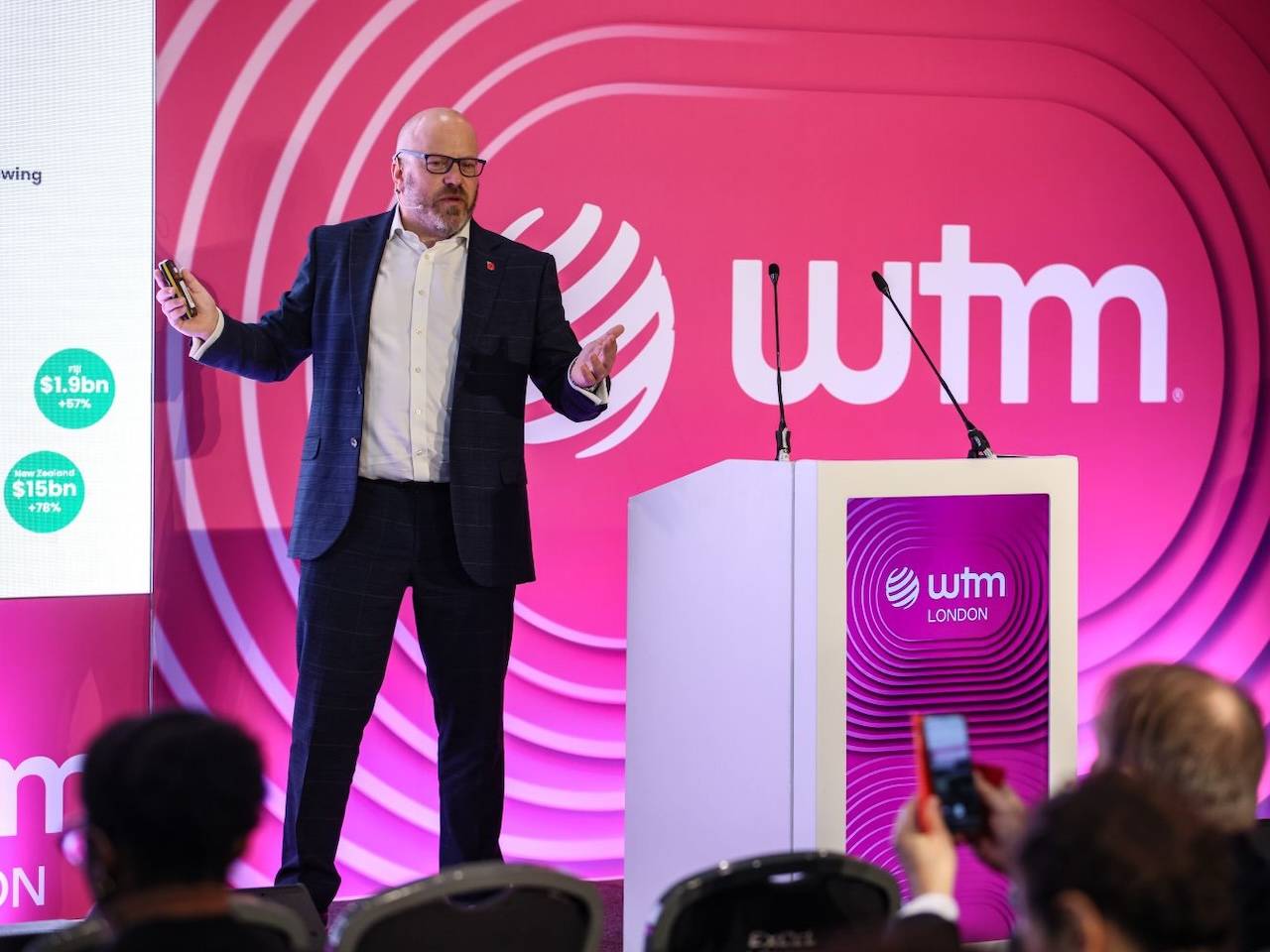
For Chris Carter-Chapman, Event Director of WTM London, the findings provide an important framework for understanding the forces shaping the sector.
“The annual WTM Global Travel Report delivers authoritative data and analysis on the trends shaping global travel, covering more than 185 countries and key tourism flows worldwide.
“The key findings of the 2026 report are echoed in the conference theme of this year’s show: ‘Resilience, Rebound & Reinvention: the next era of global travel’. This will be reflected in debates across all our stages, equipping professionals with the insights they need to navigate emerging challenges.”
Taken together, the findings point to a travel industry continuing to expand, but adapting to a more fragmented landscape of demand, where accessibility, perceived value, technological visibility and the ability to create distinctive experiences will play an important role in destination competitiveness.
Published by Meeting Media Company, the publisher of Headquarters Magazine (HQ) – a leading international publication based in Brussels, serving the global MICE industry and association community.

Since its founding in 1992, Meeting Media Group, publisher of Headquarters Magazine (HQ), has been a trusted guide and voice for associations and the global MICE (Meetings, Incentives, Conferences, and Exhibitions) industry.