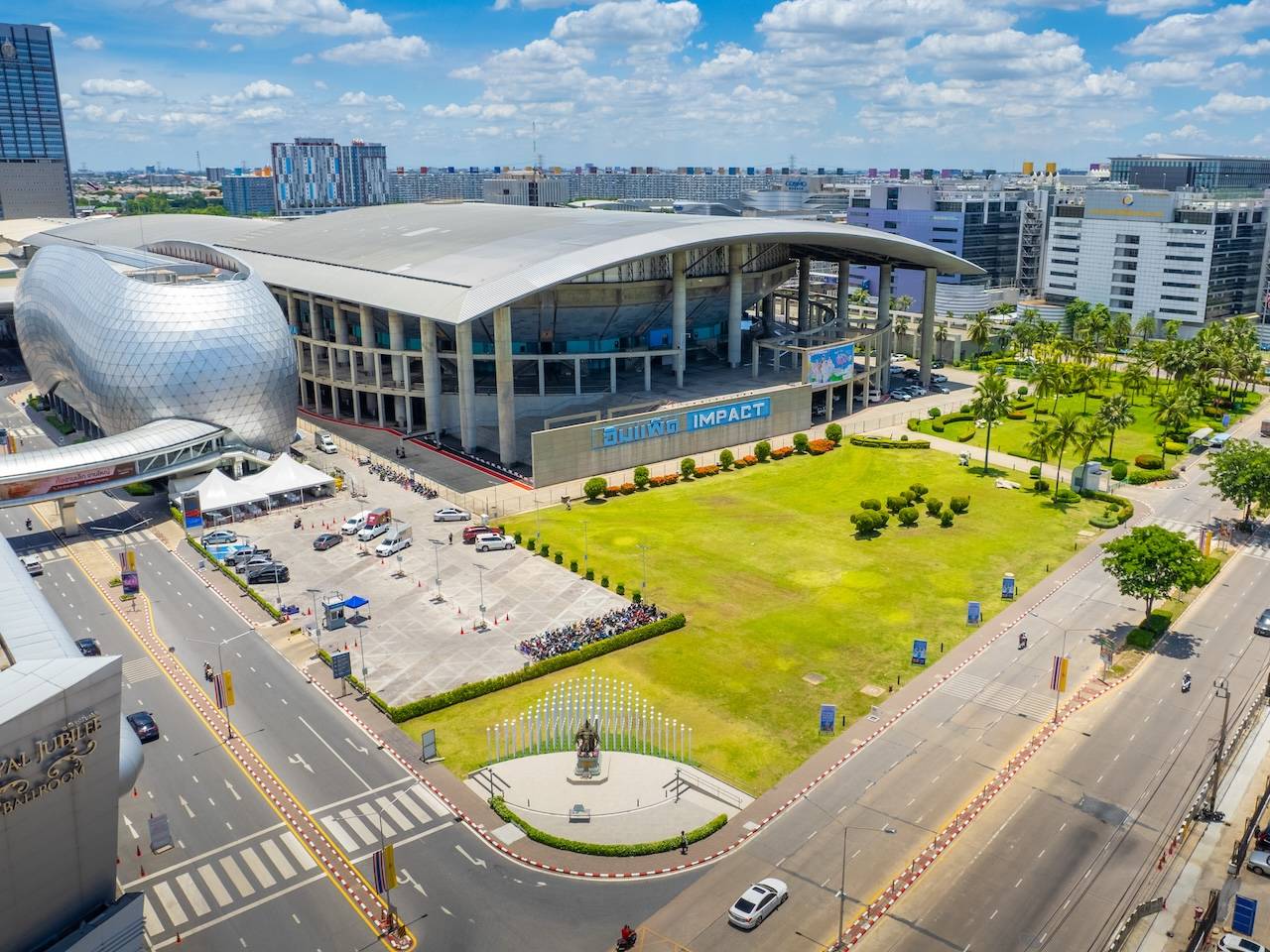
Bangkok’s position as a regional MICE hub has long rested on scale, connectivity and hospitality infrastructure. Yet, within Muang Thong Thani, one of Thailand’s leading event districts, the IMPACT Arena, Exhibition and Convention Center is advancing a more structural argument: that large-scale venues are no longer only hosts of economic activity, but active players shaping how cities operate, consume resources and engage communities.
 At the heart of IMPACT’s strategy is a redefinition of sustainability. Instead of treating it as a parallel programme, IMPACT embeds it directly into its daily operations, from procurement and food systems to waste management and supplier coordination. “Sustainability at IMPACT is not implemented as a standalone programme; it is embedded into our daily operations and decision-making processes,” says the Chief Executive Officer of IMPACT Exhibition Management Co., Ltd., Paul Kanjanapas. “For a venue that hosts millions of visitors annually and hundreds of events of varying scales, even small operational changes can create significant cumulative impact.”
This operational framing extends across the venue’s food and beverage strategy. Local sourcing has become a procurement principle, not merely an aspiration, while plant-based menus are increasingly integrated into event catering. Organic waste is processed and converted into fertiliser used within the precinct itself, closing loops that traditionally fall outside the venue boundary. “Sustainability requires continuous monitoring, measurement, and improvement,” Kanjanapas adds. “Rather than adding complexity, it has helped us create a more efficient, resilient and responsible business model.”
Moving from isolated initiatives to integrated systems is central to IMPACT’s positioning. It also reflects a broader redefinition of what ‘sustainability’ means in the context of high-volume event infrastructure, where scale amplifies both impact and opportunity. A key challenge, however, lies in organisational culture. Embedding sustainability requires alignment across departments that were historically optimised for cost, speed and delivery, with environmental performance playing a secondary role. “The greatest challenge is cultural transformation,” Kanjanapas says. “Sustainability cannot be driven solely by a dedicated ESG team; it must become part of the mindset of every department, from procurement and engineering to catering and event operations.”
.jpg)
He notes that this shift requires procurement frameworks that take more than cost into account. Environmental impact, sourcing practices and long-term efficiency are now part of decision-making criteria. Event planning, similarly, must integrate waste and resource considerations from the outset, avoiding costly adjustments later in the process. “Operational discipline means treating sustainability with the same rigor as safety, quality and financial performance,” he adds. “For large venues like ours, the opportunity is to become platforms that connect these stakeholders and create sustainable ecosystems that extend far beyond the boundaries of the venue itself.”
The same principles guide not only venue operations, but also relationships with suppliers, producers and local communities. IMPACT increasingly frames sustainability not as a collection of initiatives but as a connected network spanning food production, logistics, energy, landscaping and community engagement. “We view sustainability as an ecosystem rather than a checklist,” Kanjanapas explains. “Food sourcing, catering operations, waste management, landscaping, energy efficiency and community engagement are interconnected components of a larger system.”
Within this logic, localisation becomes both environmental and economic strategy. By working with nearby suppliers and institutions, IMPACT reduces transport emissions while strengthening regional supply chains and community value creation. “The future of sustainable venues will depend increasingly on their ability to collaborate with local suppliers, communities, educational institutions and technology partners,” he says. “Localisation not only reduces environmental impact but also strengthens economic resilience and social value creation.”
A small number of institutional partnerships reinforce this direction. IMPACT has secured multiple certifications under Thailand’s MICE Venue Standards (TMVS and TMVS Plus), ASEAN MICE Venue Standards (AMVS), and Thailand Sustainable Event Management Standard (TSEMS), thereby aligning its operations within formalised regional frameworks for performance and accountability. It has also been ranked among the top five ASEAN venues under AMVS recognition, reinforcing its market proposition.
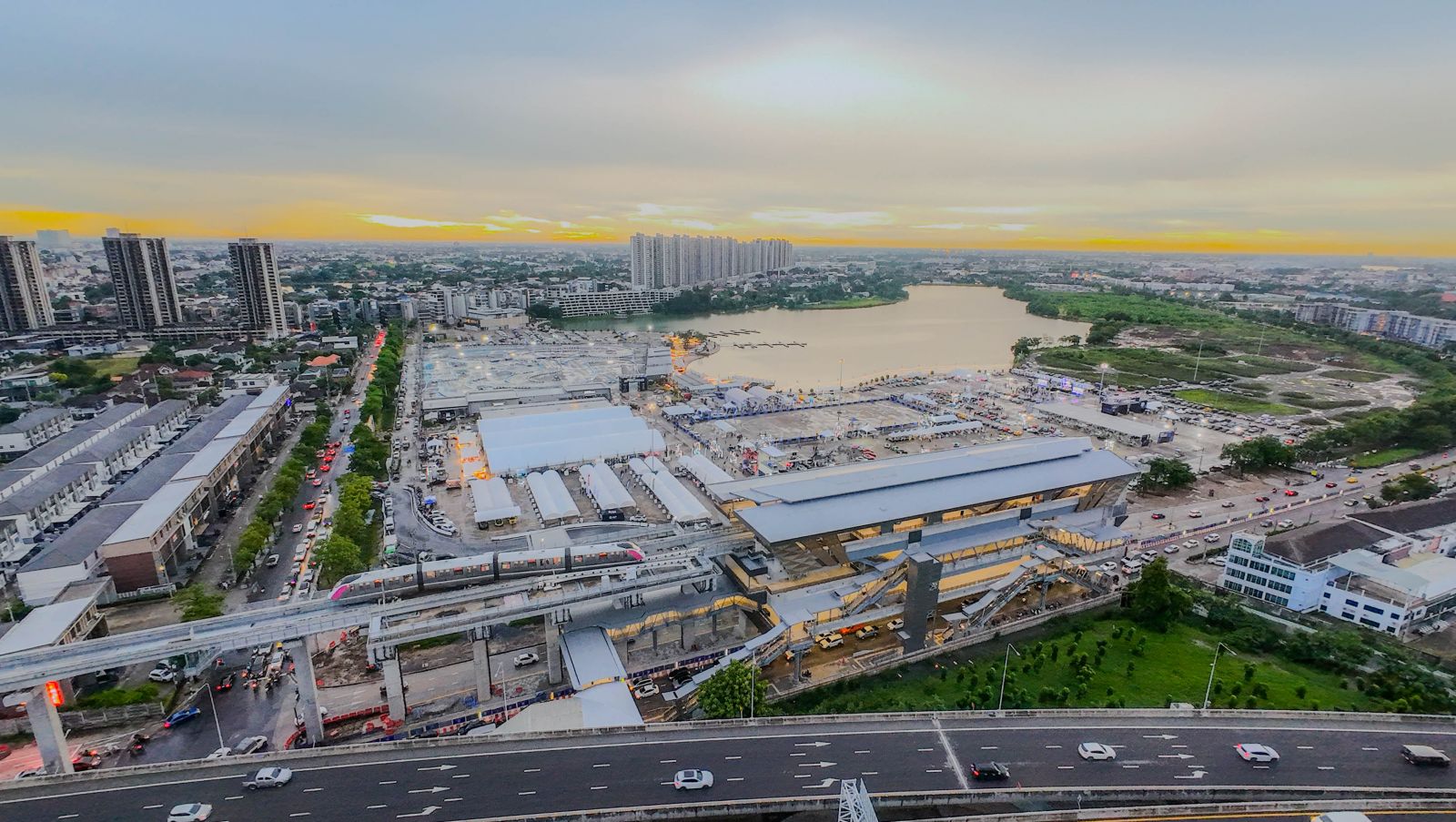
Alongside its operational efforts, IMPACT is also reshaping the spatial logic of its district. The transformation of the former Eastin Lakeside Hotel into The Lake Club signals the emergence of mixed-use, continuously active environments within Muang Thong Thani. “The Lake Club represents our vision of transforming Muang Thong Thani into a vibrant destination that extends beyond exhibitions and conventions,” says Kanjanapas. “We wanted to create a space that remains relevant and engaging every day of the year for residents, visitors, businesses and the wider community.”
Combining hospitality, culture, retail and workspaces, the project is designed to remain active year-round, not just during events. As infrastructure connectivity in the area improves, its role is expected to deepen as a node within a broader urban structure. The Lake Club is also envisioned as a ‘business laboratory,’ providing a real-world setting to test new formats before rolling them out more broadly. This includes culinary concepts, cultural programming and experiential formats developed in real operational conditions. “This approach reflects a wider trend in the events and entertainment industry,” Kanjanapas notes. “Consumer expectations are evolving rapidly, and successful organisations must become more agile, innovative and data-driven.”
He emphasises that this model allows for iterative development, reducing the distance between idea and implementation. It also positions the venue as an experimental layer within a larger framework system. Convention infrastructure itself is also being redefined. Where venues were once activated primarily during events, IMPACT increasingly sees them as components of a continuous urban fabric. “Convention centres can no longer operate as isolated facilities that activate only during events,” Kanjanapas says. “The most successful destinations of the future will be those that integrate business, lifestyle, entertainment, culture and community engagement into a cohesive ecosystem.”
A separate partnership with Bangkok University reinforces this trajectory, creating pathways for education, training and workforce development aligned with evolving industry needs. In parallel, collaboration with Nakhon Pak Kret Municipality on smart city development reflects a broader public-private alignment around urban planning, data integration and quality of life improvements within Muang Thong Thani. These initiatives point towards a model where MICE infrastructure is not only economic but also civic, contributing to long-term urban development and governance structures.
Looking ahead, Kanjanapas sees Asia’s MICE sector moving towards convergence across sustainability, technology and experiential design. “Future leadership will not be determined solely by venue size or infrastructure,” he says. “Success will increasingly depend on the ability to create integrated destination experiences, demonstrate sustainability leadership, embrace technological innovation, and build strong international networks.” Thailand’s competitive advantage, he argues, lies in its ability to combine infrastructure readiness with cultural and experiential depth. IMPACT’s strategy is to position itself within that trajectory, not as a standalone venue, but as a destination system. As he concludes: “The winners will be those that successfully combine global competitiveness with local relevance.”
Published by Meeting Media Company, the publisher of Headquarters Magazine (HQ) – a leading international publication based in Brussels, serving the global MICE industry and association community.
Since its founding in 1992, Meeting Media Group, publisher of Headquarters Magazine (HQ), has been a trusted guide and voice for associations and the global MICE (Meetings, Incentives, Conferences, and Exhibitions) industry.