“For there is nothing dearer to a man than his own country and his parents, and however splendid a home he may have in a foreign country, if it be far from father or mother, he does not care about it.” ― Homer, The Odyssey
So begins one of the passages of The Odyssey, by Homer — not with the glory of war, but with the longing for return. It was this very journey that served as the narrative thread for IAPCO’s Annual Meeting & General Assembly 2026 in Athens. Under the theme “The Odyssey Reinvented – A Very Human Journey Toward the Meetings of Tomorrow,” global leaders in professional congress organisation gathered in the city that first taught the world the art of dialogue to reflect on how meetings must be reimagined in an era defined simultaneously by technological acceleration and a renewed search for human meaning.
Some journeys unfold across open seas. Others span decades, industries and generations. And then there is The Odyssey, Homer’s timeless voyage through the human spirit, where every island becomes a trial, every detour a lesson, and every return a redefinition of what “home” truly means.
It was through this metaphor that the International Association of Professional Congress Organisers (IAPCO) chose to convene its global ecosystem for the IAPCO Annual Meeting & General Assembly 2026, held in Athens from 25 to 28 February 2026, at the Megaron Athens International Conference Centre. The setting was not merely a destination but a symbol of passage from isolation to reconnection, from survival to renewal. For if the meetings industry is indeed undergoing a profound reinvention, perhaps there is no more fitting place to confront this question than the cradle of democracy, philosophical debate and the ancient art of thinking together. Just as Odysseus required ingenuity, wisdom, narrative and purpose to find his way back to Ithaca, today’s PCOs are increasingly called upon to become strategic storytellers: designing journeys rather than programmes, crafting experiences with narrative arc, tension, climax and catharsis. In many ways, IAPCO 2026 became precisely that journey!
The four-day conference brought together more than 200 senior leaders from the professional congress organising community, alongside destination and strategic partners and other industry stakeholders, representing around 36 countries. Through a programme of workshops, field trips, compelling keynote sessions, awards and the deliberations of its own Council, the gathering reaffirmed IAPCO’s role as a forum for governance and strategic direction for the future of the global meetings industry. The 2026 Annual Meeting recorded its highest attendance to date and an unprecedented number of first-time participants. Today, the global IAPCO community comprises 95 member organisations worldwide, collectively delivering more than 23,000 meetings each year.
.jpg)
In Athens — where landmarks such as the Acropolis and the Agora stand firm as enduring witnesses to the coexistence of classical heritage and contemporary infrastructure — the setting embodied precisely what the sector seeks to achieve: tradition paired with reinvention, legacy with innovation, memory with forward vision. At the heart of IAPCO’s strategy lie five central pillars — quality, innovation, collaboration, education and advocacy — designed to support members navigating a rapidly evolving industry landscape. In that context, the central question that ran throughout the assembly was not whether technology should shape the future of events — that is already inevitable — but how to integrate it without losing the profoundly human essence that ultimately defines the impact of business events.
“We designed the programme as a journey. Day one began with storytelling, setting the narrative context for our discussions. Day two focused on leadership and the business challenges facing our sector, before moving — with Pascal — towards the future. We concluded by returning to the individual, exploring themes of personal development, balance, trauma, and homecoming, alongside important conversations around autism and the wider work of IAPCO,” Sissi Lignou, IAPCO President and CEO of AFEA Congress, told us. AFEA was one of the PCOs responsible for organising the congress, alongside CONVIN, ERA and ERASMUS, with the support of the This is Athens Convention & Visitors Bureau.
She continued: “From an IAPCO perspective, it was also an opportunity to highlight everything the association has achieved over the past year. I hope participants felt the passion and commitment of the Council in advancing our mission and strategic pillars. Through the programme and the Council sessions, we aimed to present a clear narrative of IAPCO’s past, present and future — culminating in the General Assembly, the election of the next president, and many exciting projects for the association moving forward.”
Day 1: From Ithaca to Impact
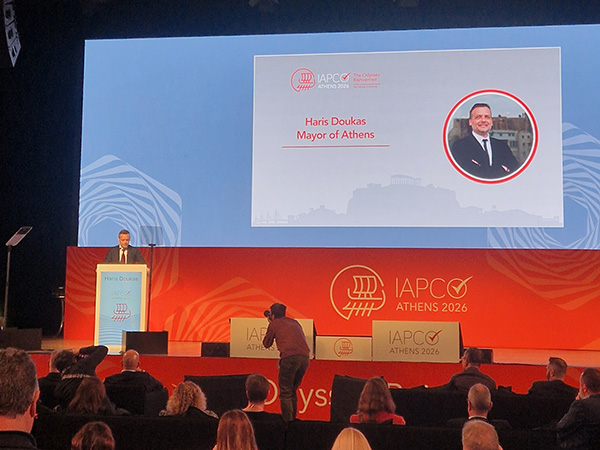
The Opening Session set the tone for the conference with unmistakable momentum, strategic clarity and a shared sense of purpose. Institutional addresses from the Greek Minister of Tourism and the Mayor of Athens underscored the city’s stature as a forward-looking, sustainable destination of global relevance. Moderated by Hazel Jackson, the session emphasised collaboration, sustainability and innovation as the defining pillars of both the local ecosystem and the wider international meetings landscape. Blending celebration with ambition, it paid tribute to the collective effort behind the event — not least the dedication of Team Athens and its partners — while highlighting the industry’s global reach and the strength of the community that underpins IAPCO.
Alongside the plenary programme, the IAPCO Dialogues unfolded across the first two days as deliberately curated spaces for structured, peer-led exchange. Eight breakout groups convened to explore themes including leadership, community engagement, innovation, legacy and emerging talent, fostering candid discussion, shared insight and practical solutions in an atmosphere designed to encourage genuine collaboration rather than passive attendance.
In the first keynote, “From Ithaca to Impact”, Angeliki Kosmopoulou grounded storytelling firmly in the classical imagination while reframing it as a contemporary leadership instrument. With her background in archaeology and cultural management, she offered a distinctive lens on meetings as spaces of transformation rather than mere transactions. A well-designed gathering, she argued, should function as a compass — providing direction in times of uncertainty. Narrative, she suggested, is not decorative embellishment but an invisible infrastructure that shapes experience and meaning. “Your work is not just about organising. It is about creating the conditions for people to speak, to be heard and to find their way home." When participants feel genuinely seen and listened to, something fundamental occurs: belonging. Active listening, moments of silence and more intimate formats were presented not as optional refinements, but as strategic design choices. In an era saturated with information, depth — not volume — becomes the true differentiator.
If the first keynote explored the historical and human essence of meetings, Panos Tzivanidis expanded the perspective to the global stage of mega-events. Drawing on the operational realities and legacy planning behind the Milano-Cortina Winter Olympics, he underscored the necessity of embedding sustainability from the outset, treating legacy as a strategic imperative rather than a retrospective consideration. The prioritisation of existing infrastructure, the reliance on renewable energy and parallel scenario planning reflected a clear philosophy: large-scale events demand accountability, long-term vision and disciplined internal communication. “Legacy and the impact that a mega event like the Olympics has on a city must be considered from the moment of the bid — not as an afterthought.” He also addressed the emotional dimension of delivering such projects, acknowledging the psychological intensity of high-stakes environments and the importance of structured transition after periods of extraordinary pressure.
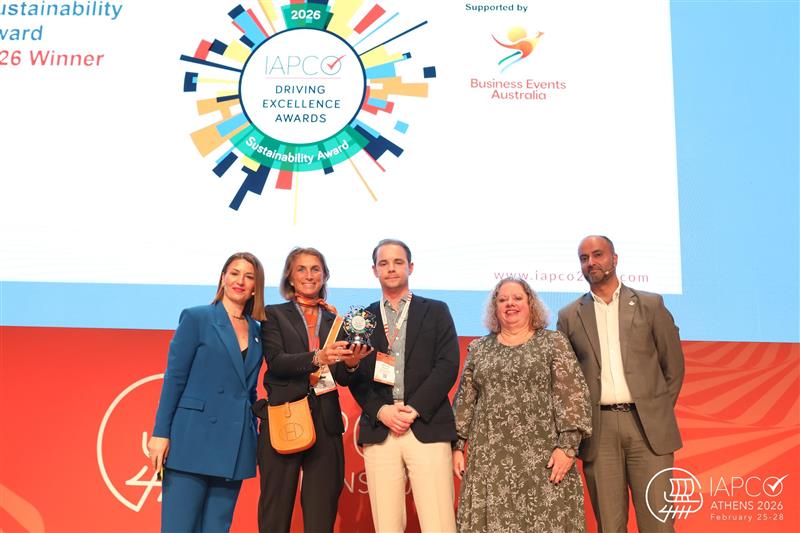
Between these two keynote moments, the institutional segment “From IAPCO to the World” charted the organisation’s strategic evolution throughout 2025. Particular emphasis was placed on the continued expansion of its global community — with growing engagement across Latin America — alongside the consolidation of flagship education initiatives such as the EDGE programme across multiple regions. The association also strengthened its advocacy work through campaigns including Dear Associations, part of the broader Unlocking Excellence initiative, while launching a comprehensive sustainability toolkit designed specifically for PCOs and aligned with international standards. Recognition through awards further reinforced IAPCO’s culture of excellence, notably the Sustainability Award presented to K.I.T. Group (above) for its work on the IUCN World Conservation Congress 2025, as well as the newly established IAPCO & NZICC Jan Tonkin Scholarship, awarded to Shimal Jaykant, Conference Manager of Medical Conference Partners in recognition of her commitment to professional development and reflective leadership.
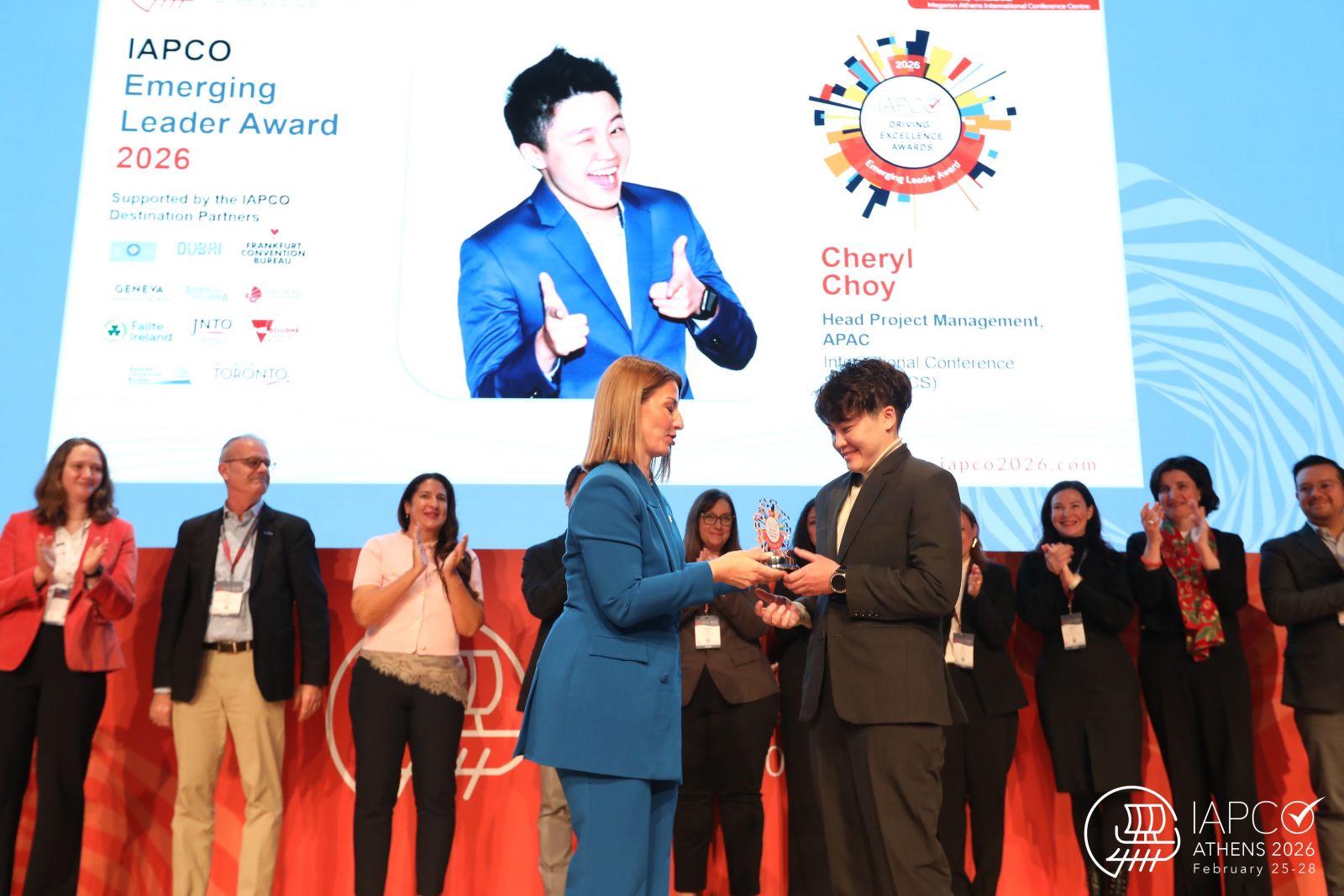
The recognition of emerging talent was equally significant, accompanied by a deliberate shift in institutional language: the transition from “Next Gen” to “Emerging Leaders”. As Giulia Sarri articulated, "(...) the leaders of tomorrow are already in the market today so we can all work together to tear down that invisible hierarchy. Words can change behaviors, can change the culture. Emerging leader as a definition removes that hierarchy, supports inclusion and shared responsibility.” In this spirit, the Emerging Leader Award was presented to Cheryl Choy (below), Head of Project Management for Asia-Pacific at International Conference Services, in recognition of her development of agile, collaborative operational frameworks. The regional dimension of leadership development was further strengthened with the launch of the IAPCO & FIEXPO Jorge Castex Scholarship Programme for Latin America, delivered in partnership with FIEXPO Exhibitions Group, honouring Jorge Castex, a foundational figure in the LATAM meetings sector and former IAPCO President.
Day 2: Navigating Between Myth and Machine
If the opening day established the philosophical compass of the gathering, the second unfolded as a deeper exploration of leadership in uncertain waters. The morning began with “Leading Through the Odyssey”, a discussion-led keynote by Fortune Greece, moderated by the news anchor Apostolos Mangiriadis, and bringing together three Greek businessmen Panagiotis Kouris, Aleksandar Preradovic, and Antigoni Xioni for a candid conversation on artificial intelligence and the evolving responsibilities of business leadership.
Rather than framing AI as a disruptive threat, the panel approached it as an instrument whose value depends entirely on human stewardship. Across sectors — from healthcare to marketing — examples illustrated how machine learning can accelerate decision-making, refine data analysis and unlock new levels of operational efficiency. Yet the speakers were equally clear about the anxieties this transformation provokes within organisations. Employees often fear becoming marginal to decision-making, a perception that leadership must actively counter. In many ways, the conversation echoed Odysseus’ own strategy before confronting the Sirens: technology may sing seductively, but wisdom lies in learning how to listen without losing control of the helm.
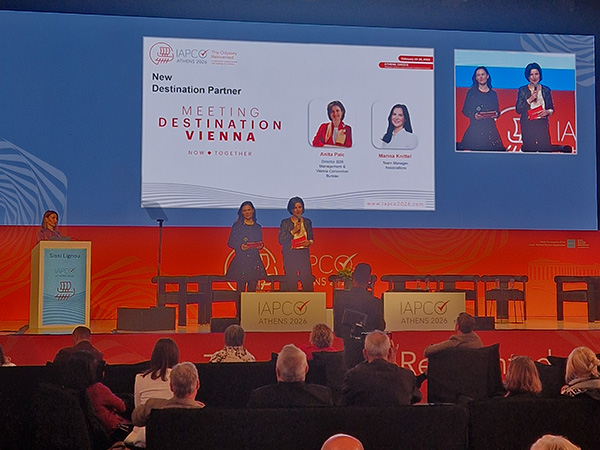
A brief strategic update followed in the second instalment of “From IAPCO to the World,” but now on route to 2026. The session offered members a snapshot of the association’s trajectory. Community engagement emerged as a central thread, alongside the expansion of regional education initiatives and advocacy programmes designed to amplify the voice of professional congress organisers in global markets. New partnerships — including collaborations with destinations such as Rwanda, Türkiye, and Vienna — illustrated a growing emphasis on experience-driven events, where the character of place becomes as memorable as the programme itself. “IAPCO represents a truly high-level global network dedicated to the advancement of business events. Before confirming our partnership, we had the opportunity to host an IAPCO Council meeting 2025 in Vienna, and what impressed me most was the openness, professionalism and genuine spirit of collaboration within the community. The insights shared were both generous and invaluable in helping us further develop Vienna’s position as a leading meetings destination. For a city of two million inhabitants that already hosts a remarkable number of international events, it is essential that the entire ecosystem — from institutions to industry partners — works together towards a shared global vision,” told us on-site, Anita Paic (photo above), Director B2B Management at Vienna Convention Bureau.
The late morning shifted tone with one of the most lively and out-of-the-box sessions of the conference: “A Thought-Leaders’ Session Jeopardy,” moderated by Kenes’ Ori Lahav. The format blended debate with a playful quiz structure, bringing together leading industry voices, namely PCMA’s Sherrif Karamat, AIPC CEO Sven Bossu, ICCA’s Senthil Gopinath and Tina M. Wehmeir, President of AMC Institute. Beneath the light-hearted delivery and pressured hints, however, the conversation tackled some of the sector’s most pressing structural questions. Leadership itself became an early point of reflection. As Karamat provocatively suggested, "I believe that most leaders in our world today are not leaders. They were put in positions because they were at the right place at the right time...and our industry specifically is grossly lacking in leadership.” — a gap that associations must address if they are to remain credible stewards of our ever more complex communities. Bossu, meanwhile, challenged the traditional model of annual global gatherings, arguing that associations must decentralise their services: "I think coming together once a year all in one place. That's no longer necessary. We need to go local. We need to offer our services where they are needed. And having those big things globally — No, stop doing that."
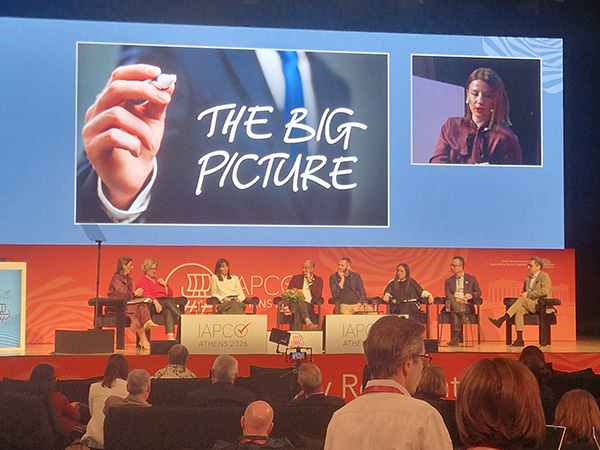
Technology and sustainability also surfaced repeatedly throughout the exchange. AI was acknowledged as a powerful operational tool, yet one incapable of replicating the empathy that underpins meaningful human encounters. On the environmental front, Gopinath highlighted a paradox familiar to many organisers: "If you look at RFPs I think 95% now have this full page of sustainability things to comply with. So every RFP has it and not a single client is willing to pay for it. Associations have the upper hand in this industry.". The discussion ultimately circled back to a broader principle — that the future of associations will depend on adopting the mindset of startups: agile, experimental and constantly reinventing the value they provide to their communities. As Wehmeier puts it: "In order to unearth new value, you've got to reinvent. Startups is about innovation and creativity. And if associations are more agile, use more innovation, I think they will unearth more value for their customers."
The afternoon programme brought a more hand-on-approach attitude. In “Ithaca and After: The Strategy and Reality of Exiting a Business,” Hazel Jackson drew on her own entrepreneurial journey to explore a topic rarely addressed openly in professional forums: knowing when and how to step away from the organisation one has built. Beyond financial valuation and taking her own company as a case study, she emphasised the importance of timing, investment and emotional readiness — reminding participants that leadership also involves recognising the right moment to pass the torch.
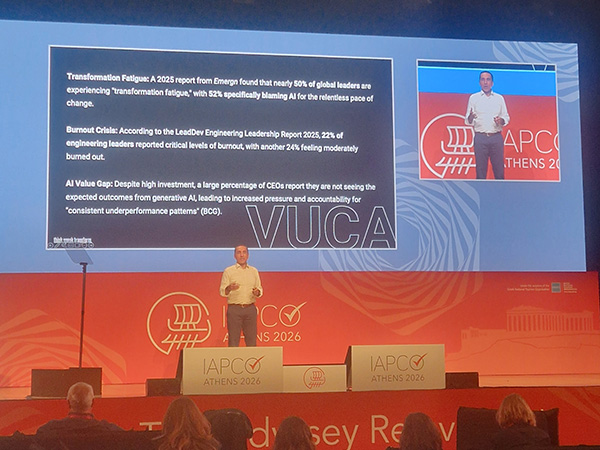
The day concluded with a very personal keynote from futurist Pascal Morgan, titled “An Odyssey into the Future: Being Human in a Technology Era.” Weaving together personal biography, classical philosophy and digital culture, Morgan reflected on how technological acceleration is reshaping not only economies but the very texture of human attention. The modern equivalent of the Lotus-Eaters, he suggested, may well be the frictionless comfort of algorithmic platforms that quietly erode concentration and critical thought. Drawing on the ancient metaphor of Scylla and Charybdis, Morgan argued that leadership in the twenty-first century increasingly resembles navigating between competing risks in a volatile environment. The response, he proposed, lies in reframing the familiar VUCA paradigm: volatility demands vision, uncertainty requires deeper understanding, complexity calls for courage, and ambiguity necessitates adaptability. Between Calypso and the seductive comfort of eternal refuge lies another reflection: the security of the familiar model versus the risk of innovation. Remaining on the island may feel tempting. Yet the calling of this industry has always been to set sail.
Day 3: From Survival to Strength
The final day of the conference unfolded as a sequence of deeply human reflections, anchored in resilience, self-awareness and renewal. In the session “Ithaca Is Worth Reaching. Still, True Success Lies in Balance Along the Journey”, prima ballerina Eleana Andreoudi brought the language of performance to the stage as a metaphor for professional life. Through the discipline of dance, she portrayed existence as a voyage towards the destiny — yet reminded the audience that fulfilment is defined less by arrival than by the poise with which one navigates adversity. Drawing on the myth of the Symplegades, she evoked the sudden collisions that confront every individual without warning, demanding courage rather than preparation. Music, she observed, functions as a universal companion — a stabilising force capable of sharpening focus and restoring equilibrium — while simple breathing practices can recalibrate composure in moments of pressure.
This was followed by a keynote of profound psychological depth, in which Despina Ploussiou used Homer’s Odyssey as a framework for healing and integration. In “The Odyssey Within: From Survival to Homecoming," the truam therapist reframed Ithaca not as a geographical endpoint, but as an internal condition of safety and belonging. Tracing Odysseus’ journey through its symbolic stations — from the dissociation of the Lotus Eaters to the confrontation of grief in the underworld, and the restorative yet restrictive embrace of Circe — she illustrated how trauma shapes survival mechanisms embedded in the body. True integration, she argued, requires a distinct form of courage: not the resolve to endure, but the willingness to return and be recognised anew. Her central message resonated clearly: crises are rarely failures of intellect, but rather breakdowns in regulation. As she noted, “Unregulated nervous systems may create unstable cultures,” underscoring the vital role of self-regulation in leadership and collective wellbeing.
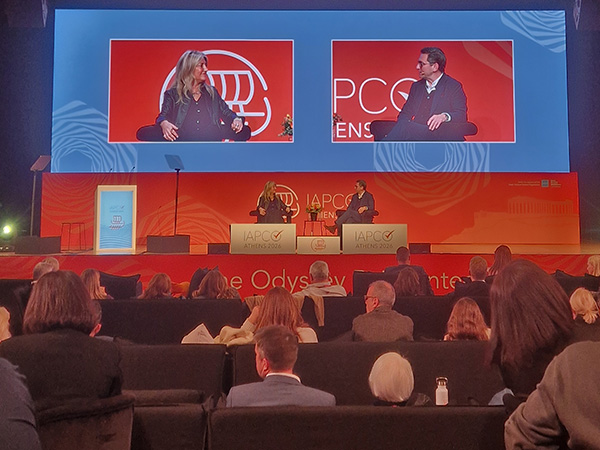
The second part of the Thought Leadership session, highlighted the pivotal role of the Events Industry Council as a global federation representing more than 60 members, while advancing a collective impact model designed to address pressing societal challenges. The CEO Amy Calvert (pictured above with Martin Boyle) showcased their sustainability strategy rooted in the integration of the Sustainable Events Standards and UN SDGs, and developed with the guidance of the Net Zero Carbon Events, an initiative led by the Joint Meetings Industry Council. In parallel, the economic impact study conducted with Oxford Economics quantified the global business events industry at $2.8 trillion, with 1.6 billion annual participants and approximately 30 million professionals — a cornerstone reference for articulating the sector’s global value proposition. An updated edition, expected in May 2026, will incorporate catalytic and legacy impact metrics. Together with the EIC Foresight Report and the Futures Landscape Study, these tools provide strategic insight to anticipate emerging trends and strengthen organisational resilience in an increasingly fluid environment.
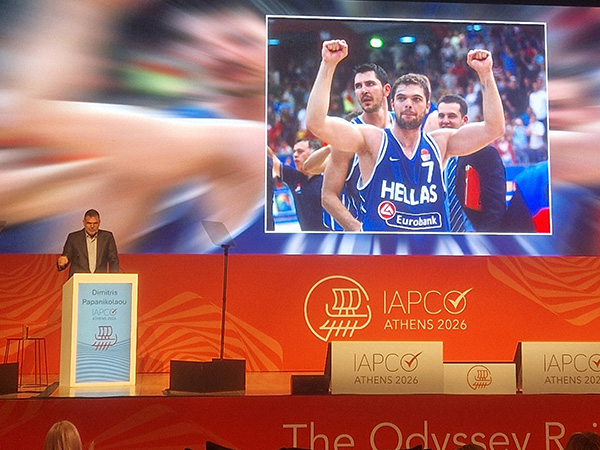
The subsequent session introduced a wave of collective energy and social reflection, culminating in an inspiring contribution from basketball superstar Dimitris Papanikolaou (up in the picture) and his daughter Aria Papanikolaou. Both living with Asperger’s syndrome, they shared their personal journey of neurodiversity, resilience and inclusion, transforming the auditorium into a space of attentive listening and shared inspiration. As Dimitris reflected, the visibility gained through his sporting career became a catalyst for publicly sharing Aria’s diagnosis — a step taken not only to support their family, but to help thousands of others facing similar circumstances: “When you shine a light, it reaches every corner. We needed to use our family’s recognition from my career to make our daughter’s diagnosis public. Only then could we help not only Aria, but countless other families confronting the same or related challenges.” Through stories of perseverance, teamwork and belonging, the message was clear: consistency, unity and determination are the true hallmarks of excellence... both on and off the court. “The difference between winning or losing is that a winner tries one more time. The moment we give up, someone else wins. So we must continue.”
The day ended with the final housekeeping notes regarding the handover of the presidency in 2027 to Jason Yeh (pictured below), CEO of the Taiwanese GIS Group, along with the admission of three new members to the IAPCO Council. The next host destinations were also announced — Mumbai (2027) and Cairo (2028) — reaffirming the association’s truly global footprint and its capacity to carry the sector’s dialogue into new cultural and geographical landscapes. The 2027 edition in Mumbai will take place at the JIO World Convention Centre, under the theme “All is Well” — inspired by contemporary Indian culture and rooted in shared values of hospitality, balance and optimism in the face of industry challenges — an invitation to approach moments of pressure with composure and intent.
“I hope this meeting conveyed a strong message about the power of our industry to navigate crises and generate meaningful socio-economic impact and lasting legacy. It definitely showed the strength of our community coming together to create change, while showcasing both the capabilities of the host destination and the remarkable work of our members,” Lignou added.
.jpeg)
To reinvent meetings is to recognise that every congress is, in its own way, a modest Odyssey: operational challenges, unexpected storms and demanding decisions are inevitable. Yet so too are community, discovery and transformation. In a city that fforged new worlds, IAPCO encouraged its members to navigate not merely to endure change, but to return to what truly matters: gatherings defined by purpose, depth and humanity. For in the end — as in Homer’s epic — the journey has never been solely about crossing seas; it has been about understanding what it means, ultimately, to come home.
“A man who has been through bitter experiences and travelled far enjoys even his sufferings after a time” ― Homer, The Odyssey
Published by Meeting Media Company, the publisher of Headquarters Magazine (HQ) – a leading international publication based in Brussels, serving the global MICE industry and association community.