The opening of the New Zealand International Convention Centre (NZICC) in February 2026 marked a major moment for Tāmaki Makaurau Auckland and Aotearoa New Zealand’s international meetings sector. During HQ’s participation in the opening celebrations, the Auckland Convention Bureau led a fam trip for international media hosted by Ken Pereira, Head of Business Events, and Kathryn Heard, Marketing Manager. The bureau forms part of Tātaki Auckland Unlimited, the city’s cultural, events and destination agency operating on behalf of Auckland Council.
The programme explored the business events sector, focusing on the close links between infrastructure, Māori cultural perspectives, creativity, sustainability, and the scenic harbour setting of the city.
A Connected Convention Environment
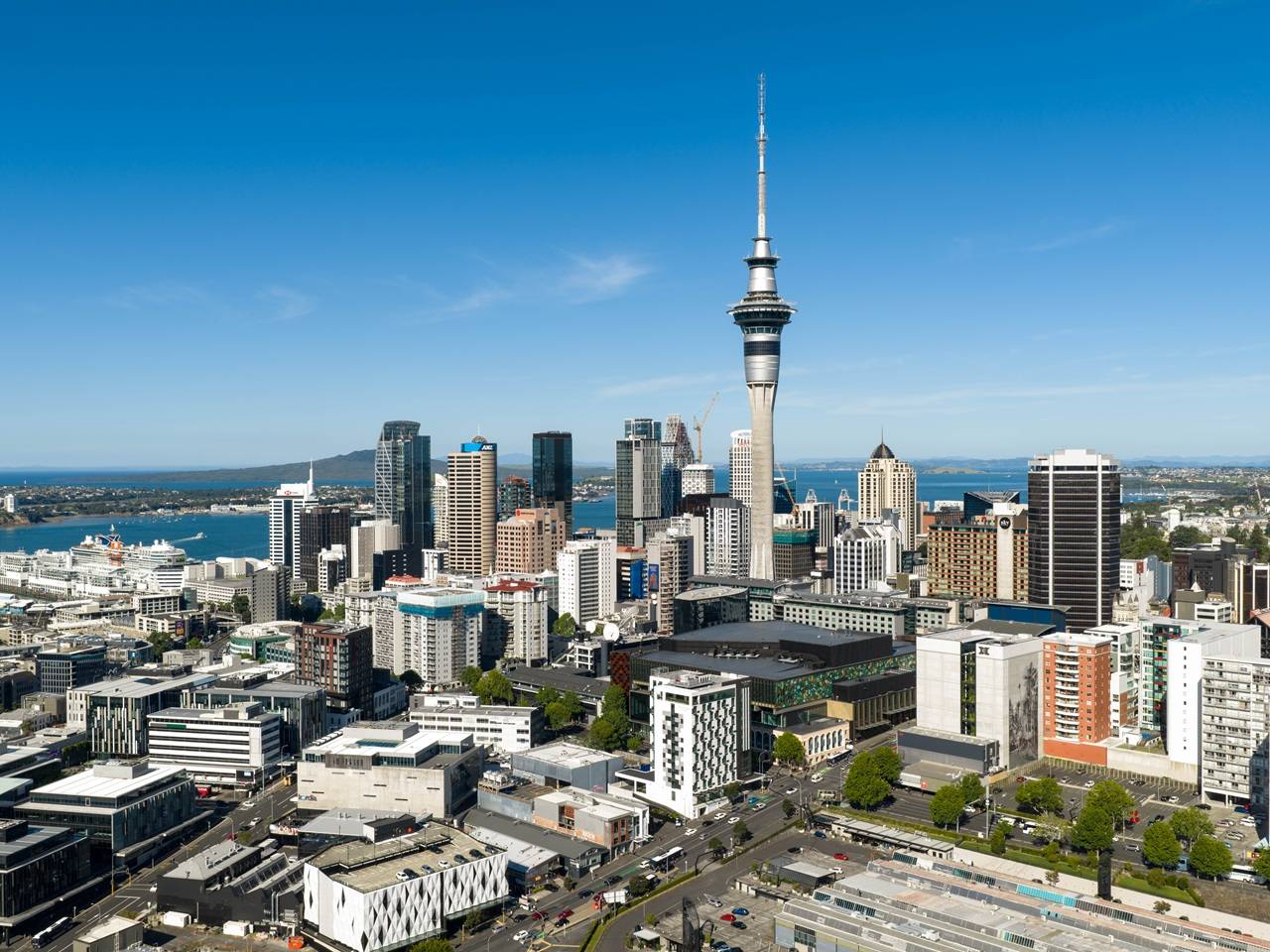
The NZICC provides Aotearoa New Zealand and its largest city with new capacity for international congresses, placing delegates directly in the heart of Tāmaki Makaurau Auckland. The convention centre is connected to the Horizon Hotel and wider SkyCity precinct through a compact urban environment where accommodation, dining, entertainment and event spaces remain within walking distance.
Experiences including Wētā Workshop Unleashed and the All Blacks Experience sit opposite NZICC, reinforcing the proximity shaping delegate movement through the city centre.
Hotels visited during the programme reflected the wider range of experiences supporting Auckland’s meetings strategy. Sudima Auckland City Hotel approaches hospitality through sustainability, wellbeing-focused design and plant-based dining at East restaurant, while Park Hyatt Auckland places executive groups and incentive delegates directly on the waterfront at Wynyard Quarter, with Onemata restaurant focusing on regional produce and local seafood. Sofitel Auckland Viaduct Harbour connects meeting spaces with marina views and the surrounding Viaduct district, while The Hotel Britomart integrates hospitality with the regenerated Britomart waterfront precinct, alongside kingi restaurant’s focus on regional ingredients and North Island seafood.
Water shapes much of daily movement through central Auckland. A short journey aboard Fullers360’s electric hydrofoil offered views across Waitematā Harbour while introducing marine technology developed with Auckland company Vessev. Using hydrofoiling technology, the vessel lifts above the water while operating in electric mode, combining harbour transport with low-emission mobility.
SailGP racing across Waitematā Harbour during our visit placed Auckland’s waterfront at the centre of a major international sporting event, serving as both a competition venue and a public gathering space.
Auckland Museum demonstrated another dimension of the city’s event infrastructure. Located inside the Auckland Domain, the museum combines heritage architecture with flexible event spaces, including the Under the Dome meeting space overlooking the skyline and harbour. Galleries and public areas can also be adapted for private functions, receptions and dinners linked to international congresses.
Creativity, Identity and Delegate Experience
Wētā Workshop Unleashed explores practical filmmaking through immersive fantasy, horror and science-fiction environments inspired by the work of Wētā Workshop, the New Zealand-based creative company behind productions including The Lord of the Rings, The Hobbit and Avatar.
Delegates move through spaces focused on prosthetics, animatronics, costume design, make-up effects and world-building techniques developed for film, television and interactive entertainment. Alongside public tours, the venue hosts private functions, workshops and business events linked with creativity and storytelling.
The All Blacks Experience connected rugby with wider conversations around identity, leadership and belonging. Guided by former All Blacks player Ian Jones, now General Manager of the All Blacks Experience, the immersive experience explored how haka, Māori culture and team values continue to shape Aotearoa New Zealand’s national identity and traditions of welcome.
Both experiences reflected Auckland’s growing focus on participatory programming within conferences across the city.
Indigenous Knowledge in a Global Context
.JPG)
The
World Indigenous Peoples’ Conference on Education (WIPCE) 2025 placed Tāmaki Makaurau Auckland at the centre of international conversations surrounding Indigenous education, language revitalisation, climate knowledge and cultural continuity.
Hosted by Auckland University of Technology (AUT) alongside Ngāti Whātua Ōrākei, the Māori iwi (tribe) with ancestral connections to central Auckland, WIPCE brought approximately 3,800 delegates from more than 40 countries to the city, becoming the largest academic conference held in Aotearoa New Zealand.
Discussions connected Indigenous perspectives on education, research, climate, language revitalisation and digital innovation. Māori knowledge systems sat alongside perspectives from Latin America, North America, the Pacific and other regions, creating an international exchange grounded in local context.
Pōwhiri, formal Māori welcoming ceremonies, bilingual signage, Indigenous artwork and cultural programming formed part of the delegate experience across venues. Public events connected parts of the programme with Auckland residents, while cultural visits introduced delegates to Pacific voyaging traditions and Māori storytelling.
Waka hourua experiences introduced delegates to traditional double-hulled Pacific voyaging canoes used by Polynesian navigators to travel across the Pacific, while Indigenous culinary collaborations brought together chefs from several countries to explore native ingredients, food systems and cultural exchange.
Sustainability through Daily Practice
Environmental initiatives focused on practical systems connected with food, hospitality and community participation. Kelmarna Community Farm, a short drive from the city centre, combines regenerative agriculture, environmental education and urban food production across five acres of public land. Volunteers, schools and chefs work alongside the farm team on composting, regenerative gardening and food programmes linked with long-term behavioural change.
.png)
Food also formed an important part of the wider sustainability discussion. Menus across the city increasingly highlight regional produce, locally sourced seafood, North Island wines and plant-based options aligned with changing delegate expectations around wellbeing and environmental responsibility.
Dining experiences linked sustainability with storytelling and local identity. Conversations around sourcing, regenerative agriculture and native ingredients appeared throughout the programme. During dinner at kingi, delegates were introduced to Velskov, a regenerative native forest initiative centred on kānuka restoration, forest foraging and native planting.
As part of efforts to offset the group’s visit, kānuka trees were named on behalf of participants and later planted and geolocated within the wider reforestation project. The initiative also demonstrated how environmental offsetting and CSR activities can integrate into delegate programmes and event legacies.
Environmental initiatives formed part of a wider strategy linking hospitality, infrastructure and long-term destination positioning. Recent events, including TRENZ 2026, MEETINGS 2026 and the inaugural MICHELIN Guide New Zealand ceremony at NZICC, point to growing international visibility surrounding the precinct and wider city.
Programmes such as the Auckland Business Events Fund continue supporting that momentum, helping attract conferences connected with infrastructure, medtech, agritech, cleantech, aerospace and creative technologies.
For international planners, Auckland increasingly offers an environment where meetings connect with local knowledge, cultural continuity, creativity and the harbour landscape surrounding the city. The opening of NZICC strengthens that proposition not only for Auckland, but for Aotearoa New Zealand’s wider business-events sector as the country expands its presence within the international meetings landscape.
Powered by Meeting Media Company, publisher of Headquarters Magazine (HQ) – a leading international publication based in Brussels, serving the global MICE industry and association community.




.jpg)
.JPG)
.JPG)