In February 2026, the BestCities Global Alliance gathered its community of international associations and destination partners in Guadalajara for its annual Global Forum — an edition that HQ attended on site. More than a networking platform, the Forum once again positioned business events as instruments of long-term impact, legacy and knowledge exchange, reinforcing the Alliance’s distinctive model of collaboration among 13 leading global destinations.
Established 25 years ago, BestCities brings together the convention bureaux from Berlin, Cape Town, Copenhagen, Dubai, Dublin, Houston, Washington DC, Melbourne, Singapore, Tokyo, Vancouver, Madrid and Guadalajara. Operating under a philosophy of “coopetition,” the network balances friendly competition with shared intelligence, collective learning and a common commitment to sustainability, innovation and client excellence — principles that were strongly reflected in the 2026 Forum’s focus on creative collaboration and local engagement.
A few days after the event, Manuel Fernandes, Magazine Manager of HQ, spoke via videocall with the Alliance’s Managing Director, Loren Christie, to explore what lies beneath the Forum’s carefully curated format — from the evolution of BestCities’ strategic direction towards 2029 to the growing role of associations in shaping global dialogue amid geopolitical uncertainty. In this conversation, he reflects on legacy, expansion plans, the mechanics of trust between competing cities, and why intimacy, personalisation and purpose remain the Alliance’s strongest strategic assets.
As BestCities Global Alliance (BCGA), each of our destination partners is committed to making the world a better place and to leveraging business events as a force for positive impact — this is firmly embedded in our DNA. That does not suggest that all of them are at the same level or addressing every aspect at the same time. Rather, it means that each partner has the desire to move forward, advancing at its own level and according to its own pace and context. Guadalajara, for me, is a compelling case, because when they joined BCGA (four years ago), the convention bureau was relatively inactive in relation to sustainability. Hence, they used the BestCities label to learn, to draw inspiration, and to absorb best practices from other destinations with innovative projects, such as Vancouver, Singapore or Copenhagen, in order to begin their own journey.
Have they now reached Copenhagen’s level? No, but you can see that they are genuinely enthusiastic about using its blueprint within their own urban development. The session between Expo Guadalajara and the Intermoda Fashion Show (integrated into this year’s BestCities Global Forum) demonstrated precisely that: an outstanding example of how they embraced the BCGA label, took on board the learnings around sustainability, and began applying them in their engagement with the local industry. Therefore, beyond the commercial dimension, I believe what truly distinguishes us is this shared commitment to positive impact — whether through legacy programmes, sustainability initiatives or even the use of innovation — which lies at the heart of the DNA of our 13 cities. It is a spirit of community collaboration that drives this impact, whether from the destinations themselves or from the associations participating in these forums. Part of this, of course, is due to the fact that it is easier to achieve within a smaller group.
I joined BCGA at a particularly interesting moment, coming straight from the COVID-19 and ready to renew our projects. One of the first things we did was to develop a new strategic plan built around four pillars. One of those pillars was to transform the network into an incubator of ideas, connecting strengths and assets with shared value. Everyone had to reinvent themselves after the pandemic, so there was a clear refocusing on what we wanted to achieve. Interestingly, almost three years on from that point, we are now preparing to embark on another strategic plan running up to 2029, with a slight shift to recalibrate to the reality around us.
I believe we have found our groove — our DNA — yet now it is time to take this to the next level, for example by addressing geopolitics and continuing the discussion around Artificial Intelligence. At the same time, being part of an alliance of this nature means fostering an ongoing dialogue on these issues. What can we do together? How can we succeed? How do we keep the spark of these 25 years alive? Preserving our shared essence and common values is one of the most important elements in achieving that. This mutual commitment to collaboration strengthens the alliance, gives us more confidence, and this is widely reported by our members.
One of the things that must be understood is that BCGA is not something that I, or my predecessor, created, nor something we have tried to persuade people to buy into. The strategic direction rests with our destination partners; we simply take on the workload as the head office.
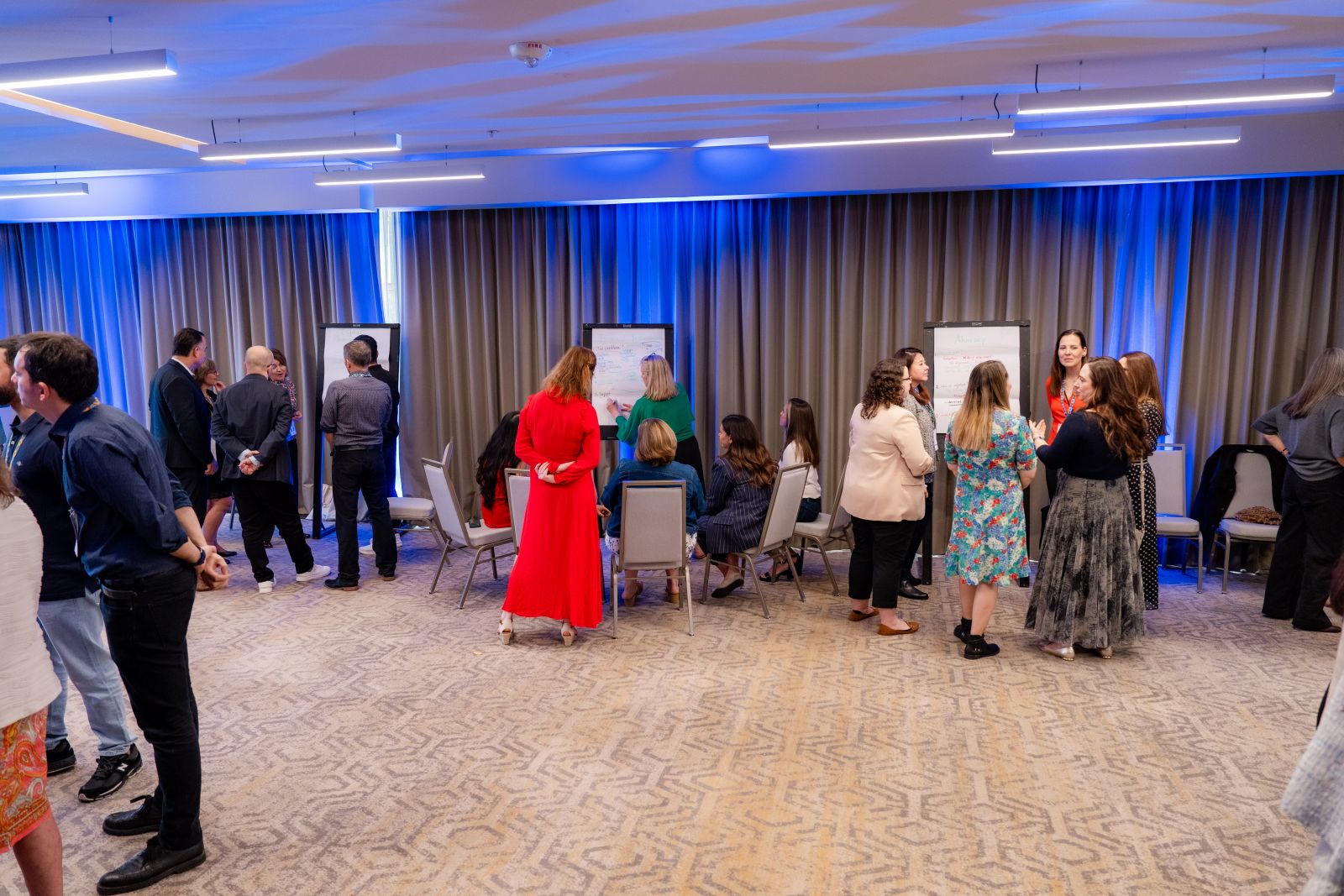
What I am seeking to do is create an opportunity — the forum — for the 13 alliance members to engage in a meaningful and well-earned strategic conversation. My role is essentially that of a broker: to implement their deliberations and to ensure that the time invested by the 13 DMOs, each of whom is extremely busy with their own cities, is well spent. It is not for me or my team to decide what we should do. Rather, it is about facilitating the continuation of that conversation, recognising that they are the architects of their own destiny.
Sometimes I feel that this is not fully appreciated when people look at the alliance from the outside. We work for them; the alliance is in their hands. I cannot say precisely what it will look like going forward, but I can say that the BCGA is satisfied with the direction we are taking. I do not anticipate major changes — though one never knows. When 13 DMOs are working together, these conversations are essential to ensure that the ship is being steered in the right direction. Above all, it is an alignment exercise.
For the time being, BCGA leans more towards co-creation. Since the beginning of my mandate, I have observed greater synergies between cities, stakeholders and, most importantly, our clients. In recent years, we developed and launched our Strategic Thinkers Group, which brought together a mix of clients, media representatives and figures from other sectors.
I do not wish to repeat myself, but what is truly distinctive about BestCities is that all parties recognise that we have something special — and that it can work. Everyone is willing to listen to external perspectives in order to understand where that niche lies which we consider so important. Among what PCMA, ICCA and other industry organisations offer to both clients and destinations, what is our unique value proposition? Once again, much of this stems from the fact that our strength lies in our size. Remaining small and agile, underpinned by trust, community and collaboration, is fundamental to us.
At the end of the day, there is a process to be followed. First and foremost, we do not wish for anyone to leave; however, current members are required to fulfil what we refer to as the BestCities Commitments. Each year, around this time, we introduce a refreshed version of those commitments. We assess a range of business-oriented aspects — such as leads and shared intelligence — but we also evaluate performance and positive impact in the areas of sustainability, legacy, impact and innovation. This is not about reaching specific thresholds, but rather about the efforts undertaken and the actions in place. Ultimately, these commitments relate to the sharing of information and knowledge, excellence in client service, and adherence to our established values. As long as members pay their contributions and honour these commitments, they remain part of the Alliance.
Within our future talks, our attention is currently focused on expansion plans and market prospecting. In terms of logistics and the rotation of international associations, there are geographies where we could have a stronger presence. We are actively seeking a new partner in Asia, potentially one in Africa as well, and we would also welcome a new partner in South America. We have identified opportunities in these regions, but it can be challenging to secure partners — either because our pricing is not competitive for them, or because they lack the financial stability required to commit to participation. India is also of interest to us.
There is a spirit of friendly competition between destinations, yet we must strike a careful balance on how many partners we get. We currently have three in North America and four in Europe and, ultimately our marketing efforts must remain realistic when it comes to return on investment. If we were suddenly to encourage internal competition with seven or eight European cities, the partnership would become less attractive, both for members and for clients. Returning to what differentiates us — exclusivity and the attention given to each destination — are what underpin our credibility and reputation. Therefore, we will not expand merely for the sake of it; it has to be the right choice.
I think we have created this environment without feeling pressured, since, in our view, the local impact and personalisation of our forums is fundamental to this connection with the local community. In this edition in Guadalajara, we had two speakers that helped us combine this "innovating with tradition, for a sustainable future" (the main theme of the forum). Part of this involves welcoming local actors and seeing how we can integrate them into the programme. Both Marisa (Lazo) and Isaac (Hernández) are examples of Guadalajara natives who nurture a passion, one for baking and the other for dance, to inspire local dialogue. It is also about creating a personal, inspiring and motivational connection with clients and attendees that gives them a sense of belonging and the energy of the place.
When I read different reports and statistics about what event organisers are really looking for, I realise more and more that a sense of community is at the top of people's wish lists... and I think we are seeing less and less of that as we become increasingly ‘global.’ Not only our industry, but the world around us seems less personal. Personalisation is therefore important when people search for a venue to hold a conference. This is one of our unique selling points, something we highlight in each forum host. We are expecting a very different atmosphere next year in Dubai, and this is intentional, because we don't just tolerate this sense of place - we aspire to it.
.jpg)
To be honest, I feel almost the opposite. It has certainly been a challenging geopolitical period, and I know that some international associations — particularly those based in the United States — initially adopted a “wait and see” approach. There was a moment of uncertainty: how would political shifts affect their global activities. But what I’m seeing now is quite different. Many associations are doubling down on their international engagement, in spite of their political environments. They recognise that their communities are global — not political constructs, but professional and knowledge-based networks that depend on international collaboration to thrive. After a period of hesitation, there’s a growing sense that they cannot simply stand back and wait. They are choosing to move forward, to continue global conversations in their respective fields, because those conversations are more important than ever.
That mindset is reflected in the theme of our next Global Forum "Tomorrow in Motion". The idea is simple: if we want the future to happen, we have to shape it ourselves. If political systems are not leading globally, then other leaders must step into that space. Associations play a critical role in advancing expertise, research and dialogue across borders. I believe we will see more of them taking ownership of that responsibility — and in that sense, I think we are very well positioned for the future.
Our two American member destinations remain fully committed to BestCities and are keen to continue moving forward within the alliance. But beyond that, what has been particularly interesting is the position of American-based international associations — and there are many of them. Some have had to adjust in response to geopolitical realities, of course. But others have pivoted in a different direction altogether. Rather than stepping back, they are reaffirming their international mandates. They are saying: we are global organisations, we represent global communities, and that does not change. Instead of remaining hesitant, many are choosing to move ahead with clarity — making decisions based on what is best for their members and for the voice they want to project within their respective sectors. In fact, I’ve had more constructive and confident conversations with international associations in the past two months than I did this time last year, when uncertainty led many to adopt a cautious approach. The tone has shifted. There is a renewed sense of determination about maintaining global engagement.
There’s no question that we’ve seen multiple examples of multi-year engagement between associations and different BestCities member destinations. Organisations often arrive inspired by the concept of legacy, and the International Society for Hip Preservation is a great example of that. Caroline (MacKenzie, their Executive Director) can openly tell you how much she was influenced by the conversations and ideas she encountered through the alliance. That said, there are always multiple factors influencing destination decisions. Of course, we would love associations to rotate exclusively within BestCities, but the reality is more complex. Associations operate within broader strategic, financial and regional considerations, and long-term multi-year commitments are not always straightforward.
What I can say is that several major clients — such as the World Physiotherapy Congress and the World Congress of Dermatology — have selected multiple BestCities destinations over time. Did they choose a city solely because it was part of the alliance? Probably not. They chose those cities because they embodied the qualities we collectively stand for: innovation, sector expertise, service excellence, strong knowledge ecosystems.
Where the alliance truly adds value is in continuity and knowledge transfer. When Guadalajara bid for the World Congress of Dermatology, for example, they worked closely with Singapore, which had previously hosted them. There was meaningful collaboration, information sharing and strategic support to carry this forward. The World Congress of Dermatology didn’t choose Guadalajara simply because it was a BestCities member — but the strength of the bid was undeniably enhanced by that prior working relationship within the network. That kind of cooperation doesn’t replace competition, but it certainly strengthens the overall proposition.
That question is perhaps slightly beyond my direct remit, as I’m not involved in the bidding process itself. My role is different. As I said before, we act as a broker — creating the conditions for trust, for networking and for meaningful collaboration, both between clients and destinations and among the destinations themselves. What I try to foster is a spirit of what I would call “friendly coopetition”: healthy competition grounded in mutual trust. If you ask any of the member cities, they will tell you that this sense of trust and openness is one of the greatest benefits of being part of the alliance.
Are there moments when cooperation could be stronger? Perhaps — but that’s natural in any competitive environment. What I can say with certainty is that once a city secures a major congress, there is genuine knowledge transfer to support the next BestCities destination. That collaborative spirit is real. I often compare it to my time working for two hotels in Toronto — the Westin and the Sheraton, when they were both under Starwood. If one property won a group and the other didn’t, there was disappointment, of course, but it also created opportunity. It meant availability for the next client. In that sense, if I’m not going to win it, I would rather see my partner get it than lose to someone outside the network.
A recent example illustrates this well. When Rotary International had a cancellation for 2027, Shannon Watson, (their Director of Meetings and Events) reached out during our Dublin Forum to ask which BestCities destinations had availability. We helped coordinate that quickly. Dublin, Dubai and Berlin were all in the mix, and Dubai ultimately secured the convention. Berlin was understandably disappointed — but as Manuel (Wrobel) said in Guadalajara, “If it wasn’t going to be me, I’m glad it was you.” That mindset speaks volumes. And interestingly, Dublin later secured the Rotary International Convention for 2031. So, the competition remains, but it is underpinned by collaboration — and that synergy ultimately strengthens everyone involved.
Ultimately, participation in the Global Forum is driven by business opportunity. The decision is not made by me or by Tia (Daniels, Business Development and Community Engagement); it is made collectively by the alliance. We have a Strategic Business Development Committee, composed of managers from each member city, that help us make the best possible choices. Each destination puts forward suggestions — associations they would like to invite, either because they are targeting them strategically or because they have previously hosted them and believe they could be relevant for other cities in the network.
However, those suggestions are reviewed collectively. The group evaluates whether an invitation makes sense for the alliance as a whole. By instance, a city might say, “We had a strong meeting with this association,” but if that association has indicated that its next edition will only rotate within Africa — and we only have Cape Town there — then it may not be the right fit at that moment. We look at their rotation patterns and at which regions they are considering.
So much of the decision comes down to shared business opportunity. If an association is considering multiple BestCities destinations, that’s ideal. The Global Forum host city naturally has slightly more influence in the selection process, since part of the Forum experience involves showcasing the host destination itself. In some cases, associations attend partly because they are evaluating that specific city. That said, we don’t invite associations solely because they are of interest to one destination. Typically, they need to have potential relevance for several member cities. The Forum is designed as a collective opportunity, not a platform for individual gain.
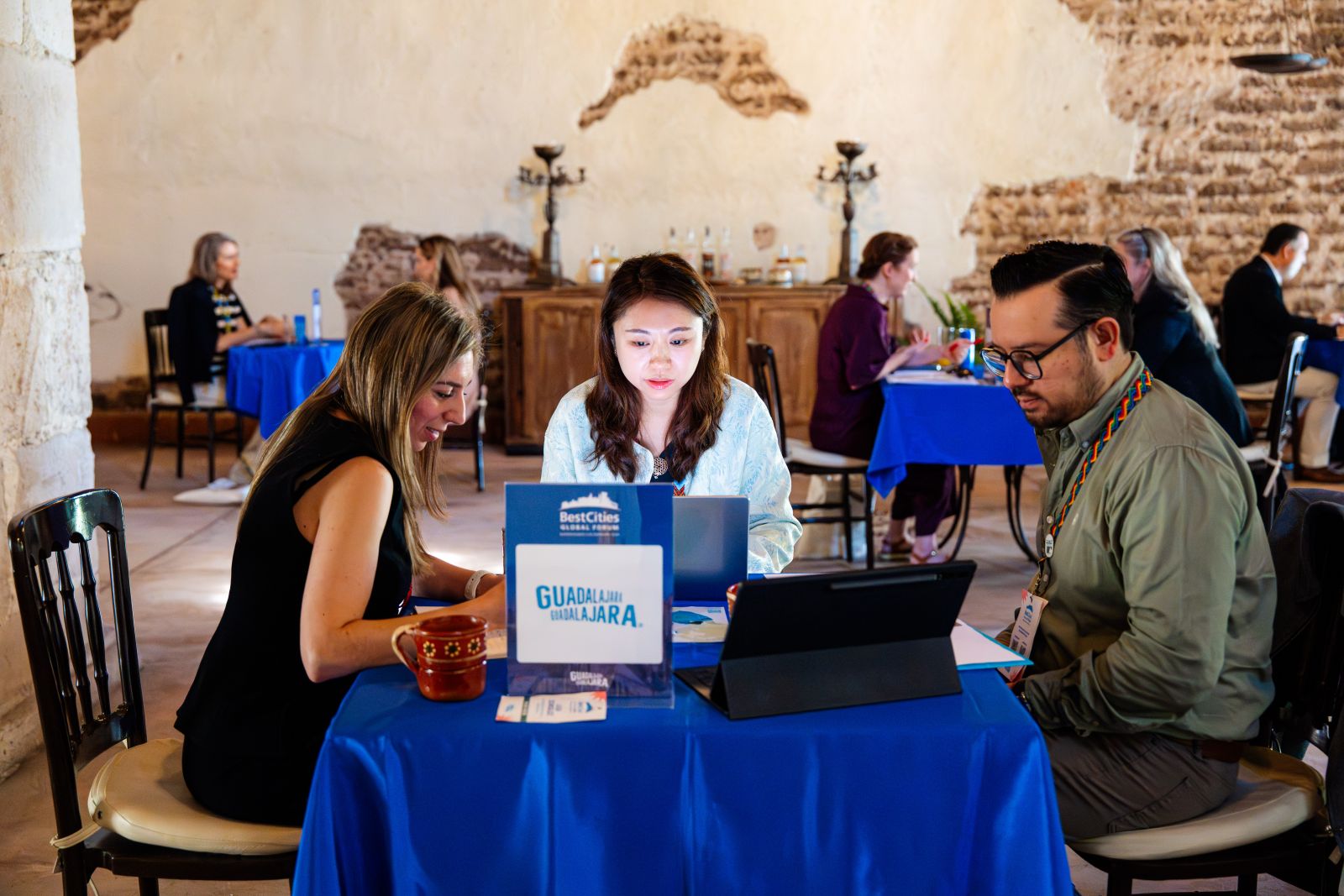
It’s always difficult to look too far ahead, because so much can change. But if we focus on the near future, I would say that the current format is working well. We’ve received extensive feedback from our Strategic Thinkers group, and of course we conduct detailed post-event surveys to understand what resonated and what could be improved. That evaluation process is ongoing and very intentional. One principle that will not change is the importance of giving each host city space to imprint its own personality on the Forum. We work very closely with each destination to understand what they want to showcase and how they want to tell their story. Over time, we’ve developed a formula that allows participants to experience a real sense of place — even within a short, business-focused programme.
Guadalajara is a good example. Participants experienced multiple venues, different parts of the city, and a balance between learning and immersion. That feeling of community and authenticity is something we consider essential. One of my favourite moments this year was the “Mi Casa Su Casa” evening at the Visit Guadalajara offices. During my site visit in June, I walked into that building and immediately felt its warmth and character. I suggested we host a gathering there because it felt like being invited into someone’s home. That kind of intimate, human connection creates a special energy — and I don’t see that disappearing. In terms of structure, the size of the Forum is also deliberate. The intimacy works. People value the connection and the ability to engage meaningfully, so I don’t foresee major changes in scale. The rotation of host cities is already mapped out for the next 13 years, agreed by the board, and while we have processes in place should adjustments be needed, the framework itself is stable.
That said, educational and networking formats are always evolving. We are committed to avoiding passive, lecture-style programming. Interaction is key — participants should never feel they are simply being “talked at” for two or three days. We remain open to new ideas and formats, even if we don’t yet know exactly what those will look like. We will continue to draw insights from post-event feedback, as well as from pre-event surveys that ask associations what they hope to gain from attending.
One initiative introduced this year that we intend to continue is the alumni programme. I believe it’s incredibly important, as it allows individuals who might not typically attend these types of events — and organisations beyond the most senior representative — to participate, gain insight and bring that knowledge back to their teams. It strengthens the relationship not just with one individual, but with the organisation as a whole. And that, in the long term, reinforces the depth and resilience of our network.
I wouldn’t necessarily describe it as a threat — but there’s no question that associations are operating in a very challenging environment. They are navigating geopolitical uncertainty, economic pressure, tighter sponsorship markets and increasing scrutiny around membership engagement. In many cases, resources are being squeezed from multiple directions. So rather than feeling threatened, we feel the responsibility to listen more carefully than ever. What do associations truly need from us? How can we serve organisations that are under pressure, with limited time and budgets, in a way that genuinely justifies their engagement with us?
For me, it comes down to constantly reassessing and refining our value proposition. We know the value associations bring to destinations — that part is clear. The more difficult question is: what value do we bring to them? And that must be articulated clearly and convincingly. Associations need to understand not only why they are attending, but how their participation will tangibly benefit their organisation, their members and their strategic goals. That clarity of purpose — and delivering on it — is one of the hardest but most essential parts of our role.
.jpg)
Published by Meeting Media Company, the publisher of Headquarters Magazine (HQ) – a leading international publication based in Brussels, serving the global MICE industry and association community.
Since its founding in 1992, Meeting Media Group, publisher of Headquarters Magazine (HQ), has been a trusted guide and voice for associations and the global MICE (Meetings, Incentives, Conferences, and Exhibitions) industry.