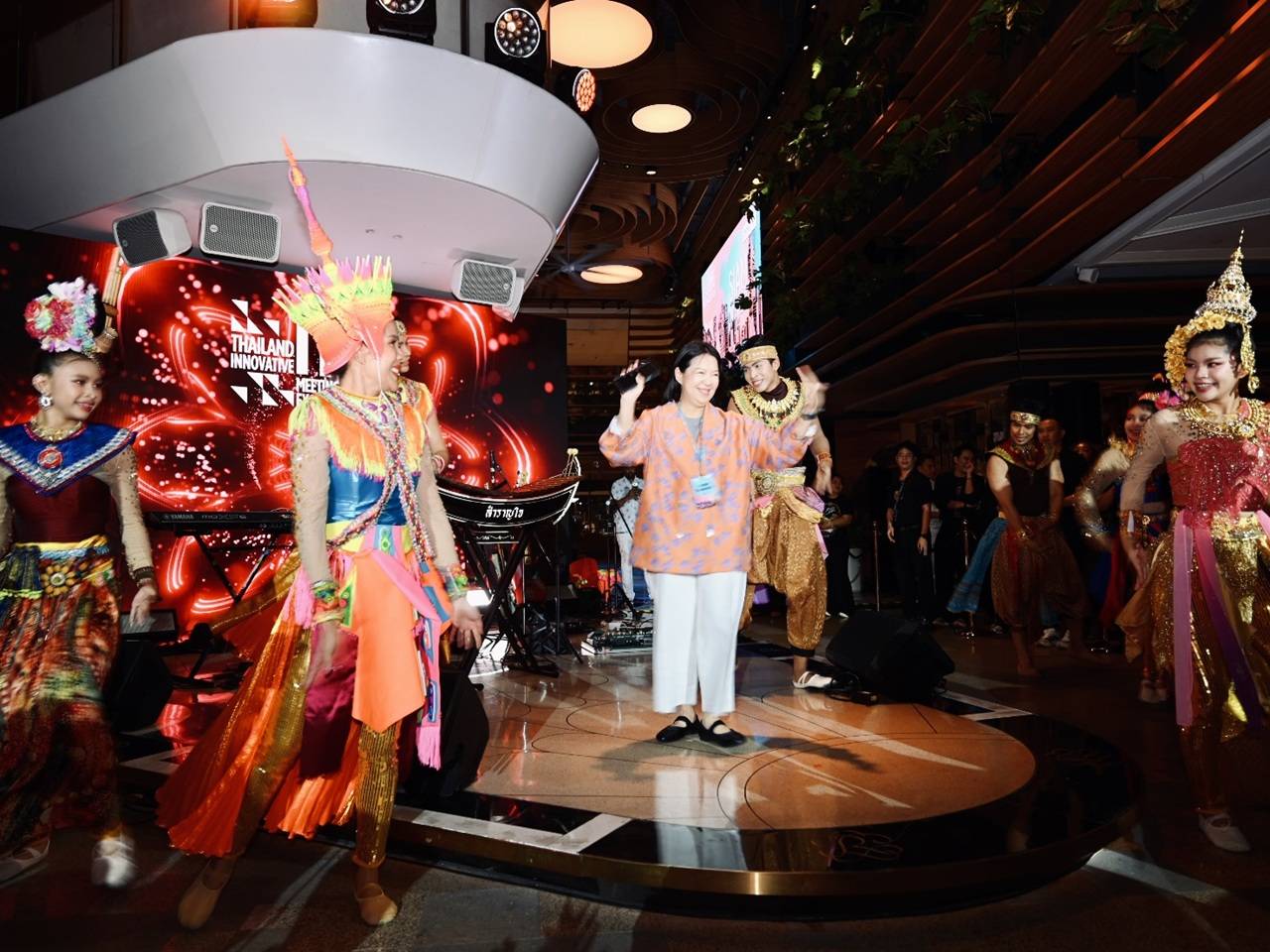
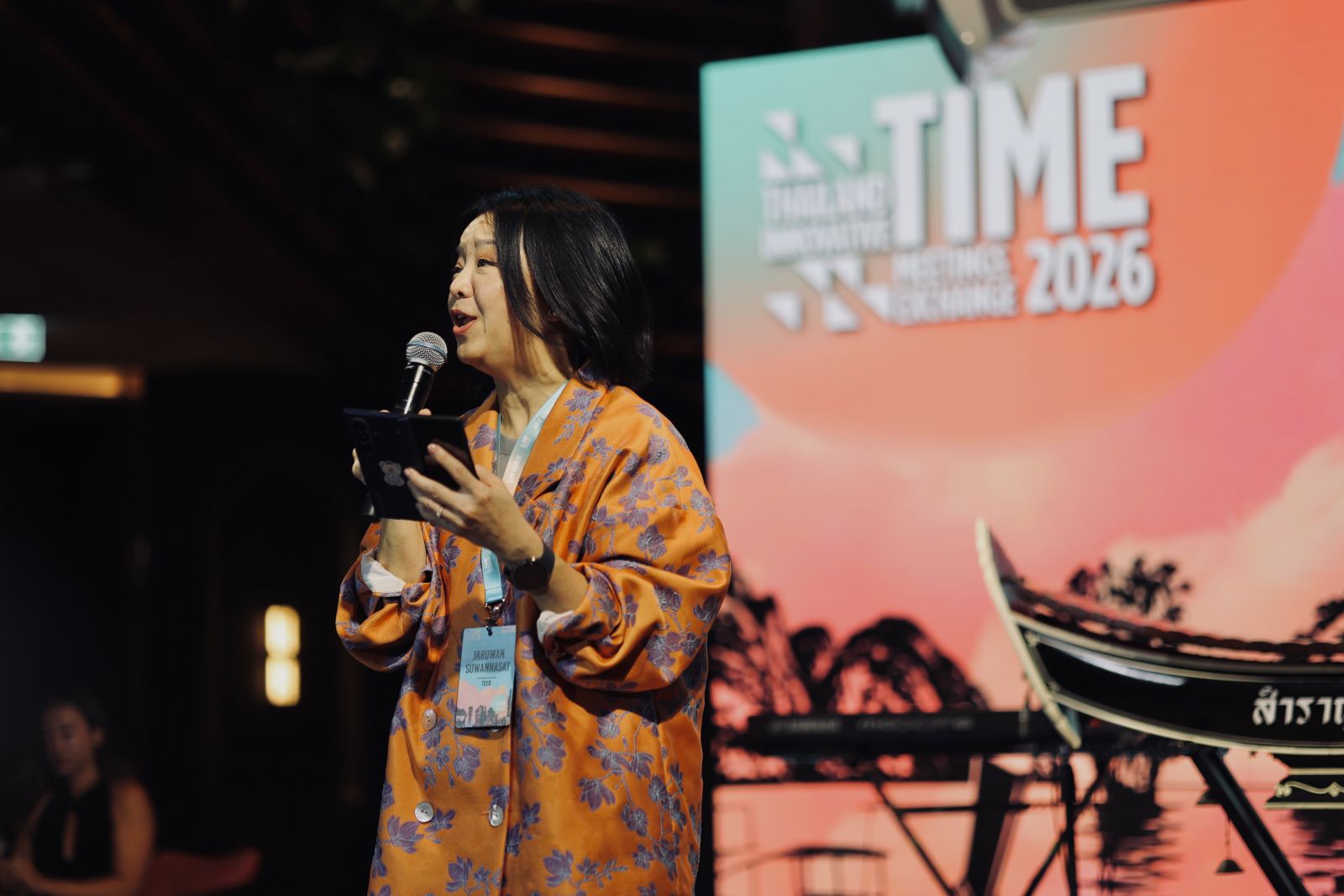
Thailand Innovative Meetings Exchange (TIME 2026) brought more than 110 international hosted buyers, media and content creators to Bangkok and Khao Lak, giving participants a view of two different MICE environments, from the capital’s urban business setting to a resort destination in southern Thailand. Dr Jaruwan Suwannasat, Senior Vice President (International Marketing and Partnerships) at the Thailand Convention and Exhibition Bureau (TCEB), where she is responsible for international marketing and partnerships, spoke to HQ about the meetings economy, local expertise, sustainability and the role of business events in Thailand’s wider economic strategy.
Author: Jesús Guerrero Chacón, HQ’s Deputy Editor
We are looking increasingly at what we call the meetings economy. A meeting brings people together to exchange ideas, and the experience surrounding that exchange should give them something distinctive to remember. Every country can provide meeting rooms, incentives, conventions and exhibitions. The question is how someone attends an event and goes home remembering they were in Thailand, whether in Bangkok, Khao Lak or another destination.
That is why we work with destinations to understand their character and local assets. Different parts of Thailand offer different experiences, and we do not want to provide a one-size-fits-all product. When we receive an RFP, we look at the purpose of the event and how the destination can meet those needs. For a site inspection, for example, we may shortlist several venues for the planner to assess.
We also use tools such as social listening to understand what business travellers from different markets are looking for. We want the product and experience to fit the business purpose. For a convention, that may mean knowledge exchange and networking. For an exhibition, it may be trade and investment within a particular sector.
I would divide it into three elements. The first is the destination itself. We work with cities and regions to identify their local assets and connect them with the focus of an event. If a destination is strong in agriculture, for example, a related conference can incorporate visits to farms, production facilities or other parts of the industry’s supply chain.
The second is experience, and much of that comes from people. Service and hospitality are important, as is the ability to adapt and solve problems.
A good example is Buriram and MotoGP 2027. A major international event can put pressure on accommodation and infrastructure in a smaller destination. Working with neighbouring cities can provide additional capacity while spreading the economic benefits more widely.
Communities also need to understand an event’s purpose and potential benefits. Large events can affect traffic, noise and the environment, so involving local people is important.
The third element is the industry behind MICE. Events can add another economic dimension through investment, innovation and international networks, creating opportunities for Thai businesses and local people to meet counterparts from around the world.
We collaborate with other government organisations that are already developing those sectors.
One example is the Creative Economy Agency (CEA), which works with cities and local clusters in fields including culture, gastronomy, design, arts and crafts. Another is the National Innovation Agency (NIA), which connects research and innovation with products and services in each city cluster. This helps amplify city DNA and creates unique experiences the destination can deliver to delegates. [Editor’s note: TCEB works with agencies including CEA and National Innovation Agency to connect business events with Thailand’s creative and innovation sectors.]
Our role is to find the connections between those strengths and MICE. Money20/20 is a good example. It brings together the region’s fintech and financial services sector, but the delegate experience can still include recognisably Thai elements. Something as simple as serving fresh fruit from a traditional fruit cart brings local character into an international business event without distracting from its commercial purpose.
That is the balance we are looking for. People come primarily to do business, exchange knowledge or build networks. The destination experience should complement that.
TCEB launched MaxiMICE Thailand at IMEX Frankfurt in May 2026 as a national framework built around three pillars: convenience, experience and impact. How do those ideas translate into what organisers and delegates experience on the ground?
For convenience, we look at how people can access the destination and how easy it is for them to organise their event. That includes connectivity, venues and the support available to organisers.
Experience is about understanding what Thailand and each destination can offer. We want to tailor that experience according to the event and the people attending it.
Impact is also very important because we need to look at the results. For an exhibition, that could be trade and investment. For a convention, it could be knowledge exchange or connections between people. Sustainability is also part of that impact.
When we work with destinations, we also need to ensure that planners can identify facilities that meet their requirements.
That is why TCEB developed the Thailand MICE Venue Standard (TMVS), which gives planners a framework for assessing venues. It covers physical characteristics, technology, service quality and sustainable management, giving buyers greater confidence while helping suppliers improve their operations.
Sustainability has increasingly become a licence to operate for MICE events. Many international organisers now ask whether a destination has sustainable venues and event practices. We have been working on this with the supply side for many years.
Organisers can use tools to assess carbon reduction and decarbonisation measures at their events, with third-party auditing and verification available. TCEB can provide financial support towards those costs within certain limits. For international events with sustainability requirements, having those systems in place can strengthen Thailand’s proposition.
Meetings and incentives represent a significant part of the market, and Asia remains dominant, but Europe, North America and Australia offer further potential.
The government is increasingly interested in the value business travellers generate, as well as visitor numbers. That makes higher-spending long-haul markets particularly relevant.
In the UK, for example, major exhibition organisers already use Thailand as a regional base for events serving ASEAN markets, giving them access to a wider regional business audience.
Australia is also important for meetings and incentives. Distance is a consideration, but when the business case is strong, people will travel.
We see that with major international events. Participants come to meet their peers, understand developments in their industry and conduct business.
Yes. Thailand has traditionally been strongly associated with leisure and broadening that perception takes time. One of the ways we are doing that is by selling the industry rather than simply selling the destination.
If someone works in energy, for example, the reason to come may be Gastech, a major international energy industry event. In financial technology, it could be Money20/20 Asia. The business reason comes first, with Bangkok or Thailand adding another layer to the experience.
Major international events also build confidence among organisers. The events industry is very connected, and organisers talk to one another. Successfully delivering one major event can influence others considering the destination. Thailand’s hosting of the 2026 Annual Meetings of the International Monetary Fund and the World Bank Group is another example of the scale of international gatherings coming to Bangkok.
The objective of MICE is ultimately business, with the destination experience making the event more distinctive.
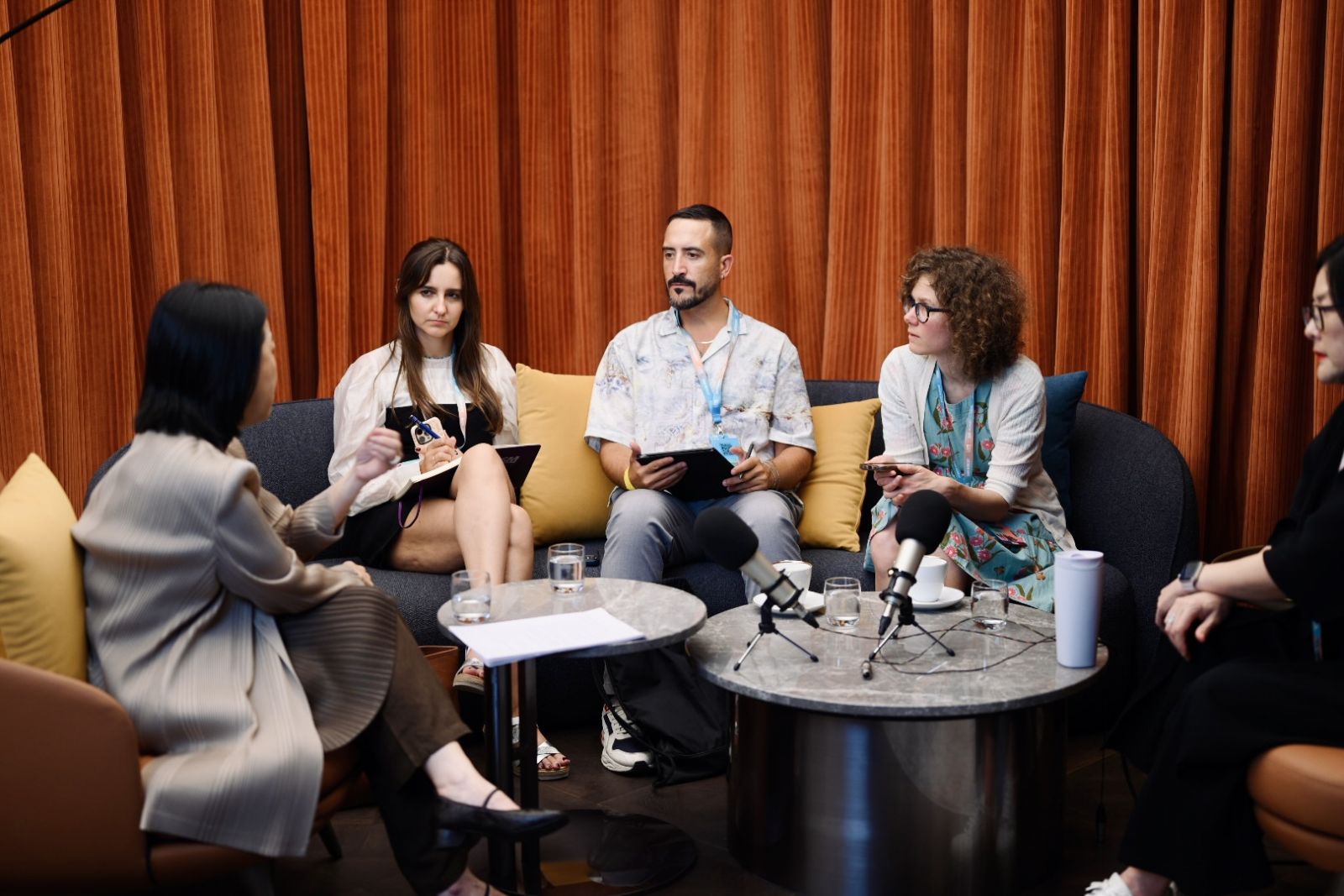
We look at both the immediate outcomes and the longer-term business potential. At the TIME Business Exchange in Bangkok, for example, Thai suppliers met international MICE agencies to explore opportunities, and we follow up to understand whether those connections develop into genuine business leads and future events in Thailand.
As a government organisation, it is important for us to demonstrate not only how many meetings we facilitate, but also the value and business opportunities those connections can create for Thailand.
We apply the same principle in Khao Lak, working with local suppliers and stakeholders to build stronger connections with the international market. Ultimately, success is not measured by the number of meetings alone, but by whether those meetings create a meaningful pipeline of business and contribute to the long-term competitiveness of the destination.
IBTM Asia Pacific gives us another platform to connect Thailand with the wider regional market.
The focus will primarily be on Asia-Pacific buyers, while maintaining some long-haul participation to create an international mix. We also want to reach buyers we are not currently reaching.
Another important element is inclusiveness. We are working with other government organisations that support SMEs because we want international business events to create opportunities for businesses of different sizes. Not every buyer is looking for a large supplier; some are looking for specialist, niche or more personalised products and experiences. We want qualified SMEs to have the opportunity to participate alongside larger companies and connect directly with international buyers.
IBTM Asia Pacific will make its Asia-Pacific debut at the Bangkok International Trade and Exhibition Centre (BITEC) on 9 and 10 June 2027, with TCEB as Official Host Destination Partner. The event offers a practical test of the strategy Suwannasat outlined during TIME 2026, connecting international buyers with Thai industries and suppliers, including smaller businesses seeking access to new markets. It also brings her idea of “selling the industry” into focus: the event creates the business reason to travel, while Thailand’s destinations, local expertise and experiences shape what that exchange can deliver.
Explore more from TIME 2026
- Discover Bangkok’s Moment of Pulse: HQ’s picks for meeting hotels, venues and experiences in Thailand’s capital.
- Continue to Khao Lak: Discover HQ’s hotel, venue, wellness and experience picks from TIME 2026’s Moment of Calm.
- Coming in HQ127, November 2026: our print feature looks deeper into the TIME 2026 Knowledge and Business Exchanges, TCEB’s wider strategy and the role business events can play in Thailand’s destinations and communities. Read the online version here.
Powered by Meeting Media Company, publisher of Headquarters Magazine (HQ) – a leading international publication based in Brussels, serving the global MICE industry and association community.
Since its founding in 1992, Meeting Media Group, publisher of Headquarters Magazine (HQ), has been a trusted guide and voice for associations and the global MICE (Meetings, Incentives, Conferences, and Exhibitions) industry.