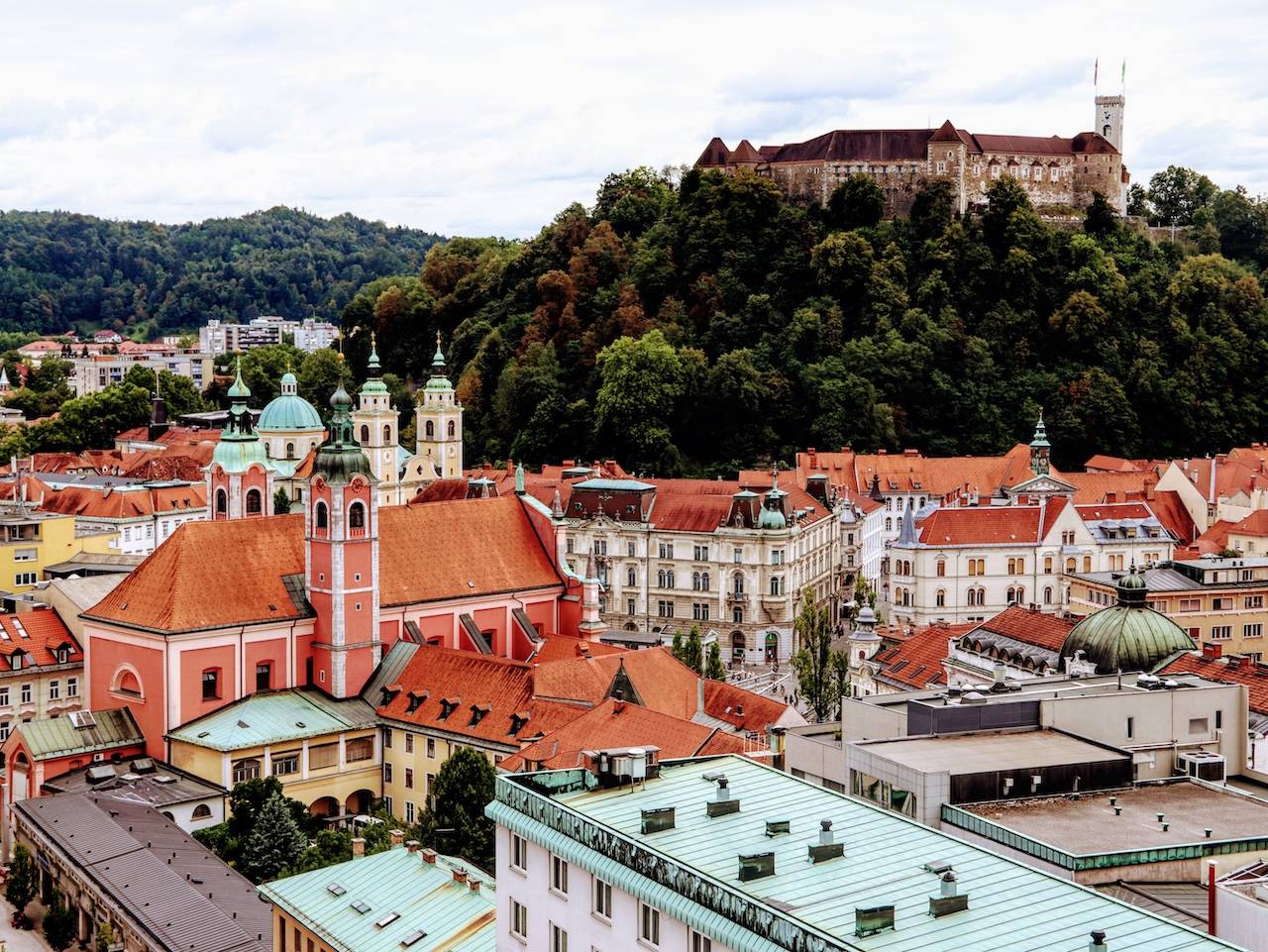
Ljubljana has been shortlisted for the inaugural European Capital of Tourism 2027 title, placing the Slovenian capital among eight cities competing in the category for destinations with more than 100,000 inhabitants. The shortlist follows an independent expert assessment by the European Commission, with the final candidates due to present their proposals to a European jury in Brussels on 18 and 19 November.
The 2027 initiative brings together, for the first time, the European Capital of Smart Tourism and European Green Pioneer of Smart Tourism competitions under a single European Capital of Tourism title. Applications were assessed against practices in sustainability, accessibility and digitalisation, alongside support for cultural heritage, creativity and local talent. Ljubljana was selected from 43 applications submitted by cities in 18 countries in the larger-city category.
For Ljubljana, the application centres on a destination-management model that combines sustainability with the use of data, community engagement, accessibility and measures designed to distribute tourism more evenly across both the calendar and the city.
One of its most developed digital tools is Ljubljana FLOWS, a destination-management platform that brings together data on tourist arrivals and overnight stays, accommodation occupancy, visitor profiles and visits to the Tourist Information Centre. Since 2026, the platform has also incorporated AI-powered predictive modelling of tourist flows.
The model combines daily tourism data with information on business events taking place in Ljubljana, as well as public holidays and other non-working days in the city's key tourism markets. The objective is to give the destination a more detailed picture of visitor movements, supporting planning and allowing measures to be introduced in response to changing flows.
Sustainability is presented not as a standalone tourism programme but as part of the city's wider management approach. Ljubljana's initiatives include a zero-waste strategy in hotels, a deposit-return system for reusable cups at major events and the long-running For a More Beautiful Ljubljana environmental campaign. The campaign involves all of the city's district communities and culminates annually with the cleaning of the Ljubljanica River. Other measures highlighted in the application include greener bus stops and the city's established urban beekeeping activity.
Accessibility has also been approached through direct assessment of the visitor offer. In 2022, Ljubljana Tourism partnered with the Brez ovir Institute to assess more than 450 tourism providers across Ljubljana and the Central Slovenia region. The assessment considered accessibility for people with reduced mobility, blind and partially sighted visitors, and deaf and hard-of-hearing people. The resulting information was made available online, while participating providers received recommendations for improvement. In 2026, the assessment was extended to Ljubljana's Unique Experiences, including creative handicraft workshops and contemporary creative experiences.
Managing where and when visitors arrive is another strand of Ljubljana's approach. LUV Fest, held from 8 February to 12 March during a traditionally quieter period, combines cultural, artistic and creative activities involving the city, residents and visitors. Meanwhile, Ljubljana's Cultural Quarters aim to strengthen cultural activity in different parts of the city and encourage visitors to explore beyond the immediate centre.
The approach is consistent with Ljubljana Tourism's wider 2021–2027 strategy, which identifies diversification beyond the city centre, improved accessibility and sustainable mobility among its priorities. The strategy also identifies the meetings industry as a key development driver for the destination, alongside city breaks, with plans for additional conference and hotel capacity.
Ljubljana will now compete with Aalborg, Braga, Genoa, Konya, Lviv, Salzburg and Sofia in the category for cities with more than 100,000 inhabitants. A second category, for destinations with populations between 25,000 and 100,000, has also produced a shortlist of eight cities. The European Commission expanded both shortlists from four to eight following the assessment, citing the quality of the applications and ties between several destinations.
Representatives of all 16 shortlisted destinations will present their proposals to the European jury in Brussels on 18 and 19 November. Two destinations will subsequently be awarded the European Capital of Tourism 2027 title.
For Ljubljana, the candidacy puts a particular model of destination management under European scrutiny: one in which tourism growth, visitor-flow intelligence, accessibility, environmental measures, cultural activity and the involvement of local communities are treated as connected elements of the destination's development rather than separate initiatives.
Published by Meeting Media Company, the publisher of Headquarters Magazine (HQ) – a leading international publication based in Brussels, serving the global MICE industry and association community.
Since its founding in 1992, Meeting Media Group, publisher of Headquarters Magazine (HQ), has been a trusted guide and voice for associations and the global MICE (Meetings, Incentives, Conferences, and Exhibitions) industry.