International events increasingly operate across borders, regulatory environments, cultures, and stakeholder expectations. Success is therefore no longer defined by execution alone, but by the ability to support resilient, inclusive, compliant decision-making designed to endure.
At planitswiss, a Swiss global event designer and producer, as well as a member of IAPCO, governance is a living operational system that is continuously evolving through technology, ESG commitments, and cross-market intelligence. By combining Swiss governance standards with global operational reach, the organisation has developed models that allow innovation to scale without compromising consistency or accountability.
Author: Arthur Bontemps, Managing Director, Head of Global Operations, planitswiss Group. Article kindle provided by IAPCO
As international events operate across multiple regulatory frameworks and governance models, the limits of disconnected digital systems have become increasingly apparent. Registration, abstract management, accreditation, and reporting could not operate in silos if events were to remain responsive, engaging, compliant, transparent, and strategically valuable. In response to these challenges, planitswiss developed its integrated event management platform, AIO (All-in-One Events), in 2017.
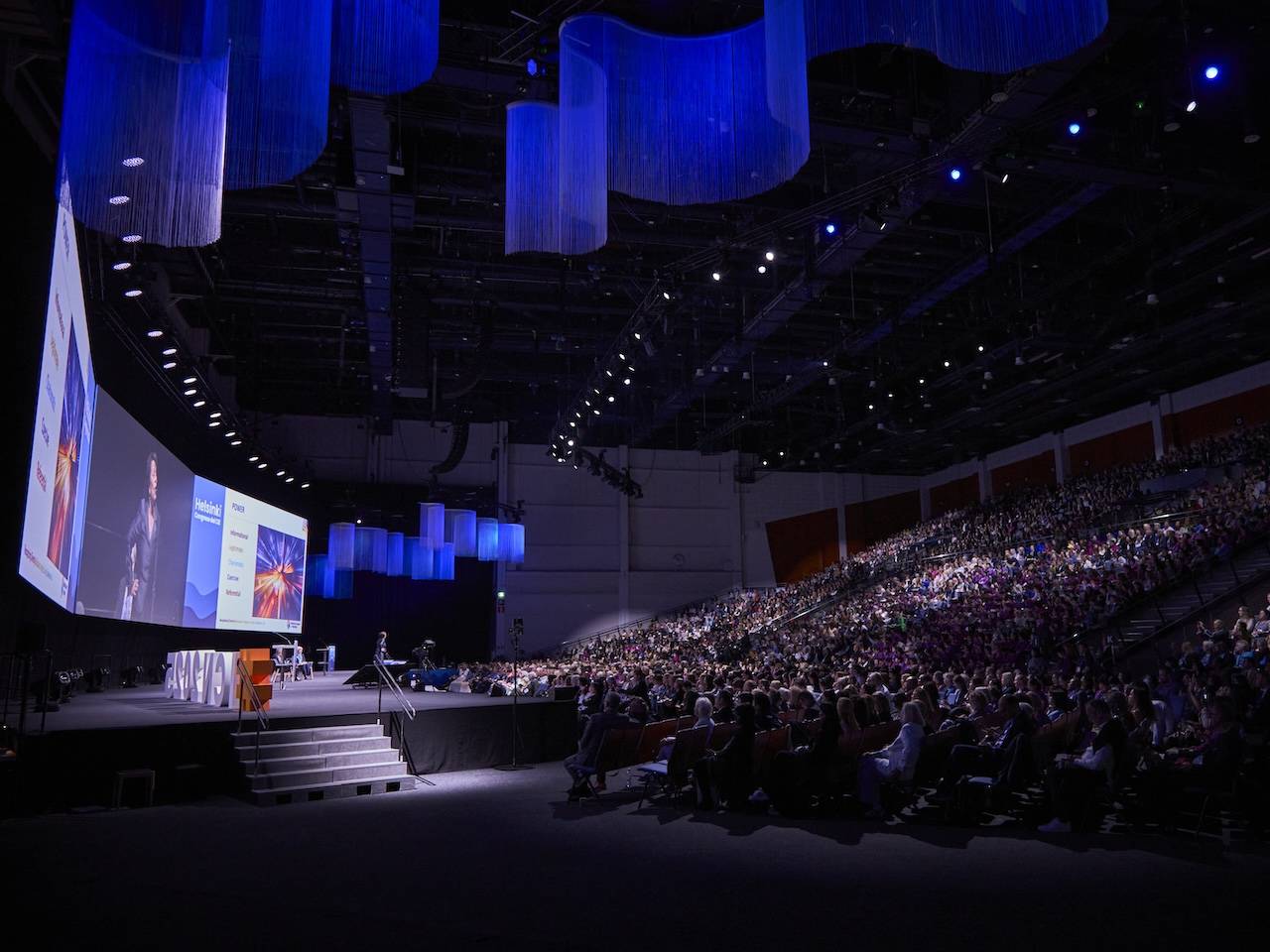
Designed to support large-scale association and institutional events, AIO integrates abstract submission and peer review, ticketing and participant accreditation, CME credit tracking through session check-in and check-out, and access control with real-time attendance analytics within a single digital environment. By consolidating these functions, AIO establishes a continuous governance loop in which participation is traceable, compliance auditable, and outcomes measurable. For associations managing congresses with thousands of delegates and stringent accreditation requirements, this digital backbone supports informed governance and decision-making.
For many global NGOs and international associations, governance no longer happens around a single table. Board members, committees and scientific councils are often spread across continents and time zones, yet decisions still demand rigour and procedural integrity. This reality has reshaped how governance meetings are designed and delivered.
To support this shift, planitswiss, with the support of imavox, its production and technology arm powering AIO, has developed solutions that enable governance bodies to meet, deliberate and decide effectively in hybrid and fully remote settings. Secure platforms ensure controlled access and confidentiality, while live interpretation and multilingual scripting allow participants to engage in their working language. Broadcast guidelines aligned with institutional and diplomatic standards further reinforce neutrality and procedural clarity, which is particularly critical for high-level institutional or intergovernmental meetings.
The result is governance continuity. Boards can meet more frequently, committees can respond faster to emerging issues, and decision-making remains inclusive without sacrificing structure or accountability. Hybrid governance becomes an enabler rather than a constraint.
Data also plays a central governance role. Collected before, during and after events, it replaces anecdotal feedback with evidence. Registration and abstract data help assess geographic reach, representation and thematic relevance, while real-time analytics reveal session engagement and content performance. Diversity and accessibility metrics further support measurable evaluation. Embedded into governance processes, this data enables transparent, informed decisions aligned with long-term organisational missions.
Environmental, Social, and Governance (ESG) principles are no longer peripheral. They are embedded early as structural decision criteria.
For large congresses, waste reduction cannot be improvised onsite. Governance frameworks define re-use policies for structures and signage, recycling streams aligned with local infrastructure, and supplier obligations covering materials, local production and sourcing.
Incorporating these requirements into contracts makes sustainability enforceable rather than aspirational.

The establishment of a production hub in Rwanda reflects a practical ESG commitment. Beyond logistics efficiency, the hub enables local production, upcycling, and reduced dependency on international freight.
As part of this approach, planitswiss has developed initiatives that transform event branding and backdrops into practical items such as school bags and laptop sleeves. Rather than treating materials as waste, they are repurposed into products with tangible social value.
Delivered in collaboration with DuHope, a social enterprise supporting vulnerable women through vocational training, the initiative links environmental responsibility with economic inclusion. Event materials gain a second life while contributing to long-term community benefit.
Inclusion and accessibility must be embedded into event governance from the very start, not added as corrective measures later. Globally significant events require deliberate design choices across content, venue, technology, and participant experience to ensure all attendees can engage meaningfully.
Accessibility extends beyond physical access to digital and cognitive participation. Live captioning, multilingual interpretation, AI-supported translation, and hybrid participation options enable broader engagement across geographies, abilities, and circumstances.
Programme design also reflects inclusion through speaker selection, session formats, and moderation that prioritise diversity and representation. At the Women Deliver Conference 2023, these principles were applied through accessible venues, inclusive programming, and hybrid delivery supporting participation across languages and abilities. Governance frameworks should capture these lessons to guide future editions and strengthen long-term equity and participation.

Delivering global summits, general meetings and multi-hub meetings requires coordination across time zones and markets. This is supported through clearly defined escalation paths, a dedicated help desk with time-zone-aware communication protocols, and centralised project governance combined with local execution authority. This structure enables timely decisions while maintaining accountability.
A core governance asset lies in transferring knowledge across markets. Insights from corporate, governmental, and NGO events are adapted across regions while maintaining consistent standards. The governance model remains consistent through central standards and methodologies, internal subject-matter expertise, and local adaptation to regulations, culture and infrastructure. This approach balances institutional trust with local realities.
One of the group’s defining strengths is its integrated ecosystem, combining planitswiss (strategic event management), imavox (production, AVL and broadcasting) and AIO (an integrated event management solution). This one-stop-shop approach reduces interface risk, strengthens compliance oversight and improves supplier accountability, while making governance, transparency and ESG alignment easier to enforce.
It also streamlines post-event improvement through structured debriefs, performance reviews and data-driven refinements. By contrast, changing suppliers annually often leads to lost knowledge and increased risk, while long-term partnerships preserve institutional memory and optimise value over time.
Ultimately, innovation in event governance is not about technology alone, but about how decisions are made, shared and sustained. By integrating digital platforms, ESG frameworks and cross-market expertise, governance becomes a driver of long-term impact. In global operations, the strongest events are built on decisions that endure beyond delivery, supporting collaboration long after the final session.
Powered by Meeting Media Company, publisher of Headquarters Magazine (HQ) – a leading international publication based in Brussels, serving the global MICE industry and association community.
Since its founding in 1992, Meeting Media Group, publisher of Headquarters Magazine (HQ), has been a trusted guide and voice for associations and the global MICE (Meetings, Incentives, Conferences, and Exhibitions) industry.