When it comes to celebrating the art behind the plate, The Best Chef Awards do not just serve accolades, they dish out a global feast of creativity, innovation, and humanity. From Dubai to Milan, this vibrant culinary network stirs together chefs, critics, and gastronomic visionaries, blending tradition with bold experimentation. With three knives instead of rankings, and a heart for social impact, the Awards cut through the ordinary to honour the people who make food matter.
Since their inception in 2015, The Best Chef Awards have established themselves as far more than a prize-giving ceremony: they are a global platform celebrating the artists behind the food. Co-founded by Polish neuroscientist Joanna Slusarczyk (PhD) and Italian gastronomist Cristian Gadau, the project aims to recognise creativity, innovation, and leadership in gastronomy. Beyond rankings and distinctions, The Best Chef brings together a vibrant community where chefs, critics, and hospitality professionals exchange ideas, challenge conventions, and inspire the next generation of culinary talent. As Joanna explains, the platform is “a point of reference for all lovers of gastronomy, a place to exchange knowledge and experience, and a forum to debate universal topics within our world.”
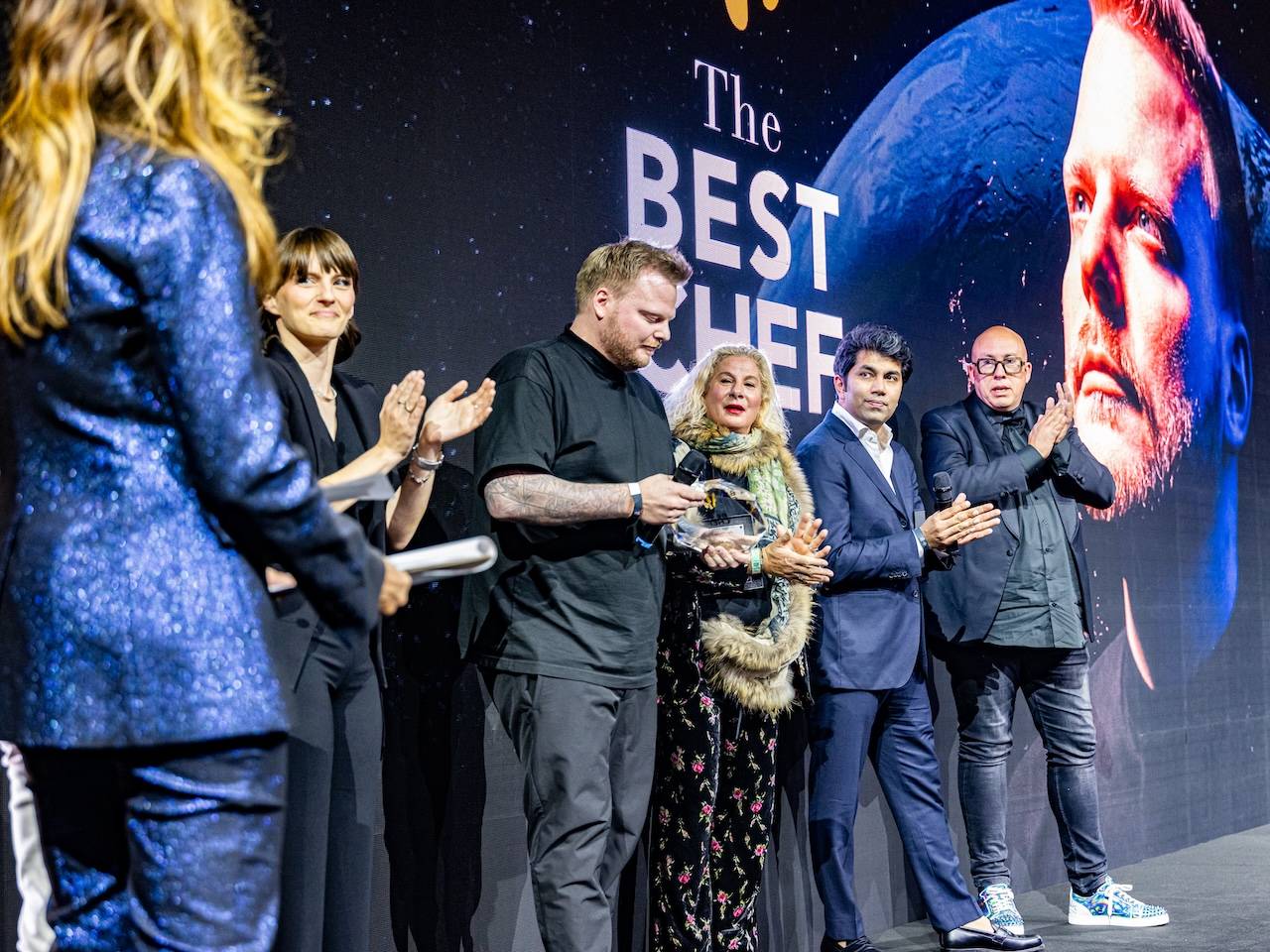
After a journey through the flavours of the Middle East in Dubai, the ninth edition of The Best Chef Awards returned in October 2025 with a dramatic and inspiring setting, combining Italian tradition with global innovation. The 2025 chapter in Milan embodied this principle, standing as a manifesto to honour culinary legacies, explore new frontiers, and foster a future rooted in flavour, tradition, and transformation. The Best Chef Awards connect past, present, and future, bringing together established icons and emerging voices to create a truly global dialogue around gastronomy. The city’s celebrated gastronomic landscape – from acclaimed chefs such as Diego Rossi, Matias Perdomo and Davide Oldani to historic institutions like Peck, Marchesi 1824 and Camparino – perfectly embodied the balance between creativity, flavour, and evolution.
The programme began in Franciacorta, a prestigious wine region, with a series of talks connecting chefs with local producers and regional narratives. This was followed by the flagship event, the Awards Gala at Studio 90, a revitalised former aeroplane factory whose industrial charm reflected the forward-thinking yet authentic philosophy of The Best Chef. As Slusarczyk reflected: “Milan is more than a city. It embodies everything we stand for: tradition, creativity and a commitment to excellence. Recipes become stories, and stories become movements.”
Alongside the main awards, the team also ran The Best Pizza Awards four months earlier, highlighting culinary mastery in a dedicated event that gathers more than 500 international guests and over 300 renowned pizzaiolos. Visionaries such as Francesco Martucci, Franco Pepe and Gabriele Bonci were recognised, while special awards celebrated innovation, artistry, and social impact in pizza-making. As Gadau observed: “To witness the passion, dedication, and artistry of so many talented pizzaiolos gathered together has been profoundly inspiring.” This expansion illustrates the breadth of The Best Chef project, extending its principles of creativity, integrity, and community across different culinary spheres.
At the heart of The Best Chef Awards lies the vision of its founders. Reflecting on the origins of the project, Joanna spoke of Cristian’s “teenage failed dream”, which collided with both his rebellious nature and the almost military discipline of the chef profession. What began as a personal ambition to become one of the world’s greatest chefs ultimately evolved into a commitment to honouring the people behind the food. “Cristian realised that most industry accreditations focus on restaurants, not on the chefs themselves, and he wanted to create something that celebrated the people behind the food.”
The community created by The Best Chef Awards seeks to shine a light on local ecosystems, which are often threatened by a corporate food system driven by profit and capable of destroying everything in its path. Speaking about the role of this community, Joanna emphasises: “We are convinced that our ambition is to be remembered as a project that defends and preserves the true values of our food culture.” This statement underlines the Awards’ mission: not just to celebrate culinary skill, but to champion ethical leadership and cultural preservation.
The Best Chef Awards bring together a global network of independent experts – including chefs, journalists, and food critics – to show the true independence and credibility of the awards’ label. “Chefs are evaluated on their food and all aspects of their work, including creativity, leadership, impact, ethics and sustainability. New talent is discovered naturally in our community by listening to what happens in kitchens, not just at dining tables,” she says. In turn, the three-knife system displays different levels of recognition instead of rigid rankings. The message is simple: “a significant shift towards greater transparency and fairness in the culinary world. Our update to the voting and ranking system follows a new approach to international chef accreditation.” In this way, the organisation moves away from numerical rankings in favour of a more inclusive, ethical, and representative assessment of culinary talent, based on qualitative attributes.
The Milan edition also debuted a new special honour: the Best of Humanity Award, which was presented to the chefs of World Central Kitchen, founded by José Andrés, in recognition of their extraordinary humanitarian work. Since 2010, the organisation has served more than 500 million fresh meals in some of the most urgent crises of our time, from Ukraine, Gaza, to Pakistan. The award reflects The Best Chef’s commitment to social responsibility and solidarity with chefs on the frontlines worldwide. As Slusarczyk emphasises: “We honoured the resilience and dedication of chefs who provide food relief, celebrating their commitment to feeding communities in challenging circumstances. Today, it is not enough to cook well; to be the best, a chef needs to show social, environmental, and ethical responsibility.”
As is often the case with pioneering projects, the greatest challenge for The Best Chef was the widespread doubt and scepticism of their peers, which left Cristian and Joanna practically alone in this endeavour. As he recalls, “Although Joanna quickly joined me, I still remember how people initially thought we were crazy. We had a clear vision of what we wanted to achieve from the start, we never doubted ourselves, and I believe this unwavering confidence has been and continues to be our strength during the most challenging moments.” This early determination, rooted in a shared passion and a refusal to compromise on their vision, laid the foundation for what has become a globally respected platform celebrating culinary talent.
Joanna highlights the platform’s ambition to reach those outside the spotlight, describing Food Meets Science Development 2.0 as the next step in expanding its educational and cultural impact. “Next steps are to become more global and reach talents who are away from the spotlight and the awards' glam and glitz. We want to be heard and seen all year long, not just once a year during celebration, whether talking about food issues or discovering forgotten villages in Siberia.”
Looking ahead, the Awards aim to leave a lasting legacy in host cities, fostering cultural and gastronomic development beyond the gala itself. This year’s edition will follow in that spirit: “It is time to break down barriers and unite all key elements under a single city sky. We don’t want the event to last 48 hours and be forgotten; we want to leave a legacy.” As Joanna concludes, “The era of self-celebration is behind us, and the focus has shifted back to viewing food as a way to share within the community.”
Powered by Meeting Media Company, publisher of Headquarters Magazine (HQ) – a leading international publication based in Brussels, serving the global MICE industry and association community.
Since its founding in 1992, Meeting Media Group, publisher of Headquarters Magazine (HQ), has been a trusted guide and voice for associations and the global MICE (Meetings, Incentives, Conferences, and Exhibitions) industry.