In this opinion piece, Sven Bossu, CEO of AIPC, makes the case for scenario planning as a practical way to move beyond prediction and build strategic foresight. Drawing on the realities facing venue leaders, he outlines an eight-step approach to identifying critical uncertainties, developing alternative futures and turning them into actionable decisions.
Predicting the future is always a bit of an art. In times of uncertainty, it is even more difficult. Next to the “classics” (SWOT, SMART business goals, etc.), something else might be needed: scenario planning, which is less hard than it seems and an excellent approach to be more future ready.
It is one of those statements you read in International Monetary Fund reports, articles in Foreign Affairs and even in the weekend edition of my local newspaper: we are living in a new reality and we are not really sure which way it is going. And sure enough, the level of unpredictability is indeed a lot higher than ten years ago. But this is nothing new. In 1977, John Kenneth Galbraith (a Harvard economist) already published a book called The Age of Uncertainty. What is different this time, I believe, is both the speed and the number of societal aspects being hit by a very high level of change.
That makes planning (something every organisation needs) slightly more difficult. Just imagine you are the CEO of a convention centre. You are confronted, like many CEOs from other industries, with inflation, raising interest rates, disrupted supply chains, difficulties in finding the right talent (and difficulties in defining what the “right” talent would look like), changing customer behaviour, etc. On top of that, there seems to be a new surprise every day, most of which are not under control of the CEO. So, how do you plan?
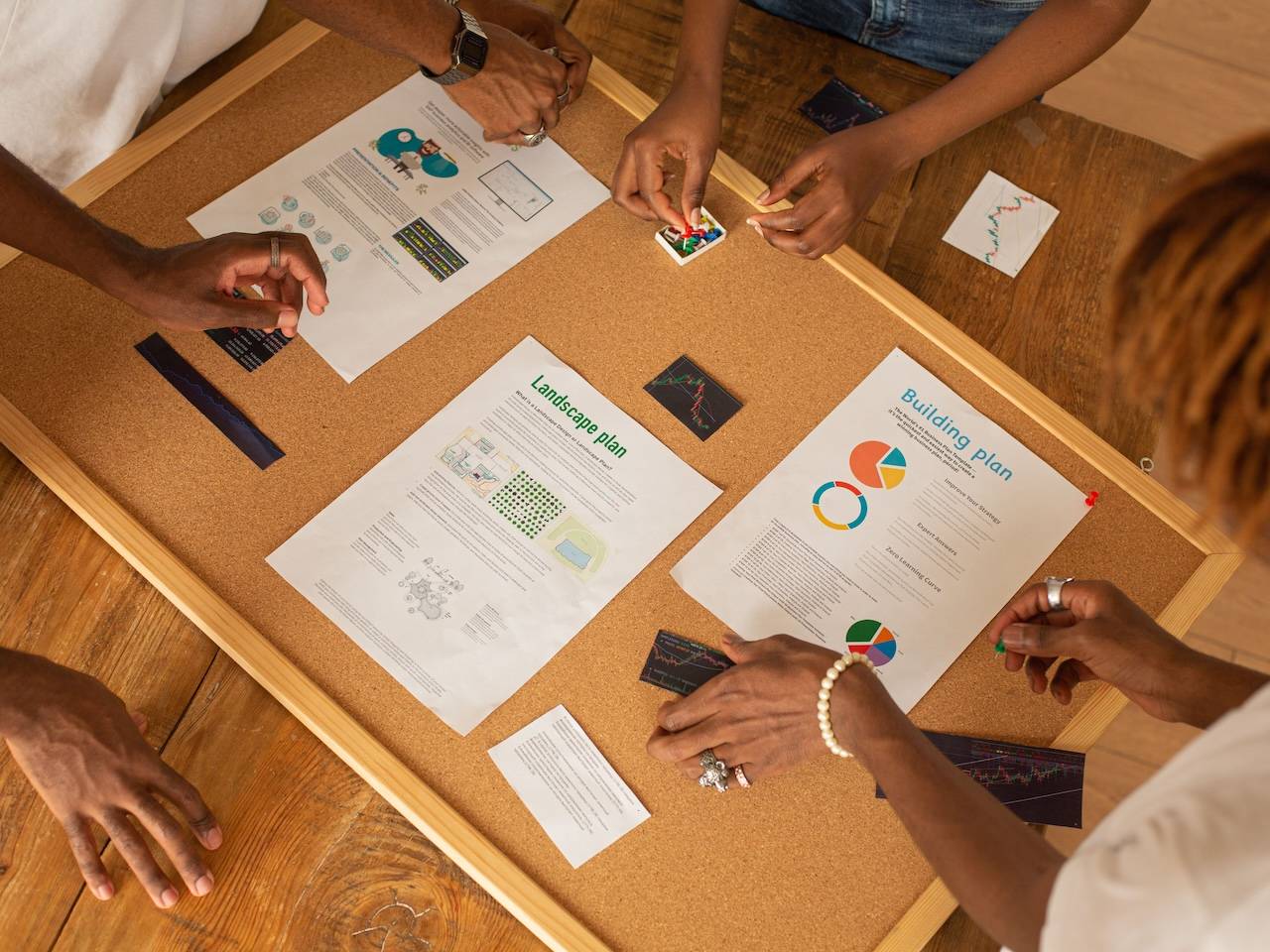
This is where scenario planning kicks in. It is about coming to terms with the facts that in these times, there are various possible futures and they indeed might depend on things outside our control. The World Economic Forum published a great report in February 2025 on why scenario planning helps us to move from prediction to foresight. But how do you go about scenario-planning in practical terms when you are the CEO of a convention centre? Well, the first thing is to book a one-day meeting with your senior management team, during which you will ask them to stack their cell phones on a table (the first one removing their phone buys dinner, drinks included.) Then you take the team through eight steps.
The first thing to do is define the focus question. What will drive demand for our convention centre in the next three to seven years? How should we adapt our product? What type of business should we be aiming for? Just as an example: HUNGEXPO in Budapest has a thriving movie business next to classic event business. Once the focus question is defined, we need to figure out what are the key drivers. Or put differently: what can change? And that could be anything, from new competition to technology and all the other challenges mentioned above.
The third step (not easy) is to pick two critical uncertainties; meaning they have both high impact and high uncertainty. For a convention centre those could be demand (high vs low), and event type (traditional vs experience-driven and multi-use). This third step is critical, because it will provide you with the axes, on which you will construct a 2x2 matrix.
After this, you build four scenarios, using the matrix. For example, a scenario could be: high demand plus traditional events. In this scenario, you need to focus on scale and logistics and invest in capacity. Another scenario could be: high demand plus experience-first. In that case, you are looking at clients wanting a “wow” moment, meaning that you need to invest in flexible space, staging, premium food services, etc.
Once the scenarios are built, you need to define “what to do” in each scenario. What are the key actions? And with a little bit of luck you will identify “no-regret moves,” actions which need to be taken in every scenario. Increased space flexibility could be one. Improving sales intelligence could be another.
Step seven (almost there) is to create traffic lights. Not a single one of the 4 scenarios will become 100% reality, but you need to have indicators to move right or left or straight ahead. Here you need to find indicators which make your scenario real. Average lead time, corporate travel policies, travel costs all of these could be traffic lights. Finally, you need to create a decision roadmap, because if the traffic lights indicate a certain direction, action needs to be taken.
Is all of the above easy? Of course not. But it is possible to go through these steps in one day, given that everyone is engaged and focused. And that will, indeed, enable your organisation to make a significant shift from forecasting to strategic vision.
Powered by Meeting Media Company, publisher of Headquarters Magazine (HQ) – a leading international publication based in Brussels, serving the global MICE industry and association community.

Since its founding in 1992, Meeting Media Group, publisher of Headquarters Magazine (HQ), has been a trusted guide and voice for associations and the global MICE (Meetings, Incentives, Conferences, and Exhibitions) industry.