The global business events industry has no shortage of ambition when it comes to sustainability. Organisations across the sector are committing to reducing environmental impact and creating positive social and economic value.
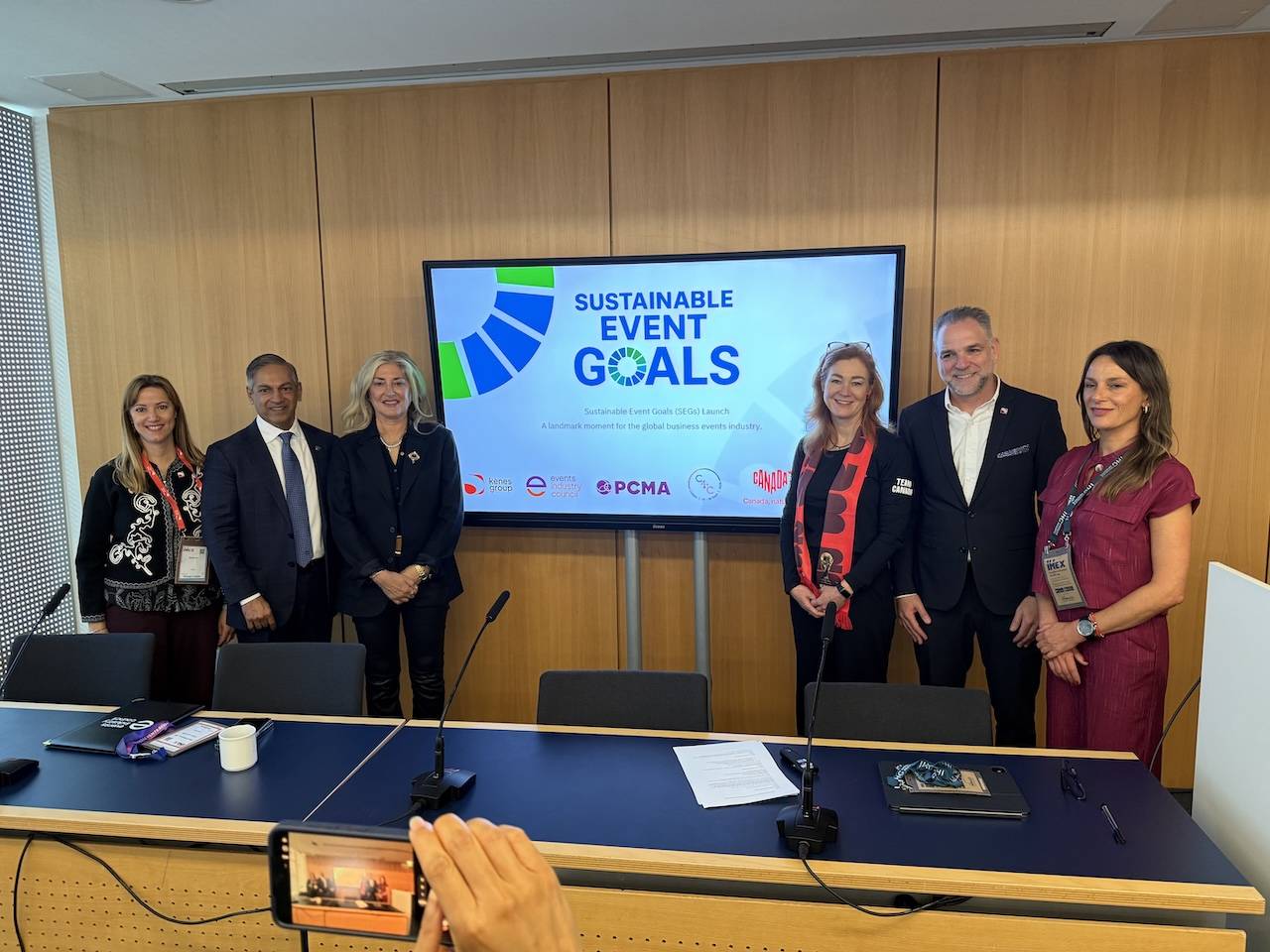
What the industry has needed is a shared way to translate sustainability goals into practical decisions across the event lifecycle. That is where the Sustainable Event Goals (SEGs) come in. Launched at IMEX Frankfurt 2026, the SEGs provide a practical, industry-aligned framework designed to help organisers, suppliers, destinations and partners embed sustainability into everyday event decisions.
The SEGs are 13 interlinked goals designed to minimise negative environmental and social impacts while promoting positive economic outcomes. They translate the UN Sustainable Development Goals into clear, event-specific guidance for the business events ecosystem.
They are not a certification or a replacement for existing frameworks. Instead, they act as a shared language and practical tool that complements existing standards and can be integrated into current sustainability strategies without duplication.
For an industry operating across diverse markets and stakeholder expectations, this common structure provides clarity and direction where it is most needed.
The framework responds to a clear challenge across the industry. While sustainability commitments are growing, alignment and execution remain inconsistent.
Sustainability is still often treated as an additional consideration rather than a core part of planning. The SEGs aim to change that by supporting decisions where impact is defined, including travel and logistics, venue selection, food and beverage, supplier engagement and community impact.
By embedding sustainability into these decisions, the SEGs help organisations move from intention to consistent, credible action.
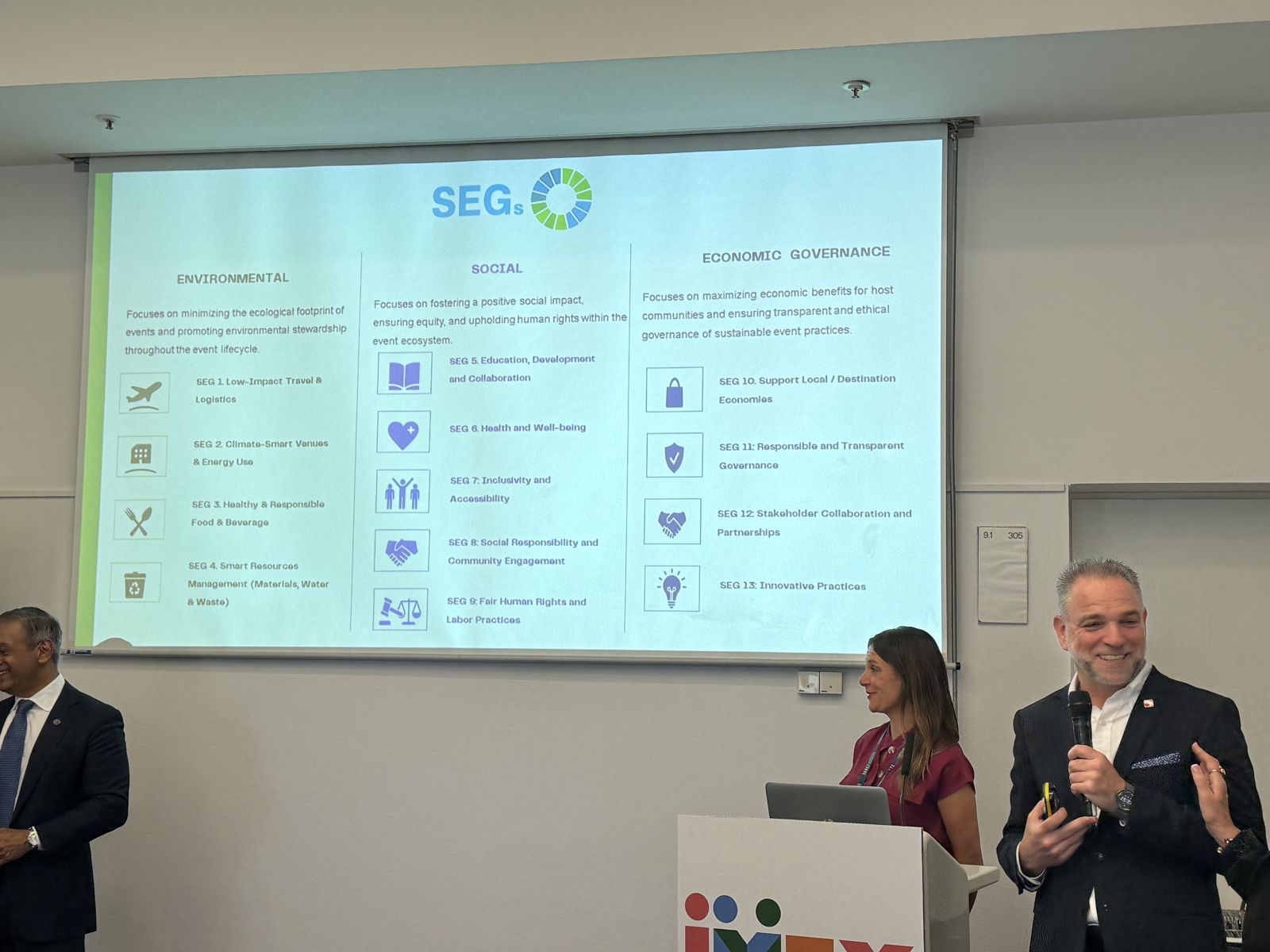
The SEGs are structured around three interdependent pillars: Environmental, Social, and Economic Governance.
The Environmental pillar focuses on reducing the ecological footprint of events through areas such as energy use, travel, food and resource management. The Social pillar addresses inclusivity, wellbeing, collaboration and community engagement. The Economic Governance pillar emphasises local impact, transparency, partnerships and innovation.
Together, these pillars reflect a holistic understanding of sustainability, where environmental, social and economic considerations are interconnected.
One of the key strengths of the SEGs is their ability to connect global sustainability priorities with practical event actions.
Every decision, from choosing a destination to selecting suppliers or designing participant experiences, becomes part of a broader, shared framework. This ensures that sustainability is considered early and consistently throughout the planning process, rather than addressed at the end.
The SEGs were developed following Destination Canada’s Business Events Sustainability Roundtable in Montréal in April 2025, where industry leaders identified the need for greater alignment and practical implementation.
They are the result of a global, volunteer-led, cross-sector collaboration and are endorsed by organisations including Destination Canada, PCMA, Convene 4 Climate, the Events Industry Council, Kenes Group and Amex GBT Meetings & Events.
Importantly, the SEGs are designed as a neutral and widely adoptable framework that supports the industry as a whole.
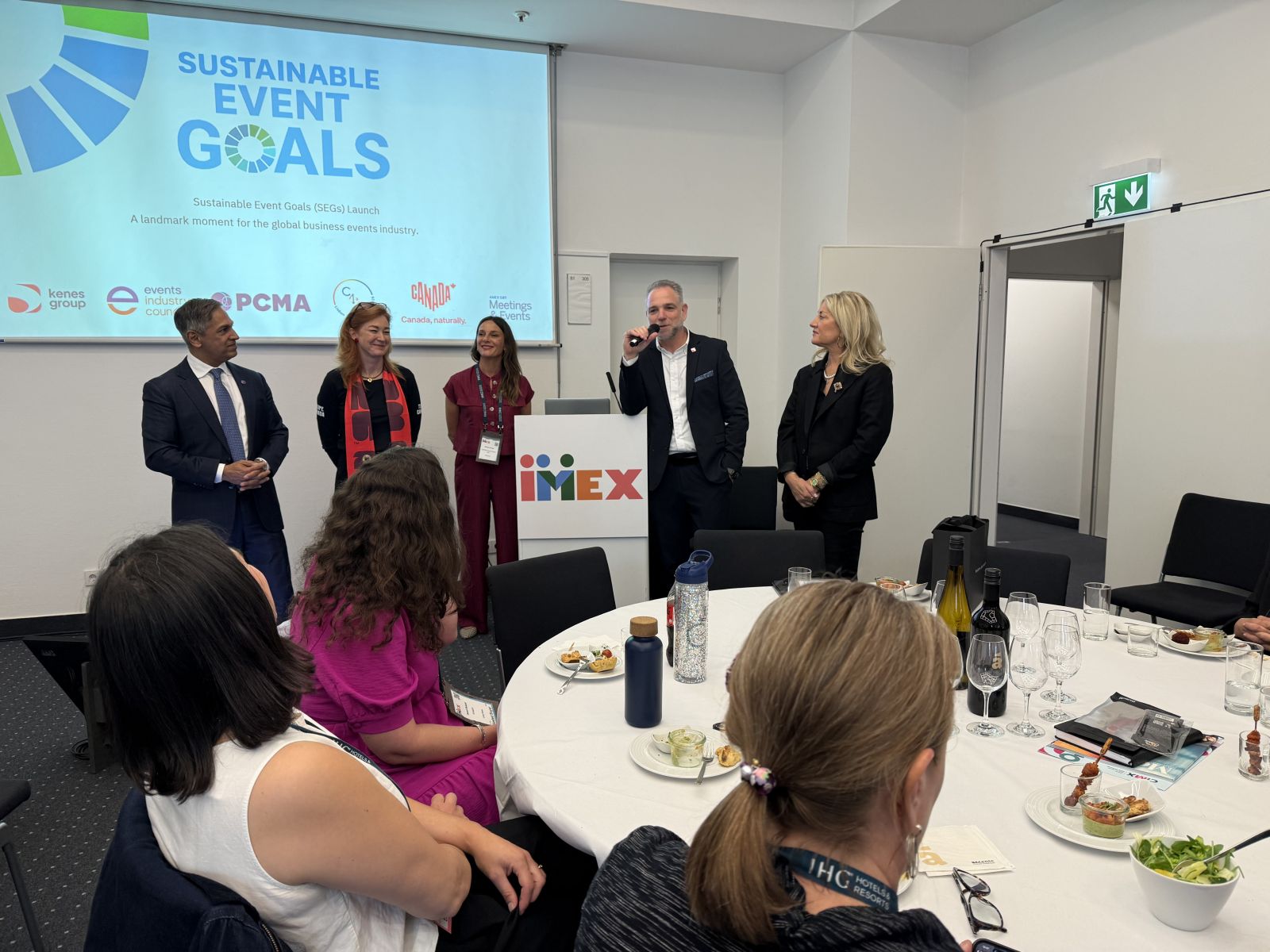
For Kenes Group, supporting the SEGs reflects a broader commitment to advancing practical sustainability in events. As Ori Lahav, CEO of Kenes Group, noted: “Sustainability only delivers real impact when it is embedded into everyday decisions. The Sustainable Event Goals respond to a clear need within our industry for greater alignment and practical direction, helping organisations move from ambition to action in a consistent and credible way.”
This perspective aligns with the core purpose of the SEGs: making sustainability actionable and relevant at every stage of event planning.
With the Sustainable Event Goals now established through this global, cross-sector collaboration, the focus shifts from framework development to implementation. The Events Industry Council (EIC) is now advancing the next phase of this work, as part of the EIC Centre for Sustainability and Social Impact, translating the SEGs into practical tools, resources and pathways that help organisations embed sustainability into everyday decision-making.
Working alongside industry partners and the founding partners, EIC will develop implementation guidance and align the SEGs with existing initiatives, including the EIC Sustainable Event Standards, ensuring they serve as a practical catalyst for action across the full event lifecycle. This next phase is designed to help organisations of every size and sector move from aspiration to measurable, scalable impact through the creation of pathways.
“The introduction of the Sustainable Event Goals represents an important step forward for our industry,” said Amy Calvert, EIC President and CEO. “For many years, organisations have been navigating a complex landscape of frameworks and expectations. The SEGs provide a shared foundation, one that helps translate global sustainability priorities into practical, everyday decisions, while aligning with established standards and practices.”
Powered by Meeting Media Company, publisher of Headquarters Magazine (HQ) – a leading international publication based in Brussels, serving the global MICE industry and association community.
Since its founding in 1992, Meeting Media Group, publisher of Headquarters Magazine (HQ), has been a trusted guide and voice for associations and the global MICE (Meetings, Incentives, Conferences, and Exhibitions) industry.