© All Photos: Radisson Hotel Group
A new roadmap for associations and PCOs focuses on turning sustainability commitments into repeatable practices, with destinations playing a central role in the process.
Sustainability may now be firmly established on the agenda of associations and event organisers, but translating that commitment into operational practice remains a more difficult proposition. A new guide from Radisson Hotel Group and GDS-Movement puts the gap under scrutiny, arguing that the industry’s challenge lies less in awareness than in implementation.
Launched in Brussels on 16 September, Accelerating Sustainable & Regenerative Events: A Guide for Associations & PCOs sets out a practical roadmap for organisations managing events across different destinations, venues and supplier networks. The guide draws on insights from destinations participating in the GDS-Index, with the stated aim of helping associations and professional conference organisers integrate sustainability into event planning, delivery and reporting.
The figures cited by the partners illustrate the distance between ambition and practice. While 66% of associations consider sustainability highly important, fewer than 34% have embedded it into their operations and only 3% report having an advanced sustainability programme. The guide identifies perceived costs, limited access to sustainability data, fragmented supplier ecosystems and a lack of practical implementation frameworks among the barriers facing organisers.
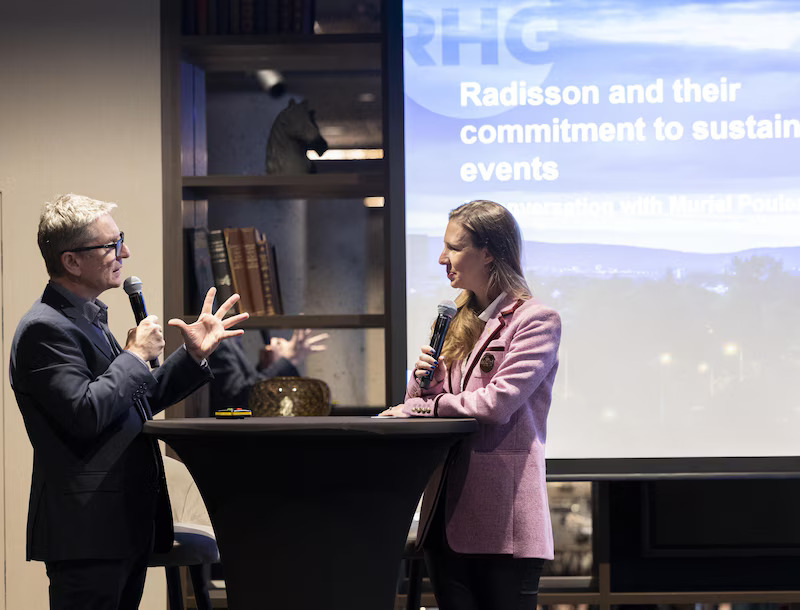
For associations, the challenge extends beyond a single event. Congresses, annual meetings and regional gatherings may move between destinations and involve different venues, suppliers and planning teams, making consistency difficult to maintain.
That is where the roadmap seeks to move the discussion. Its premise is that sustainable events require more than isolated initiatives: they depend on collaboration between associations, destinations, venues and suppliers, alongside approaches that can be measured and repeated across an event portfolio.
“The industry does not have a sustainability awareness problem; it has an implementation challenge,” said Inge Huijbrechts, Chief Sustainability and Security Officer at Radisson Hotel Group. “As a global hospitality company, we work closely with associations, event organisers, and destinations around the world and understand the practical barriers they face. This guide is designed to move the conversation from ambition to action by providing planners with practical tools, trusted frameworks, and stronger collaboration models.”
The five actions proposed by the guide are consequently aimed at making sustainability part of the planning process itself:
1. Bring destination partners into the planning process earlier.
Rather than treating the destination as a location to be assessed after the event strategy has been established, associations and PCOs are encouraged to involve destination partners earlier, allowing local sustainability capabilities and priorities to inform event design.
2. Prioritise certified supplier networks and sustainability credentials.
The roadmap calls on organisers to give greater weight to recognised sustainability credentials when selecting suppliers, creating a more consistent basis for procurement decisions across different events and markets.
3. Build social impact and legacy into event design.
Sustainability is framed beyond environmental performance, with organisers encouraged to consider how events can generate lasting social benefits and contribute to the communities in which they take place.
4. Incorporate low-carbon mobility strategies.
Travel and delegate mobility are brought into the sustainability equation, with organisers encouraged to consider lower-carbon transport options for delegates and other stakeholders as part of event planning.
5. Link sustainability to measurement, reporting and incentives.
Finally, the guide calls for sustainability objectives to be connected to measurable performance, reporting frameworks and incentives, helping organisations track progress across successive events rather than treating each meeting as a standalone exercise.
Taken together, the five measures provide a framework for moving from individual sustainability actions towards a more consistent event-management approach. For associations running recurring congresses across different destinations, that consistency is particularly relevant: the objective is to establish practices that can travel with the organisation even when the venue, city and supplier base change.
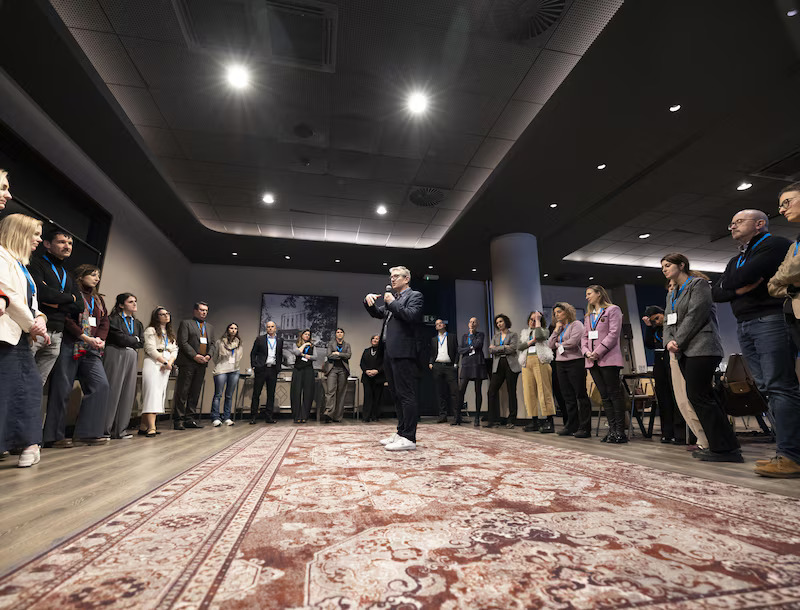
The guide gives destinations a more active role in this process. Through the GDS-Index, destinations are assessed against 74 qualitative and quantitative indicators aligned with the United Nations Sustainable Development Goals and the Global Sustainable Tourism Council Destination Criteria. The resulting data is intended to give event organisers greater visibility of destination-level sustainability performance when making planning and sourcing decisions.
“Destinations play a pivotal role in accelerating the transition toward sustainable and regenerative events,” said Guy Bigwood (pictured above), CEO and Chief Changemaker of GDS-Movement. “Through the GDS-Index, we help destinations measure and improve their sustainability performance while providing event organisers with the information they need to make informed decisions. Collaboration between destinations, venues, and suppliers is essential to creating events that generate meaningful social, environmental, and economic value.”
That places destination intelligence closer to the beginning of the event decision-making process. For associations, it can provide a basis for considering sustainability alongside more established destination criteria such as accessibility, infrastructure, accommodation capacity and venue suitability.
The partnership also brings a hotel group into a framework built around destination performance. Radisson says the initiative builds on its existing sustainability work, including its Verified Net Zero programme and the implementation of Hotel Sustainability Basics across its portfolio.
The resulting roadmap is therefore less a new sustainability pledge than an attempt to give associations and PCOs a common operational framework: identifying which partners need to be involved, where sustainability can be embedded in event design, and how performance can be tracked across a series of meetings.
For an industry that has spent years establishing sustainability as a strategic priority, the practical test now sits further down the chain. The question is how those commitments survive contact with procurement, destination selection, delegate travel, supplier choices and post-event reporting, and whether the same standards can be carried from one congress to the next.
The full Accelerating Sustainable & Regenerative Events: A Guide for Associations & PCOs from Radisson Hotel Group is available here
Published by Meeting Media Company, the publisher of Headquarters Magazine (HQ) – a leading international publication based in Brussels, serving the global MICE industry and association community.
Since its founding in 1992, Meeting Media Group, publisher of Headquarters Magazine (HQ), has been a trusted guide and voice for associations and the global MICE (Meetings, Incentives, Conferences, and Exhibitions) industry.