Photos kindly provided by Výstaviště Praha
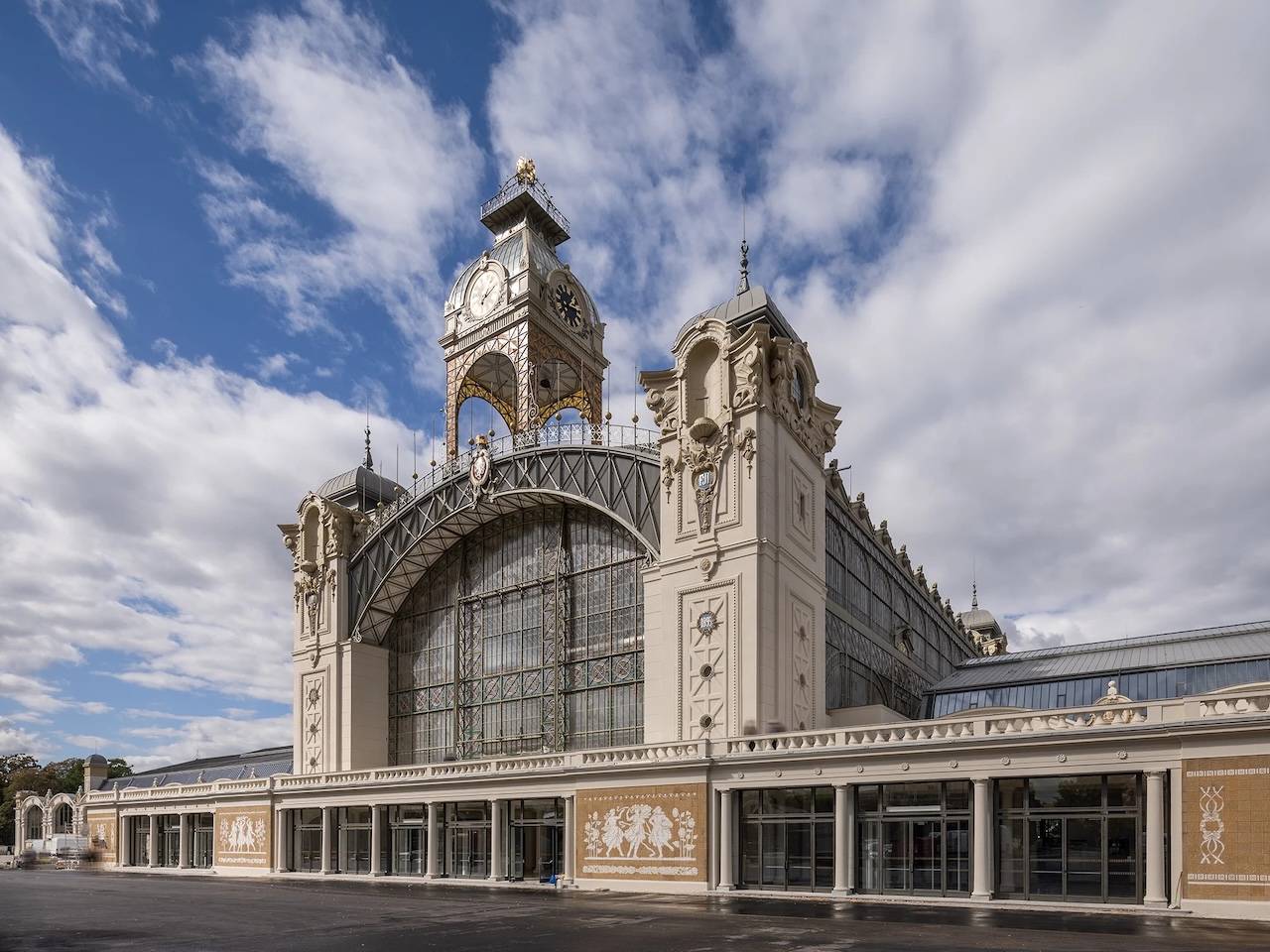
The Designblok gala brought me to Prague Exhibition Grounds (PEG) at a moment when its most emblematic building was reclaiming its place at the heart of the site. The evening marked a new chapter for the Industrial Palace, the grounds’ architectural centrepiece, which had regained its full form following four and a half years of reconstruction. Originally built for the 1891 Jubilee Centennial Exhibition, the Palace had stood incomplete since a devastating fire destroyed its left wing in October 2008. Its reopening reunited the historic structure, restoring a landmark that has witnessed more than a century of change in Prague’s cultural and exhibition landscape.
The sheer scale and versatility of the Grounds are striking. The 34-hectares bring together historic architecture, exhibition halls, cultural venues and extensive outdoor spaces within one of the city’s major recreational areas. The relationship between these different environments gives the site a distinctive proposition, but also presents a complex management challenge: how to pursue commercial growth while preserving its role as a public space serving the city and its residents.
Hosted by the Prague Convention Bureau, I met Tomáš Hübl (on the right), Chairman of the Board of Výstaviště Praha, in his office at the grounds to discuss what comes next for this historic site. Our conversation ranged from the opportunities created by the Industrial Palace’s reopening to the practical realities of managing a multifaceted venue, developing new business and partnerships, and reconciling financial sustainability with public responsibility.
Author: Manuel A. Fernandes, HQ Magazine Manager
I still consider this diversity our greatest advantage, because we are not a conventional exhibition venue of the kind you find elsewhere in Europe. Even in Czechia, the major exhibition grounds in Brno (Brno Exhibition Centre) represent a more traditional model, with clearly separated routes for visitors and exhibitors, dedicated transport infrastructure and a very different approach to traffic management within the site.
We offer something quite different. Our grounds are closer in character to a festival site, where exhibitors and visitors share the same routes and spaces. This is partly due to the way the venue was designed to cater for a mix of different user groups. Founded 135 years ago, the PEG are, in many ways, a living record of the exhibitions that have taken place here over the decades. Major exhibitions would often bring new structures and site plans, reshaping the grounds to meet their needs, while some of the existing buildings remained. What we have today is therefore a fascinating collection of architectural styles and spaces, each reflecting a different stage in the site's history.
The Industrial Palace is the oldest and most prestigious of these buildings, and it has now been restored. It is our flagship venue, offering 10,000 m² of high-profile event space. Then there are the Křížík Pavilions, located to the north of the Industrial Palace which were built in 1991, as conventional exhibition halls for the centenary of the Provincial Jubilee Exhibition. Architecturally, they are relatively simple, functional structures, but that simplicity is precisely what makes them so versatile. They work exceptionally well for a wide range of events, including concerts, festivals and more elaborate productions. We have painted the interiors black and installed black blinds, allowing us to transform the halls into black-box spaces. With the right lighting and structures suspended from the ceiling, we can create almost any atmosphere. The same space can accommodate an elegant gala dinner with sophisticated lighting or become a venue for a large dance party.
That is the beauty of the grounds: the buildings offer very different possibilities, and their individual characteristics allow us to accommodate an unusually broad range of events.
Absolutely. As you mentioned, our portfolio also includes cultural venues, of which we now have two.
The first is Nová Spirála (New Spiral), a highly distinctive venue with seating arranged in a 360-degree configuration around the stage. The second is the Pyramid (formerly known as GoJa Music Hall), a building dating from the 1990s, located just behind our offices. It accommodates 800 people in a conventional, theatre-style seating arrangement. The design may feel a little old-fashioned by today's standards, but it offers a more affordable alternative to the New Spiral, which is a technically sophisticated venue with a considerably more demanding technical infrastructure.
What really sets the PEG apart is the combination of our buildings and open spaces. That is the real value we are looking to develop and offer to clients. You can hold an event in the Industrial Palace, for example, while extending the programme outdoors, with additional activities taking place in the surrounding park, which is maintained to a very high standard.
Many events here make the outdoor areas their main setting, using the surrounding buildings to complement the experience. This interplay between indoor and outdoor spaces is also one of our greatest strengths. Rather than offering a collection of separate venues, we can provide organisers with an integrated environment in which different spaces work together to create a more varied and distinctive event experience.
It is certainly a challenge, because our offer is not as straightforward as that of a conventional exhibition centre with six identical halls, where clients simply decide how much space they need. For someone unfamiliar with the PEG, it can be difficult to grasp the scale of the site and understand its full potential from a distance. Here, organisers and agencies have to think more creatively about how to use the different spaces and how they might work together. Our team has become very experienced in developing tailored solutions, helping clients make the right connections between the various parts of the venue and showing them what is possible.
That is also why we place such importance on personal visits and site inspections. Our sales team attends B2B exhibitions and industry conferences, and travels internationally to meet potential clients at major tradeshows. However, bringing organisers to the grounds is often what makes the real difference. Once they experience the venue in person, they begin to see possibilities they might never have considered from a brochure or a website alone. The spaces spark ideas, and clients start to imagine how they could be combined to create something distinctive for their own events. Experiencing this “campus” first-hand often makes the proposition much easier to understand.
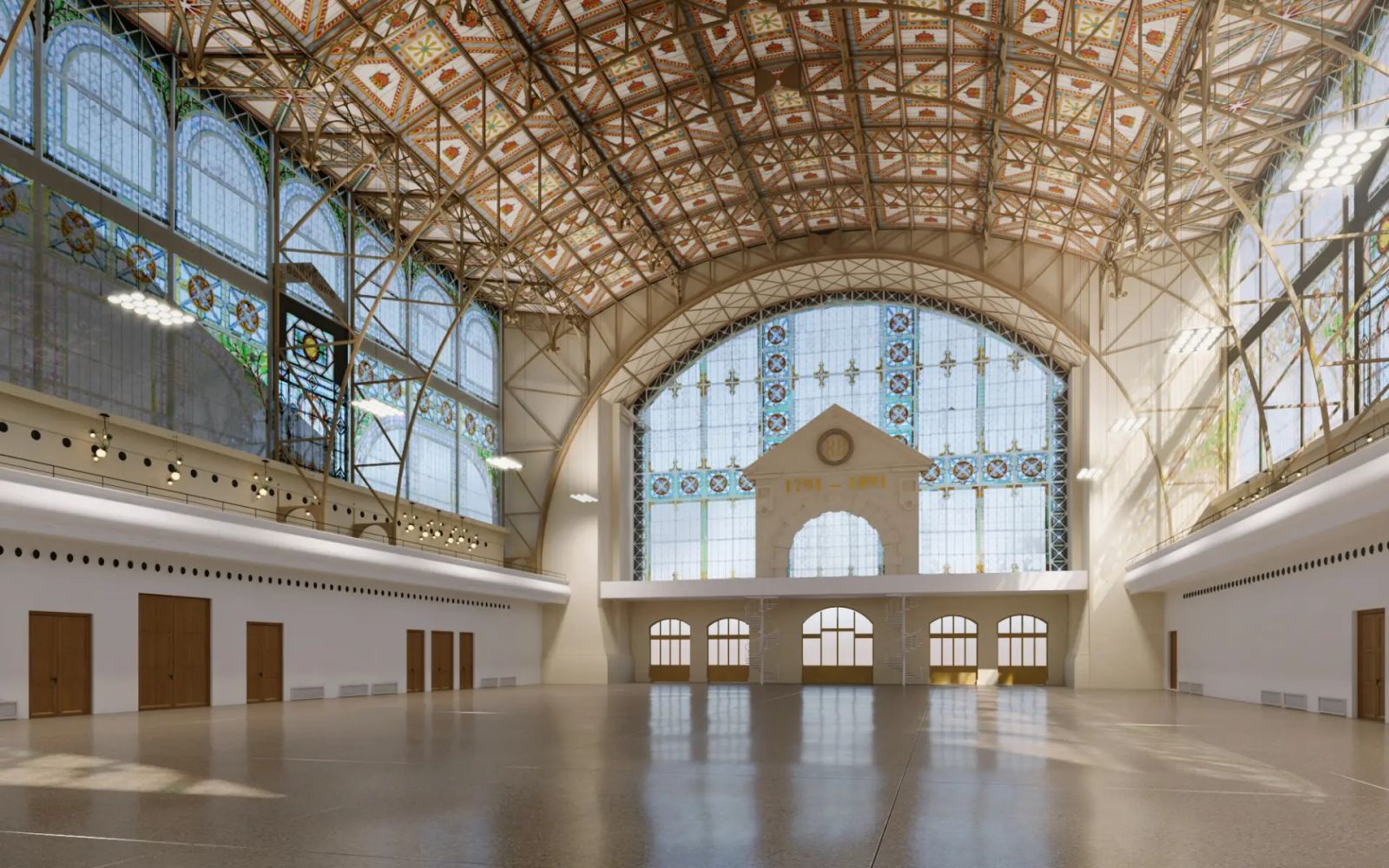
We still have drone footage, photographs and videos, but to be honest they cannot really convey the full picture. One of the most important aspects is the proximity of the buildings, which makes it easy for organisers to move between them and combine different spaces within a single event.
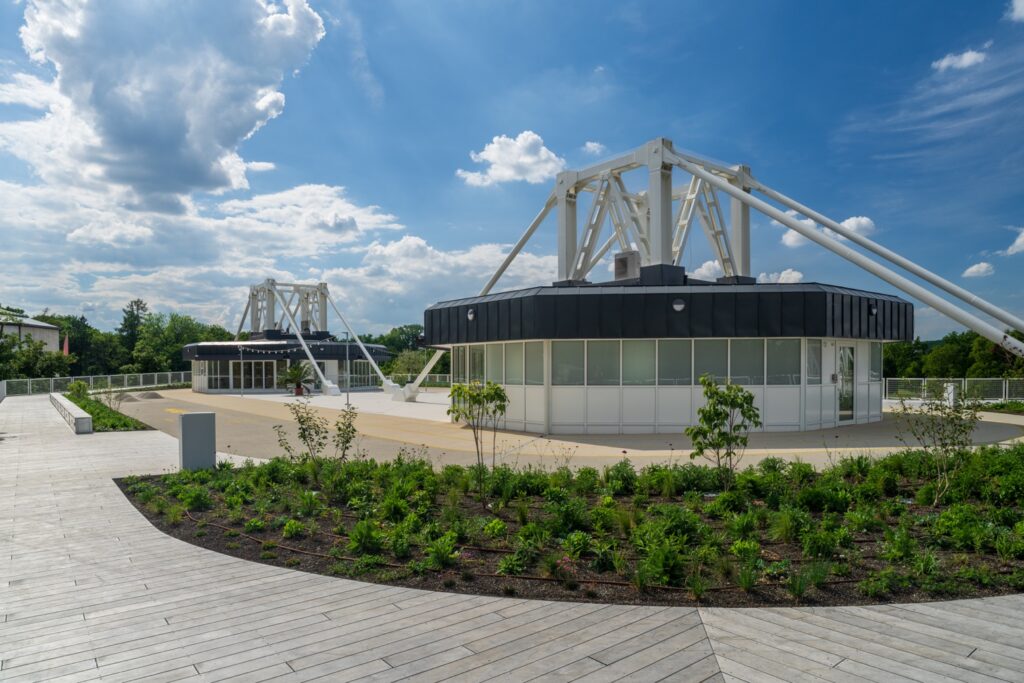
Some events, for example, use both the Industrial Palace and the Křížík Pavilions, with the latter providing around 6,000 m² of space for the main programme, while the outdoor areas accommodate catering, hospitality or leisure activities. This allows organisers to create distinct environments for different parts of their event without losing the sense of cohesion between them. The layout around the Křížík Pavilions offers further possibilities. The buildings frame a large fountain and an outdoor seating area with a capacity of approximately 4,000 to 5,000 people, making it an exceptional setting for concerts, DJ parties and other large-scale gatherings.
Organisers can, for instance, hold their congress sessions and exhibition stands inside the pavilions, while moving selected presentations or speeches outdoors, where a dedicated stage can be set up. The same applies to entertainment and social activities, particularly during the summer months, when the outdoor spaces can become an integral part of the event programme. It is this ability to connect different environments, each serving a distinct purpose, that allows organisers to create more varied event experiences within a single venue.
There has already been a hotel within the grounds. Hotel Expo was built in the 1990s, but it is now privately owned and operates independently of the exhibition venue. We also have established accommodation options nearby, including Mama Shelter Prague, just opposite the grounds. The hotel underwent a refurbishment during the pandemic and it is, now, widely used by delegates attending conferences and other major events here; organisers frequently book rooms there.
That said, we would certainly welcome an additional hotel in the immediate vicinity, particularly a higher-end property that could expand the options available to our clients. Prague is a relatively compact city, and one of its advantages is the accessibility of its wider hotel offer. We are just five tram stops, or around ten minutes, from the city centre, where a range of leading hotels, including five-star properties, can accommodate delegates when required.
Overall, the existing capacity meets our needs reasonably well, although additional accommodation nearby would undoubtedly be welcome. Building a new hotel within the exhibition grounds, however, is not an option. The city's urban planning regulations do not permit it, and the entire site is designated as protected cultural heritage of the Czech Republic. Any new construction would therefore be subject to heritage protection requirements, making the development of a hotel here unfeasible.
We are certainly competitors, particularly with the Prague Congress Centre, which offers a large auditorium that we cannot match. Prague also has a diverse range of other venues, from the historic Municipal House, which hosts concerts and gala dinners, to the privately owned O2 Arena, O2 universum and PVA Expo Prague, each serving different segments of the events market.
Nevertheless, we know one another, maintain close relationships between our management and sales teams, and are happy to cooperate when it benefits the client. For larger events, that can mean combining our strengths: a conference at one venue, for example, followed by a gala dinner or another activity at another. The Prague Convention Bureau also plays an important role in connecting these different players. When major international congresses come to the city, cooperation is essential, because no single venue can accommodate every requirement.
We can also offer something quite distinctive for product launches and roadshows. Automotive manufacturers, for instance, can bring vehicles onto the site, showcase them and organise test drives within a controlled environment, without having to take them out into public traffic. That is a significant advantage, and one that few other venues in the city can offer.
It is still too early to put precise figures on that, because we are only beginning to establish this new phase of operations. One of our immediate challenges is understanding the running costs of the Industrial Palace. We took over the building only a few weeks ago, and we have yet to receive all the technical documentation needed to assess its energy consumption, heating and other operating expenses. These are fundamental figures when determining the business model and the revenue required to make the venue sustainable.
There is also a broader consideration: the exhibition grounds remain a public space. People come here to enjoy the park, the swimming pool, the ice rink and other leisure facilities, and there is an expectation that the site will continue to serve the local community.
At the same time, maintaining that public role cannot be the sole basis of our business model. We need corporate and private events to generate the revenue that makes the wider operation viable. So we need the corporate events, we need private events, and we need to close the buildings sometimes. Finding the right balance between these two functions will be essential to the long-term sustainability of the grounds.
.jpg)
We receive no direct state funding. Although the PEG are wholly owned by the city, the municipality just finances capital investments in the buildings, such as the reconstruction of the Industrial Palace. All operating costs, however, fall to us, from electricity, heating and gas to staff salaries and the day-to-day maintenance of the grounds. We have to generate the revenue ourselves while continuing to fulfil our public mission.
That means keeping the grounds accessible for much of the year, so people can enjoy the park, use the playgrounds and other facilities, or simply spend time here. These services also require staff and ongoing investment, but there is no additional funding to cover them. Ideally, I would like to see an even balance in our business: around 50% private and business events, including congresses, roadshows, product presentations, company meetings and Christmas parties, and 50% public-facing events. The latter would include festivals, exhibitions, trade shows and major music or cultural events, which remain an integral part of our business.
It is certainly complicated. Municipal elections take place every four years, bringing a (possible) new mayor, new councillors and potentially a different vision for how the exhibition grounds should operate, what they should deliver for the city and how much revenue they should generate. Our contractual relationship with the city adds another layer of complexity. Although we are wholly owned by the municipality, our agreement is essentially a standard rental contract: we rent the site from the city and pay it a share of the profits generated by our commercial activities. We must retain the remaining revenue to cover the operating costs associated with the grounds.
At the same time, the municipality expects us to fulfil a public function and take responsibility for the wider upkeep of the site. In effect, the city acts both as our owner and as our landlord, while also expecting us to generate revenue and meet our financial obligations. These expectations do not always align easily with the municipality's other spending priorities. There are competing demands on public funds, from extending the underground network to developing the city's road infrastructure, and some political representatives may prefer to direct resources towards those projects.
The reconstruction of the Industrial Palace illustrates the public dimension of this responsibility. The city invested approximately CZK 3 billion (around €123 million) in the project. Having committed such a substantial sum to the buildings, the municipality naturally wants the public to be able to appreciate that investment: to visit the grounds, enter the buildings and make use of the facilities. The site must remain accessible and continue to serve the people of Prague. That is where the balancing act comes in. We estimate that around 2.5 million people visit the grounds each year, making this a major destination for leisure and recreation in Prague. At the same time, we have to generate enough commercial business to cover our costs and ensure that the operation remains financially sustainable.
We close parts of the grounds only a few times a year, and there has to be a compelling reason to do so, with something of sufficient value to justify the disruption. We rarely close the entire site; usually, around half remains accessible. The closures tend to affect the northern section, which includes the park, playgrounds and other outdoor public spaces, and typically last for a weekend or, occasionally, a full week. This happens perhaps three or four times a year.
Even so, these closures can prompt negative reactions on social media, particularly from people who question why the playgrounds have to be closed. We announce them well in advance and make efforts to communicate and promote the events, but there will always be visitors who are unaware of the arrangements and arrive expecting to find the facilities open. Managing those expectations is an ongoing challenge, yes.
We already do this through our in-house programming department, which develops and produces a range of events throughout the year, primarily aimed at the public. In early June, for example, we host the Festival Kašpárkovo, associated with the wider celebrations of Children’s Day. Organised in cooperation with the city, the event brings together municipal institutions offering children a range of sporting, leisure and recreational activities, attracting around 15,000 visitors.
Another major fixture is Heroes’ Day, a family-oriented event showcasing the work and equipment of the emergency services, police, armed forces and specialist units. It draws approximately 20,000 people. We also produce our own sporting events, including Prague Bike Fest, which attracts around 15,000 visitors, a commercial venture, with exhibition stands sold to participating businesses. Our programme extends to a Make-up Fair, Christmas shows and theatre productions staged at the New Spiral.
We have come to realise that we need to retain operational control of all the buildings. In the past, we have had long-term tenants using some of the spaces exclusively, and these arrangements proved difficult to manage because the grounds are constantly changing. Parking areas may need to close or reopen, events can run late into the night, and activities elsewhere on the site can generate noise that affects neighbouring buildings. For long-term tenants, this can be particularly limiting, as we cannot guarantee uninterrupted access or consistently provide the conditions they might expect from a standalone venue.
The Pyramid Theatre, for example, was operated by a private theatre company for around 25 years. Although the company became accustomed to the arrangements, there were still constraints. We might have to inform them that a major event with live music was scheduled for the following week and that noise could be audible inside the theatre, with little we could do to prevent it. We continue to work with companies and institutions that return regularly, perhaps every three or six months, to hold their events here. However, we are no longer looking to enter into long-term rental arrangements that could limit our ability to manage the grounds as a whole.
Our location gives us a particular responsibility. We sit within one of Prague's largest leisure and recreational areas, alongside Stromovka Park, the Vltava River, the White Water Slalom Course, the Zoo, the Botanical Garden and Troja Castle. At the same time, the former industrial site across the railway tracks is being redeveloped, with plans to bring around 30,000 new residents into the area. This will inevitably change the demands placed on the grounds and create new expectations of what we can offer.
Although we sometimes feel we are approaching the limits of our capacity to accommodate more events, activities and commercial partners, we know that we must adapt to the area's development. We are not simply a commercial venue; we also have a responsibility to provide accessible public space. The challenge is to accommodate that wider role without undermining the financial viability of the operation. The difficulty is that the city's priorities can change significantly with each four-year electoral cycle. One administration may place greater emphasis on commercial performance and revenue generation, while the next may prioritise public access and activities, expecting more of the grounds to remain open and fewer areas to close for events.
Although there is a long-term vision for the site, changes in political direction make it difficult to plan and invest with confidence. Our visitor numbers reinforce the importance of the public dimension. We believe that the public function should account for at least half of our activity, and we continue to make that case to the city. The challenge is to secure a sufficiently stable understanding of that role to allow us to plan for the long term while (again) keeping the operation financially sustainable.
Powered by Meeting Media Company, publisher of Headquarters Magazine (HQ) – a leading international publication based in Brussels, serving the global MICE industry and association community.

Since its founding in 1992, Meeting Media Group, publisher of Headquarters Magazine (HQ), has been a trusted guide and voice for associations and the global MICE (Meetings, Incentives, Conferences, and Exhibitions) industry.