From the outset, Tallinn demonstrated one of its key advantages for associations: everything is close. Delegates were based at Nordic Hotel Forum, a centrally located conference hotel on the edge of the UNESCO-listed Old Town, which allowed participants to experience the city largely on foot. This walkable layout, combined with efficient infrastructure, set the tone for a smooth and highly accessible visit.
A City Where History and Innovation Coexist

The programme opened with a guided walk from the Rotermann Quarter to the medieval Old Town, highlighting Tallinn’s ability to blend historic character with contemporary urban development. Once an industrial zone, Rotermann has been transformed into a district of modern architecture, creative businesses and restaurants, offering planners a clear view of the city’s forward-looking development.
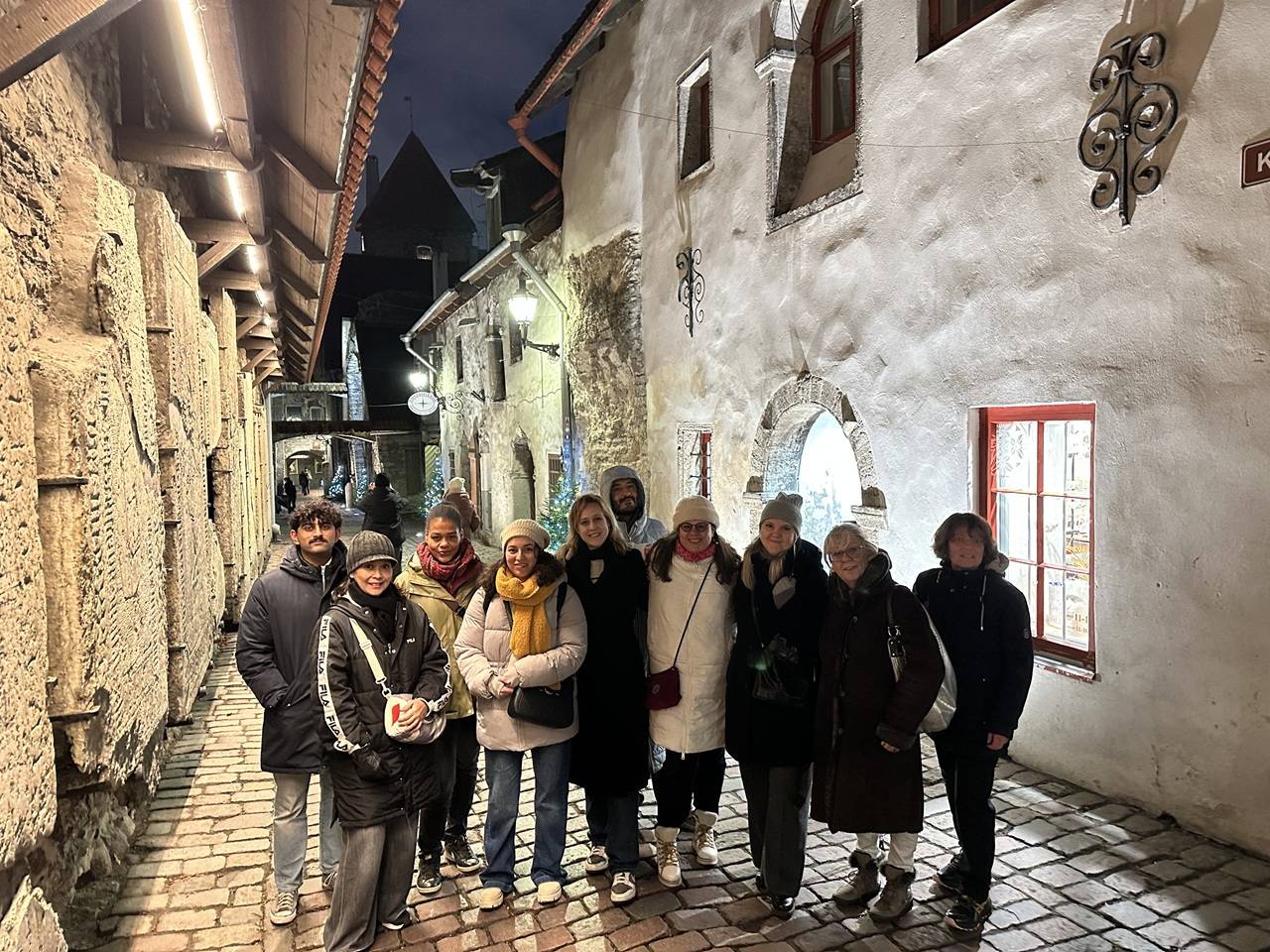
Entering the cobbled streets of the Old Town, participants explored one of Europe’s best-preserved medieval centres, enriched with local stories, legends and seasonal atmosphere. A hands-on marzipan painting workshop at Maiasmokk Café, Tallinn’s oldest café, added a practical cultural element, while the visit to the Christmas Market on Town Hall Square showed the city at its most festive.
Dinner that evening took the group back several centuries at Olde Hansa, where historic recipes, candlelit interiors and period music demonstrated how Tallinn uses storytelling to shape group and delegate experiences.
Venues with Character and Scale
The second day focused on site visits to some of Tallinn’s most distinctive event venues, underlining the city’s suitability for small and mid-sized international association meetings.
Participants explored the Tallinn Creative Hub (Kultuurikatel), a former power station reimagined as an industrial-style event space, and the Tallinn Cruise Terminal, an ultramodern facility with an expansive sea-facing hall. The Estonian Maritime Museum’s Seaplane Harbour impressed with its vast hangar and waterfront setting, while PROTO Invention Factory, located in a former submarine factory, showed how heritage buildings can be adapted into interactive venues for content-driven events.
Lunch in the revitalised Noblessner harbour area at Lore Bistro further illustrated how Tallinn combines contemporary dining with emerging urban districts close to the city centre.

Creativity, Sustainability and Digital Leadership
In the afternoon, the group headed to Telliskivi Creative City, one of Tallinn’s most dynamic neighbourhoods. Once an industrial complex, Telliskivi is now a base for designers, start-ups, galleries and cultural venues. Visits included sustainable leather brand Stella Soomlais Studio and Fotografiska Tallinn, the internationally recognised photography centre known for its exhibitions, city views and Michelin Green Star restaurant.
At Fotografiska, participants also received an introduction to the e-Estonia Briefing Centre, which outlined how Estonia has become one of the world’s most advanced digital societies. From e-governance and digital signatures to e-Residency, the session indicated why digital site visits and knowledge-focused content are increasingly integrated into association events hosted in Estonia.
Dinner at Restaurant PULL rounded off the day with a contemporary dining experience centred on quality ingredients and open-fire grilling, in contrast to the medieval setting of the previous evening and reflecting Tallinn’s culinary diversity.
Strong Hotel Infrastructure in a Compact Capital
The final day featured site inspections of key conference hotels and venues, including Alexela Concert Hall in the centrally located Solaris Centre, as well as Radisson Blu Hotel Olümpia, Hilton Tallinn Park, Swissôtel Tallinn and Radisson Collection Hotel Tallinn. Together, these properties demonstrated the city’s capacity to host international meetings with professional standards, modern facilities and minimal transfer times within the compact capital.
A Destination That Delivers More
With a population of just 450,000, Tallinn offers association planners the infrastructure and expertise of a capital city alongside the ease and human scale of a smaller destination. Nordic efficiency, digital innovation and creative use of heritage spaces are matched by strong sustainability credentials and competitive costs for international events.
Co-organised by Visit Estonia and the Estonian Convention Bureau, the fam trip reflected Estonia’s collaborative approach to supporting international meetings and association clients. Association planners interested in exploring Tallinn as a future host destination are invited to contact Ms Külli Teimann, Association Manager at the Estonian Convention Bureau.






.jpg)