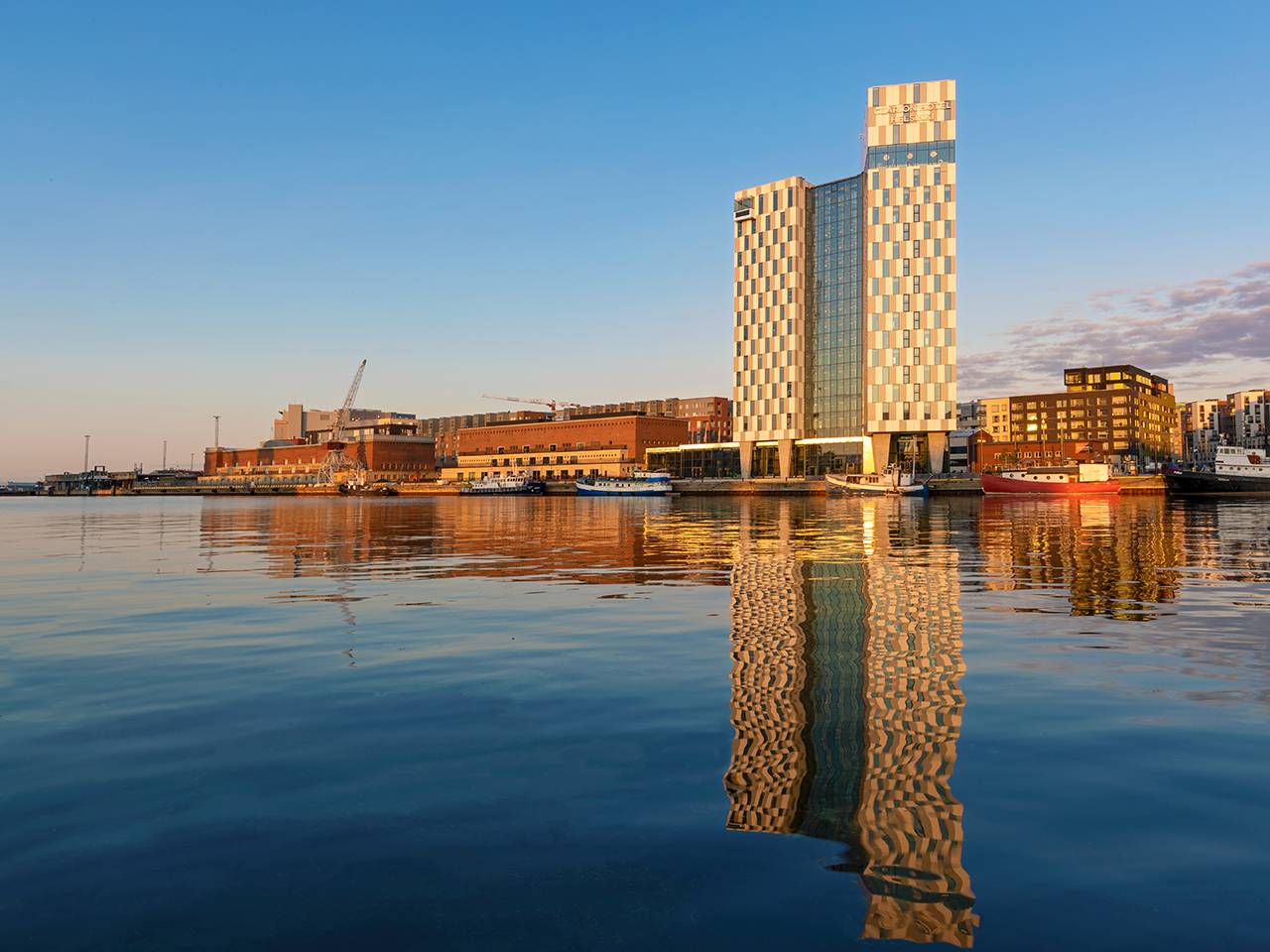
Hotel Clarion Helsinki © Helsinki Partners
In Finland, happiness is more than a statistic, it shapes the way people and meetings operate. In the Helsinki Capital Region, three cities are building the perfect roadmap where delegates move effortlessly between urban centres, research campuses, and event rooms. For international organisers, Finnish hospitality becomes a strategic advantage, turning conferences into reliable and memorable experiences. Discover how Helsinki, Espoo, and Vantaa are creating one of Europe’s most efficient congress ecosystems.
“We do not really have borders between our cities.” This simple remark from Karoliina Ala-Opas, Head of the Helsinki Convention Bureau, captures the essence of how the Greater Helsinki Region operates. In many practical ways, Helsinki Partners, Visit Espoo and Visit Vantaa operate less like separate destination organisations and more like a single metropolitan ecosystem.
Public transport offers the clearest example of the region’s seamless connectivity. A single ticket allows delegates to travel easily between Helsinki, Espoo and Vantaa, moving within minutes from Helsinki’s city centre to Espoo’s key research campuses or from Helsinki Airport to congress venues. “We are more than just geographically close, we are tightly integrated,” Ala-Opas explains. “This naturally creates a strong foundation for collaboration when it comes to attracting and hosting international conferences.” Behind that connectivity lies a broader metropolitan reality: each city maintains its own governance, yet infrastructure systems, from mobility to energy and waste management, are deeply interconnected. According to Miikka Valo, Director of Conventions & Tourism at Visit Espoo, the region functions naturally as one metropolitan area. “Collaboration happens organically rather than through a fully integrated day-to-day bidding structure.”
For the meetings industry, this creates a flexible ecosystem. Helsinki brings experience and scale in hosting international congresses, Espoo contributes a strong academic dimension through institutions such as Aalto University, and Vantaa completes the structure with Helsinki Airport and a growing cluster of airport hotels and conference facilities. As Johanna Grönberg, Senior Advisor for Congresses at the Helsinki Convention Bureau, puts it: “We see ourselves as partners. Each city has its own strengths, and together they create a stronger reputation for the entire region."
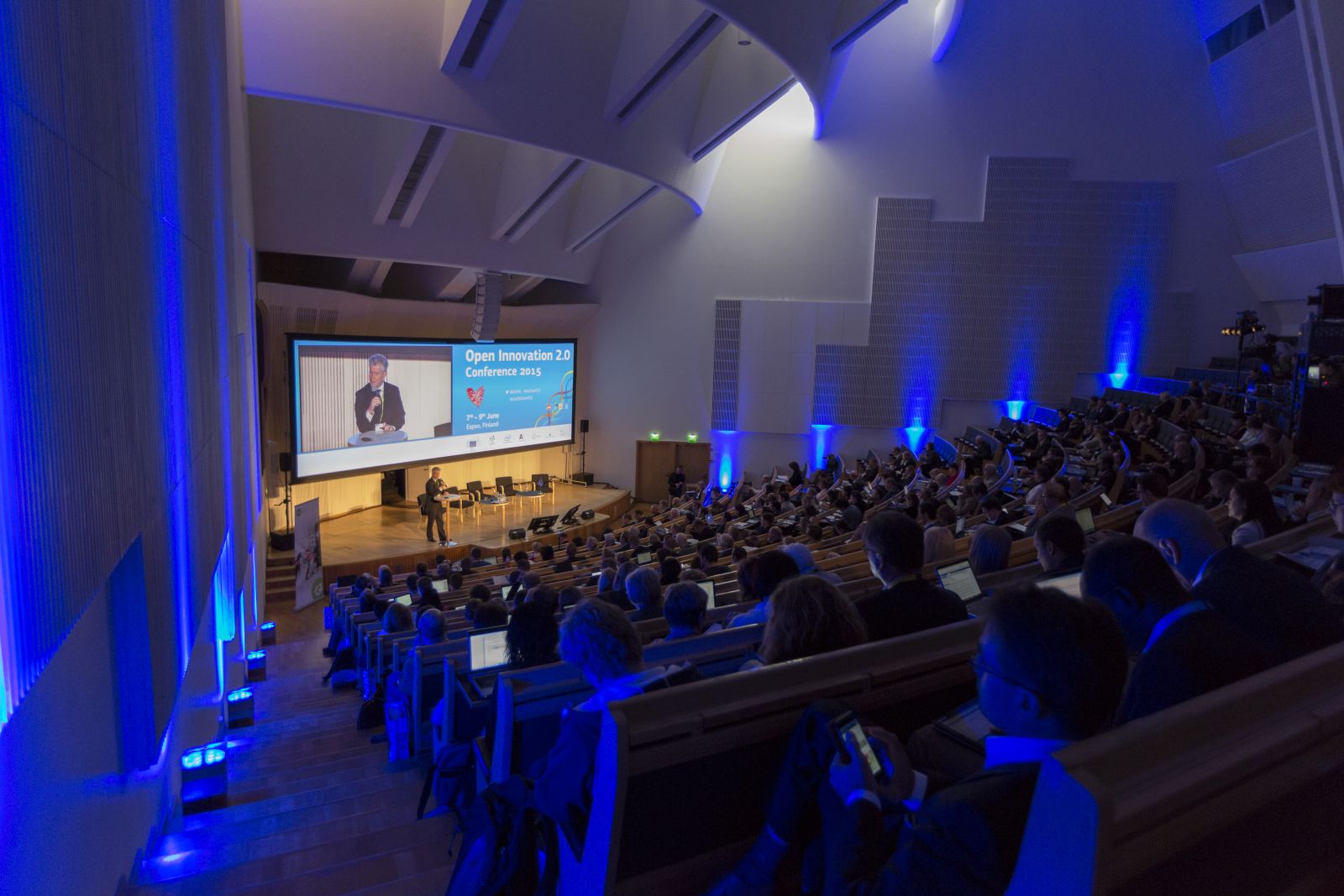
Open Innovation 2.0 Conference 2015 © Visit Espoo
If collaboration triggers the strategic framework, proximity delivers the operational advantage. Distances are short by European capital standards: the metro between Helsinki and Espoo takes less than ten minutes in some sections, while commuter trains link the airport to the city centre in around half an hour. “This also means delegates can enjoy both an urban conference experience and immediate access to nature within the same trip,” Ala-Opas says. Rather than marketing three separate destinations, convention bureaux present the region as a unified platform.
Accommodation is a good example. Helsinki hosts the largest hotel inventory, while Espoo and Vantaa provide complementary capacity, creating roughly 22,000 rooms across the metropolitan area. “Some delegates may prefer to stay close to the venue in Espoo, while others choose hotels in Helsinki’s downtown and commute easily by metro,” Valo notes. “From an economic perspective, conferences benefit the entire metropolitan area.” For its part, areas such as the Design District are intentionally shaped to be walkable and easy to explore, with lively hubs like Kamppi and highly connected neighbourhoods such as Pasila.
Orderly and stress-free, Helsinki combines modern architecture with waterfront landscapes, green spaces, and a compact city centre ideal for walking. Consistently ranked among Europe’s top congress destinations, Helsinki placed within the top 20 in Europe according to UIA and ICCA rankings. In 2024, the city hosted 203 international association meetings, noted for its sustainability, accessibility, and high delegate satisfaction across hotels, restaurants, and cultural venues. Key facilities include Messukeskus Helsinki Expo and Convention Centre (pictured below), with over 58,000 m² of flexible space and a new Arena for up to 7,500 delegates, Finlandia Hall, and the historic Helsinki Congress Paasitorni.

© Helsinki Partners
Espoo brings a complementary dimension. Known for its research institutions, international companies such as Kone and Neste, and vast natural areas, the city is anchored by Aalto University’s Otaniemi campus, a hub of start-ups and research organisations. “Because universities and research fields differ significantly, we rarely find ourselves bidding for the same conferences,” explains Grönberg. While Helsinki hosts larger-scale congresses, Espoo often welcomes more specialised or research-focused events. Its venues, including Dipoli Conference Centre (up to 1,000 delegates), Otakaari 1 auditoriums (70–600 delegates) and Espoo Metro Areena, provide flexible spaces for meetings, workshops and social programmes.
Vantaa plays a distinct but equally strategic role as the region’s international gateway. Beyond its logistical importance, the city offers rich cultural and natural experiences, from interactive exhibits at the Heureka Science Centre to lakeside saunas and Sipoonkorpi National Park, as well as cultural spaces such as the Finnish Aviation Museum. Its smaller venue ecosystem, including Clarion Hotel Helsinki Airport, Hotel Tikkurila, and Håkansböle Manor, complements the metropolitan area by providing settings for receptions, airport meetings, and social programmes, ensuring delegates can access both city life and Finland’s nature within the same journey.

Dipoli Conference Centre © Visit Espoo
Beyond venues and logistics, the Greater Helsinki Region’s meetings industry is deeply connected to its research ecosystem. Helsinki is internationally recognised for expertise in fields such as healthcare, clean energy, quantum technologies and smart city solutions. The city is also part of UNESCO’s Creative Cities Network as a City of Design. In Espoo, the Otaniemi campus has become one of Northern Europe’s most dynamic research clusters. As the home of Aalto University, start-ups and multinational large corporations, it provides fertile ground for conferences focused on emerging scientific fields. That academic environment increasingly shapes the types of events hosted in the region.
In 2024, the Sustainability Research and Innovation Congress brought together global experts through a collaboration between the University of Helsinki and Aalto University. “At a broader level, Finnish cities, including our three, have ambitious climate targets and are investing heavily in sustainable urban development and new technologies. Therefore, it makes perfect sense to host a congress like this,” Valo says. Another example is the World Planning Schools Congress 2026, which will bring around 1,200 delegates to Finland. The programme will take place across several cities, with multiple sessions hosted in both Helsinki and Espoo. Such collaborations highlight an important feature of the region’s meetings landscape: conferences are not only hosted in the city, they are embedded in its research community.
, facade, Helsinki_ Photo Rune Snellman, Alvar Aalto Foundation_.jpg)
Finlandia Hall © Helsinki Partners
Sustainability is another defining element of the country’s meetings strategy. Unlike many destinations where sustainability is presented as an optional feature, here it is integrated into urban infrastructure, transportation, carbon neutrality and daily life. “Sustainability begins with mobility,” Ala-Opas explains. “Because the region has an extensive and well-integrated public transport network, delegates can move around easily while keeping their environmental footprint low.”
The region’s efforts have received recent international recognition. Helsinki has ranked first in the Global Destination Sustainability Index for two consecutive years and is the first city with more than 500,000 residents to receive the Green Destinations GSTC certification. At a policy level, the city aims to become carbon-neutral by 2040. For organisers, the convention bureaux provide practical tools to support sustainable events. According to Grönberg, planners receive guidelines covering the entire event lifecycle. “We provide organisers with Sustainable Meeting Guidelines, which offer a step-by-step framework from early planning stages to post-event evaluation,” she says. A carbon footprint calculator is also available to help associations assess the environmental impact of their conferences.
Interest from organisers has grown noticeably in recent years. “Helsinki has developed a Legacy Toolkit, which we are updating through a joint project with Espoo and Vantaa. We even have dedicated staff who work directly with congress organisers to help them design sustainability and legacy initiatives that benefit the host city,” Grönberg says. “Today we see a stronger commitment from clients.”
The commitment to sustainable events is supported by each city’s own roadmap: Helsinki’s Regenerative Tourism Action Plan 2025–2027 guides sustainable event practices, Visit Espoo’s Sustainable Tourism Roadmap provides tools and strategies for green meetings, and Vantaa’s sustainability framework integrates environmental, social, and operational best practices across venues and services. Together, these initiatives ensure that sustainability is not an optional add-on, but an intrinsic feature of every event in the region.

Espoo Museum of Modern Art © Visit Espoo
Beyond sustainability, the region is increasingly focusing on the long-term impact of events. “One of the key objectives has been to make legacy initiatives easier for organisers and researchers to implement,” Valo explains. “Rather than managing every project ourselves, we aim to act as facilitators who connect associations with local stakeholders.” In addition, the Helsinki Congress and Event Legacy Programme and CSR initiatives, have helped shape this approach, providing organisers with practical guidance, from planning and sustainability tools to actionable strategies on five key areas: education, environment, equality, wellbeing, and innovation. By incorporating these practices into event planning, the region ensures that conferences deliver both immediate value and long-term social benefits.
Case studies already illustrate the potential. The European Academy of Neurology congresses 2024 and 2025 hosted in Helsinki included public awareness campaigns and educational programmes focused on brain health. “Together with the Association, we launched the Brain Health School Challenge encouraging students at various educational levels to develop brain-related projects and campaigns,” explains Grönberg. Meanwhile, the European Conference on Operational Research 2022 in Espoo, brought nearly 1,900 participants to Aalto University, strengthening international collaboration.
Infrastructure, research ecosystems and sustainability all contribute to their success as a congress destination, but organisers often highlight something less tangible: the culture of Finnish society itself. For nine consecutive years, Finland has ranked as the world’s happiest country according to the UN World Happiness Report, a recognition often associated with trust, transparency and social stability. “One reason everything tends to work smoothly here is that Finnish society is built on reliability and trust,” Valo says. “When organisers bring a conference to our region, they know that operations will run efficiently and on schedule.”
Collaboration also plays a major role. “Because the meetings industry here is relatively small, stakeholders know each other well,” Ala-Opas explains. “Even competitors often work together to support large events.” Delegates themselves frequently notice these qualities. “One comment we hear consistently in our delegate surveys is how friendly and helpful people are,” Grönberg says. “Visitors are often surprised by how approachable and supportive people are when major events take place.” Another advantage is that Finland has not experienced the same levels of mass tourism as many European destinations. Visitors often feel genuinely welcomed. “When people choose to organise an event here,” Ala-Opas concludes, “we truly want to make sure they have the best possible experience.”
Jussi_Hellsten_ToriQuarters.jpg)
Tori Quarters © Jussi Hellsten for Helsinki Partners




Powered by Meeting Media Company, publisher of Headquarters Magazine (HQ) – a leading international publication based in Brussels, serving the global MICE industry and association community.
Since its founding in 1992, Meeting Media Group, publisher of Headquarters Magazine (HQ), has been a trusted guide and voice for associations and the global MICE (Meetings, Incentives, Conferences, and Exhibitions) industry.