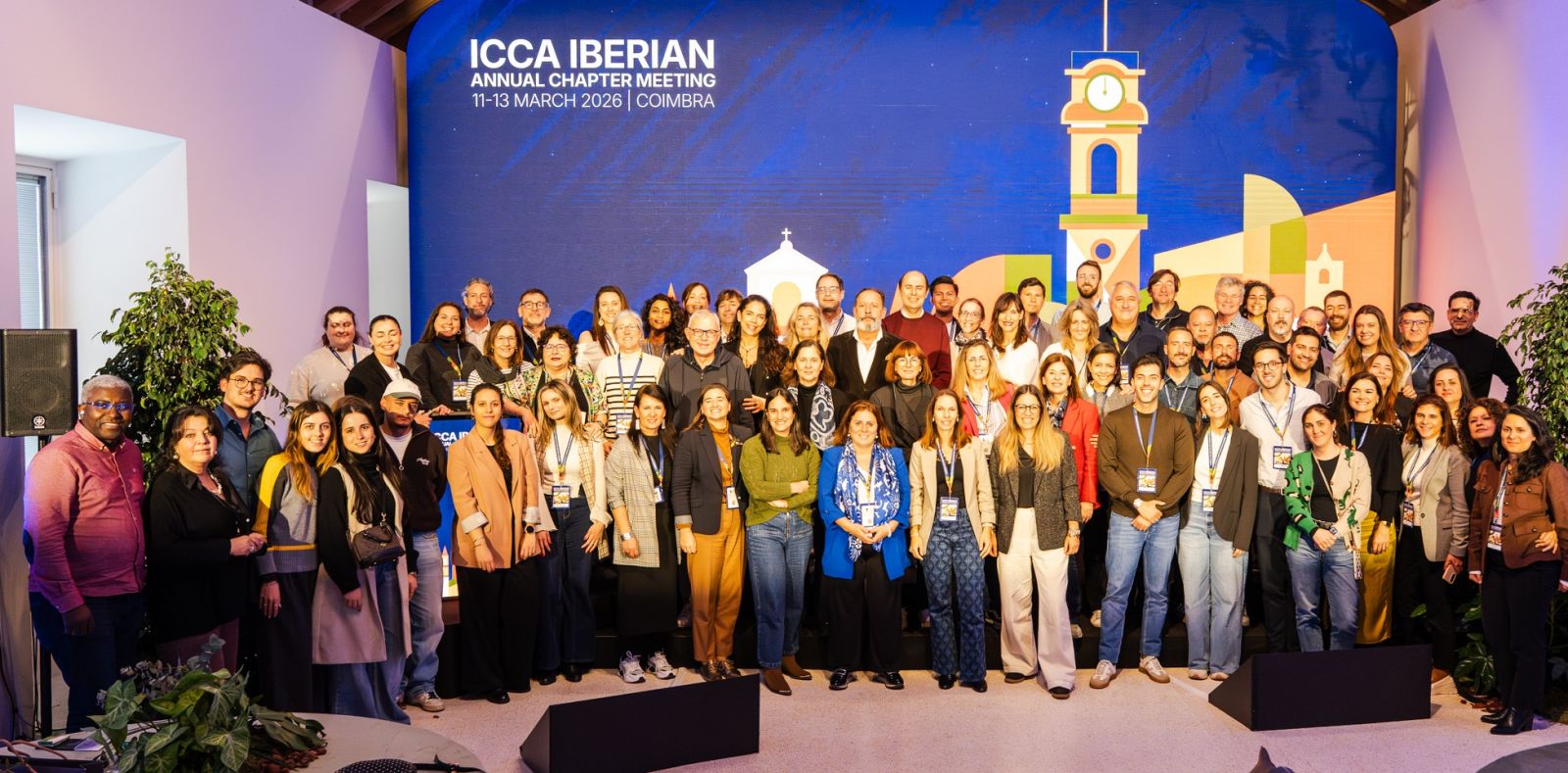
Tighter budgets and higher expectations framed several discussions during the event. Associations face tighter financial conditions and are asked to deliver measurable outcomes for members, partners and public institutions, while calling for defined selection criteria, shorter evaluation timelines and clearer expectations before committing to a candidacy, as convention bureaux prioritise bids aligned with local research sectors, economic priorities and institutional partnerships.
As a concrete example of how these conditions are addressed, Turismo de Portugal presented its national funding programme under the Portugal Events Programme 2026–2028. Financial support is linked to bed night generation, with defined tiers and additional increases for off-peak periods and lower-density regions.
Portugal’s model allows organisers and destinations to calculate expected return using accommodation data before a bid, linking event size, timing and available support in early planning. Examples from other European regions show multiple countries supporting a single candidacy. For Iberia, this creates a different competitive position, with destinations combining resources across borders.
Sustainability, Legacy And Measurement As Operational Layers
Legacy and sustainability were treated as planning questions, introduced early to shape programme design, partnerships and reporting.
Barcelona Convention Bureau presented legacy as a methodology that defines intended outcomes and connects congress topics with local needs, followed by partner identification and long-term evaluation. The programme includes five congresses, 15 collaborations and more than 650 beneficiaries, showing how impact is designed from the outset.
Sustainability cases focused on material and process control. Servis Complet, specialising in the design, construction and technical set-up of event spaces, used its work for the 2025 European Congress of Rheumatology to show how modular design, reuse strategies and logistics planning reduced material use by more than 80%, with 82% reused and 6% sent to landfill.
Bilbao Exhibition Centre addressed the same question through the Food4Future 2025 pilot, where exhibitors declared materials in advance, inputs were measured in kilos and waste streams prepared before opening, recording 77% reuse from 43,900 kg and integrating organic waste processing into venue systems.
Visit Gijón introduced a different dimension by treating human capital and talent as part of destination value. They presented a format built around student engagement and training, connecting meetings with future professionals and events with skills development and long-term sector capacity.
A session examined how events generate social, economic and environmental impact on host destinations before, during and after delivery. Contributions from Madrid Convention Bureau, 4foreverything, RX Global (organiser of ibtm World) and the University of Coimbra focused on timing, continuity and local connection: legacy must be introduced early, carried across the event lifecycle and reinforced through repeat editions or institutional ties beyond a single meeting.
Associations remain central, as objectives, content and timing are defined at the start and translated into practice by destinations, organisers and local partners.
ICCA is currently working on a
global impact measurement tool that assesses outcomes across education, research and community effects alongside economic indicators.
Strengthening Connections Across Ibero-America
.jpg)
Spain, Portugal and Latin American markets were positioned as part of a connected space where events, knowledge and partnerships can circulate more easily across regions.
Differences in association structures remain a defining factor. European organisations tend to operate with formal governance, defined decision processes and longer planning cycles, while many associations in Latin America work with smaller teams and less formal structures, limiting their capacity to bid for international events and deliver large-scale meetings.
In Spain and Portugal, support is directed towards bid development, data preparation and coordination with local partners. Shared language and institutional links facilitate collaboration and position Iberia as a connection point between Iberia and Latin America.
Multi-country bids provide a mechanism to extend that collaboration. Associations can rotate events across destinations while maintaining continuity, reducing the need to restart processes for each edition and expanding access to new markets within the same network.
Corporate events follow a different pattern, with different markets generating consistent demand through multinational companies and operating under distinct timelines and requirements. For destinations and organisers, this requires parallel strategies that distinguish between both types of events.
Talent, AI And The Capacity To Design And Deliver Events
Access to skilled professionals came up repeatedly as organisers, associations and destinations described increasing demands in reporting, programme design and data handling within tighter timelines.
Sessions on artificial intelligence focused on how these tasks are handled in practice and integrated into workflows. Structured prompting is used to generate reports, organise information and manage communication, while more advanced use cases include data analysis and multi-step reasoning for sponsorship modelling and research support.
Content generation and research are widely implemented, yet applications relying on participant-level data or tailored outputs remain limited, pointing to a gap between tool adoption and integration into decision-making. Tools are available, but use depends on people able to define inputs, structure data and interpret results within the context of an event or organisation.
This requires professionals to define context and translate outputs into programme design, decision-making and event delivery.
.jpg)
Coimbra And Destination-Led Design Of Delegate Programmes
In Coimbra, the board of the Iberian Chapter engaged with university students before the Annual Meeting, introducing them to the industry and creating direct contact between academic training and professional practice.
Sessions extended into university spaces, including evening access to the Biblioteca Joanina at the University of Coimbra, often considered one of the most beautiful libraries in the world.
The Coimbra–Centro de Portugal Convention Bureau used the meeting to demonstrate programme design across multiple layers of the destination, combining academic spaces, cultural activity and gastronomy within a single structure.
A session showcased a three-year plan from 2026 to 2028, bringing together public authorities, academia and industry to position Coimbra as a place where meetings connect sectors, knowledge and territory.
Cultural and gastronomic elements, including the region’s culinary offering, are built into that structure as part of its presentation to international associations. Venues, institutions and local actors are built into the meeting structure, shaping how delegates move, interact and engage throughout the programme.
Bilbao, Host Destination in 2027
Bilbao will host the ICCA Iberian Chapter Annual Meeting in 2027. The announcement was made in Coimbra, where Bilbao Convention Bureau presented the destination.
The announcement placed the Basque destination within the chapter’s rotation across Spain and Portugal and linked it to discussions during the meeting, where venue operations, sustainability, legacy and impact measurement formed part of the programme.