Business events are being asked to do more than fill venues and generate economic activity. In this issue, our Magazine Manager looks at the growing expectations placed on destinations, associations and organisers, from smaller, more purposeful meetings to the wider role of events in shaping knowledge, communities, innovation and places.
Author: Manuel A. Fernandes, HQ Magazine Manager
I have spent much of this year reading, interviewing and writing about what destinations are asking of business events. The most interesting answer, however, is that they are asking for more than attendance. The new UIA International Meetings Statistics Report (which I break down in this issue) provides the scale. In 2025, Europe accounted for 54% of international association meetings, across 1,445 cities and 173 countries. The longer view is equally instructive: 49.8% of meetings with known attendance between 2006 and 2025 had between 101 and 500 participants, while another 27.4% had 100 or fewer.
Those figures matter because they challenge the industry’s fixation with scale. A few years ago, during one of my press trips, I asked the host why there were no large convention centres in that city. The reply was telling: “Our strategy and profile within the sector do not rest on mega-events, but rather on smaller meetings where working groups can move forward their agenda. That is the direction our industry is taking!” Tallin was right about that. Today, the association meeting market is largely composed of gatherings small enough to fit comfortably within a specialist community, yet potentially significant enough to influence research, policy, professional practice or careers.
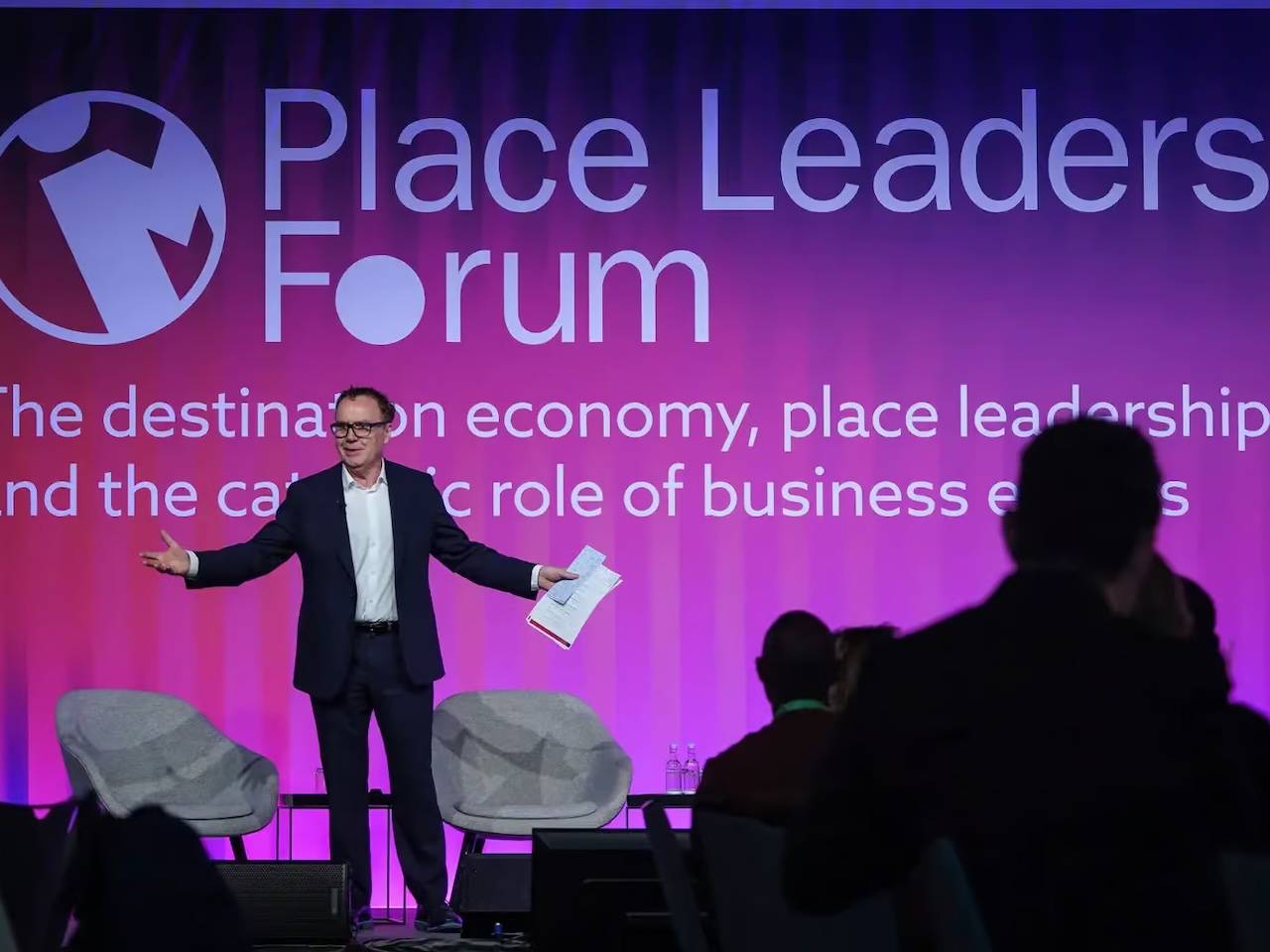
This is where IMEX’s new Place Leadership and the Business Events Sector white paper becomes particularly provocative. Its central thesis is that business events should strive to shape places, not simply selling them. The paper calls for closer alignment between event portfolios and economic and innovation strategies, co-designed legacy, stronger cross-sector partnerships, better intelligence-sharing with governments and a more credible role in public policy. A convincing argument with just one caveat: we should be careful not to turn place leadership into another lip service exercise. The test is whether a congress actually connects to something a city is trying to achieve.
Truth be told, that is where some of the work we have covered in our latest HQ #126 issue proves useful. visitBerlin is developing its role around government, science, business and civil society, while its Impact Programme seeks concrete social, environmental and educational outcomes. Its scientific ecosystem gives associations access to institutions and people who can shape the content of a congress. Elsewhere, the principle takes different forms. RAI Amsterdam has explored how a major scientific congress can engage with the city through experiences designed around ageing and public screening. Tokyo focused on what algorithms cannot provide amidst this information overload, drawing on the past to shape its future. IAPCO’s work with emerging professionals, on the other hand, reminds us that associations themselves are communities through which knowledge, networks and careers are built.
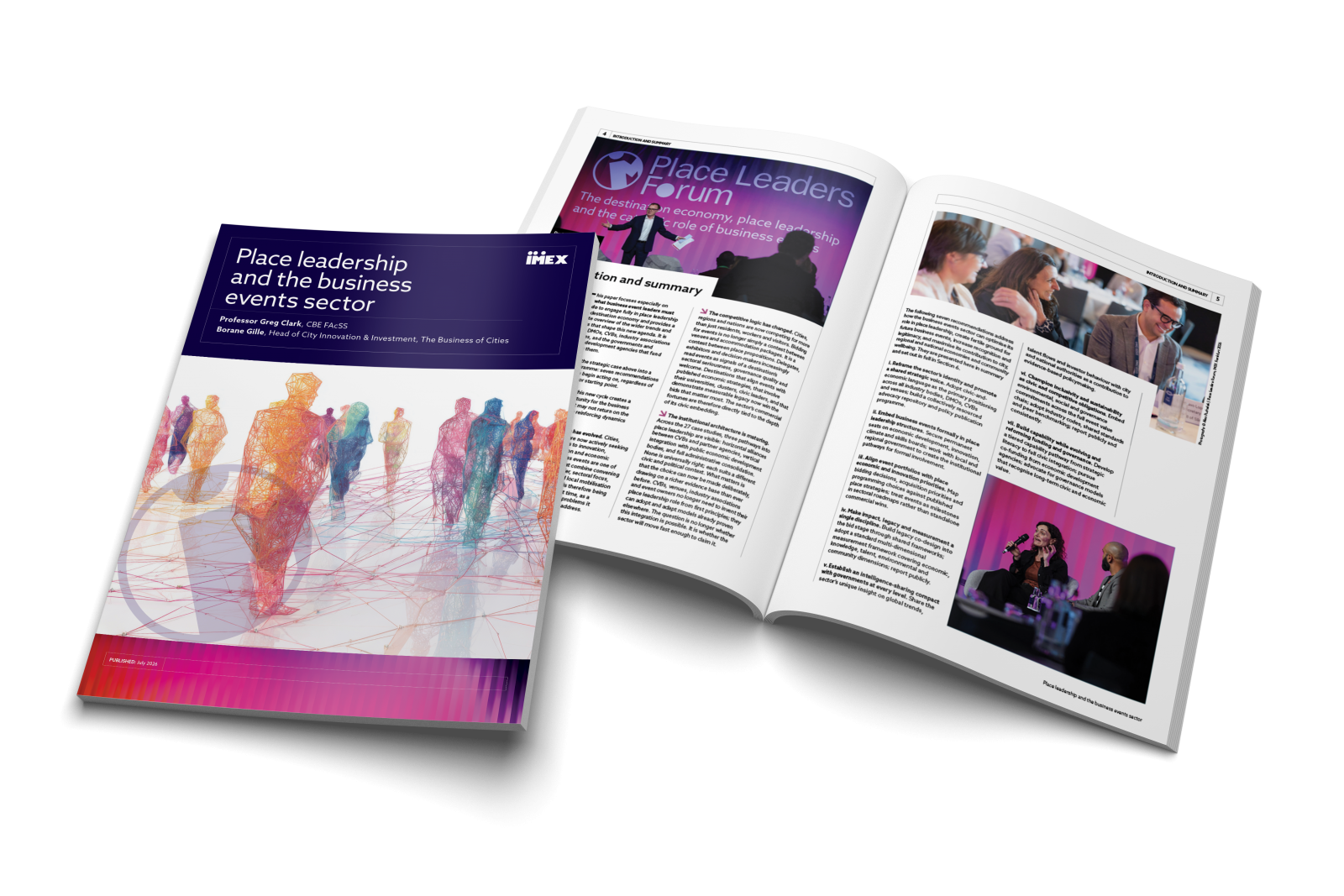
The IMEX paper argues for legacy programmes involving research partnerships, student participation, skills development, community engagement and innovation. That implies a broader definition of impact, when a meeting can leave behind people, relationships and capabilities, not simply projects or carbon figures. For associations, this could become one of the primary factors in destination selection. A congress that connects a young researcher with a laboratory, a professional with a future employer or a specialist with a new international collaborator has generated an outcome that will never appear in a hotel-night calculation. Something that runs through my talks with JMIC’s new director, Dorian Kronenwerth, and jwc Partner, Kai Hattendorf.
The sector has long asked governments to recognise its economic contribution. The stronger advocacy argument may be that business events provide governments with access to global networks, specialised knowledge, talent and investment intelligence. The white paper explicitly calls for this intelligence to become part of public decision-making. If we want a seat at the table where places decide their economic, scientific and social futures, we need the capabilities to move beyond the conference centre. The UIA numbers tell us how large the association meeting ecosystem is; the IMEX paper asks what that ecosystem could actually do!
Powered by Meeting Media Company, publisher of Headquarters Magazine (HQ) – a leading international publication based in Brussels, serving the global MICE industry and association community.
Since its founding in 1992, Meeting Media Group, publisher of Headquarters Magazine (HQ), has been a trusted guide and voice for associations and the global MICE (Meetings, Incentives, Conferences, and Exhibitions) industry.