Our September edition of Headquarters Magazine (HQ126) looks at the skills, qualifications and professional development expected from an increasingly international meetings workforce. While working on the edition, one question kept returning: where does the time needed to acquire those skills come from?
Our Deputy Editor approaches professional development from the personal time behind it. The same concern appears in his conversation with Laura Capell-Abra, Founder of Stress Matters, who speaks openly about burnout in the events industry and the relationship between workload, learning and retention.
Author: Jesús Guerrero Chacón, HQ Deputy Editor
Talent attraction and talent retention have become familiar themes across the meetings industry. Professionals are asked to become more qualified, more visible, more connected, more technologically literate and more internationally mobile, while managing travel, networking and the operational demands of events that move across cities, time zones and weekends.
Education programmes, certifications and leadership initiatives have become part of the professional landscape, reflecting a sector that wants to raise standards and respond to demands around technology, sustainability, accessibility and client expectations. The pressure begins when certification sessions and in-person learning are added to a profession that already spends a significant part of its time in airports, hotels and event venues.
Industry calendars increasingly include work outside official event dates, with long-haul journeys often adding governance meetings, strategy sessions or certification before a congress or trade show. Professional development is also scheduled around major events or weekends, making participation easier while using time once reserved for recovery. Over a year, these commitments form a second layer of work that affects visibility, networks and career progression, especially for younger professionals, freelancers and small business owners.
Organisations including Stress Matters, EventWell, the International Congress and Convention Association (ICCA), Professional Convention Management Association (PCMA), Meeting Professionals International (MPI), Society for Incentive Travel Excellence (SITE) and the Events Industry Council (EIC) have helped bring wellbeing into the mainstream conversation. Recent initiatives range from ICCA’s Event Mental Wellbeing Toolkit for Associations and the EIC’s Futures Landscape Report to PCMA’s content exploring the impact of long hours and constant travel on younger professionals.
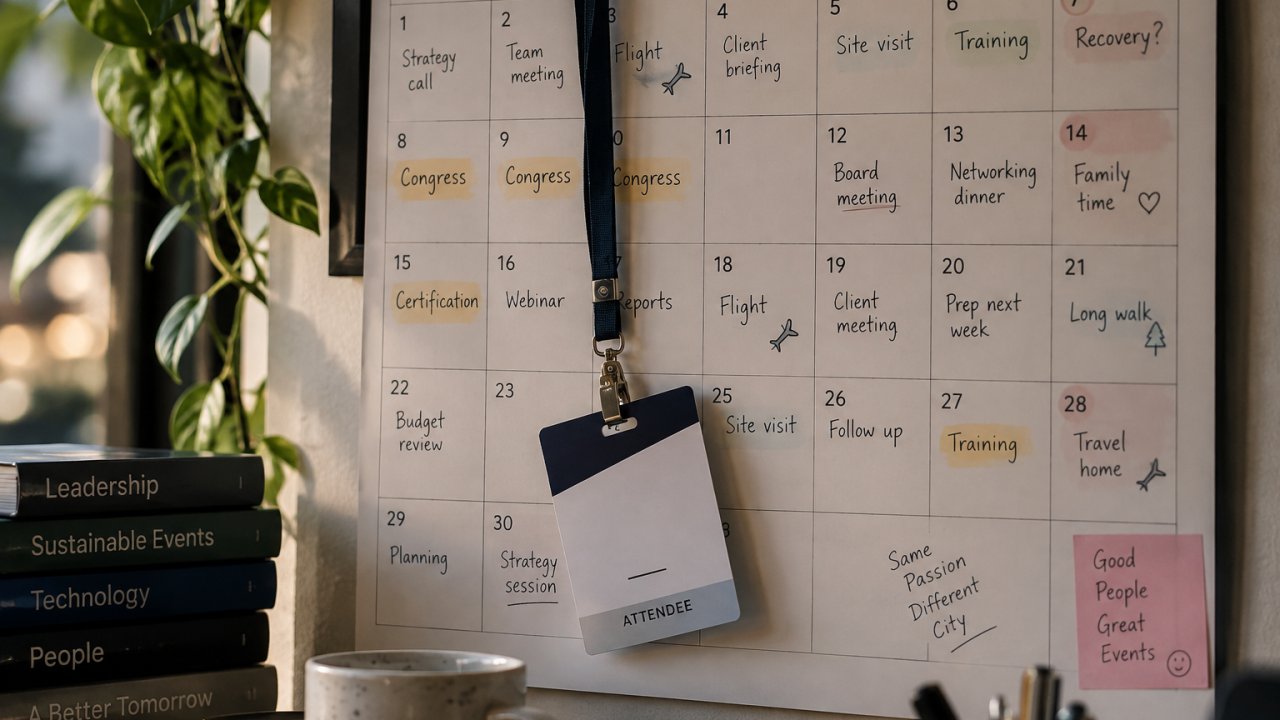
Research continues to highlight concerns around stress, workload and burnout, while talent shortages remain a recurring topic at conferences, board meetings and industry forums. Recovery time receives less attention than credentials and career advancement, yet it affects how people learn, negotiate and make decisions. Early arrivals, hosted experiences, retreats and education may offer real value, but they also consume weekends, travel days and personal time rarely counted in workload or wellbeing. Sleep, family life and time away from work remain invisible inputs.
The industry measures economic impact, legacy and sustainability with growing sophistication, but rarely the cumulative effect of its working practices on those delivering them. Skills development often depends on professionals finding extra time while organisational calendars continue to absorb evenings, weekends and travel days.
Our new edition explores education, credentials and career development through the question of how learning is built into professional life. New technologies, changing business models and evolving client expectations leave little space for standing still. How learning is delivered, where it takes place and whose time it occupies may become just as important as the credentials themselves.
Control of time is central: travel, weekends, family, recovery, learning and personal time. Professional development, wellbeing and talent retention are often treated separately, but event professionals’ experiences show how closely they are connected.
Powered by Meeting Media Company, publisher of Headquarters Magazine (HQ) – a leading international publication based in Brussels, serving the global MICE industry and association community.
Since its founding in 1992, Meeting Media Group, publisher of Headquarters Magazine (HQ), has been a trusted guide and voice for associations and the global MICE (Meetings, Incentives, Conferences, and Exhibitions) industry.