Nearly 200 destination professionals gathered in Canada’s capital to examine the political and economic pressures reshaping tourism, while DI introduced new resources on advocacy, climate preparedness and destination leadership.
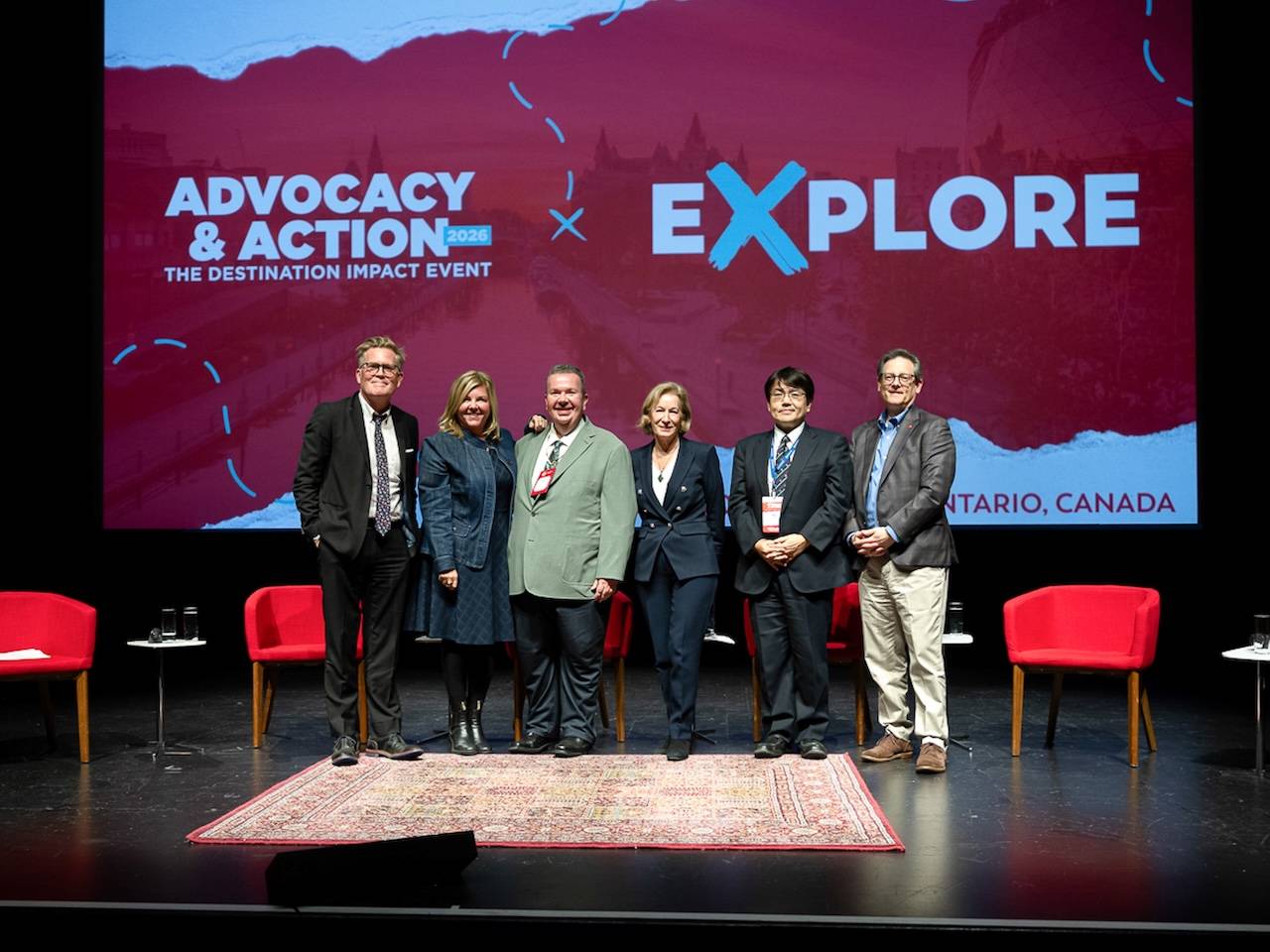
Destinations International (DI) brought together nearly 200 destination professionals, industry experts and policymakers in Ottawa from 20 to 22 October for the inaugural Advocacy & Action: The Destination Impact Event, a gathering focused on how destination organisations can navigate political uncertainty, economic pressures and changing community expectations.
Held in Canada’s capital, the event combined DI’s former Advocacy Summit and Thrive Summit into a single programme examining destination advocacy, organisational resilience and community impact. It also introduced new practical resources intended to help destination professionals communicate tourism’s wider value, prepare for climate-related disruption and strengthen relationships with policymakers and local stakeholders.
The meeting came at a time when destinations face a combination of economic uncertainty, geopolitical tensions, shifting trade relationships, changing government policies and growing pressure on public resources. Against this backdrop, the discussions explored how tourism can be positioned within broader conversations about economic development, employment, trade and community well-being.
Canadian Prime Minister Mark Carney sent an official note of greeting, thanking DI for its “commitment to promoting and facilitating international collaboration in the tourism sector.”
"At a time when political and economic developments are creating significant uncertainty for destinations around the world, there could not have been a more appropriate place for this conversation than Ottawa," said Don Welsh, president and CEO of Destinations International. "Destination organizations are navigating challenges that extend well beyond traditional tourism promotion. They must be effective advocates, trusted community partners and resilient organizations capable of demonstrating their value. Advocacy & Action was designed to provide the insights, relationships and practical tools to help them succeed."
The opening plenary, Tourism Beyond Borders: Navigating Politics, Policy and Purpose, was organised by Ottawa Tourism and the Tourism Industry Association of Ontario (TIAO) at the National Gallery of Canada. The discussion examined tourism as an economic driver, diplomatic connector and cultural bridge at a time of geopolitical tension, shifting trade relationships and political polarisation.
Moderated by Ryan McDonald, editor of Politics and Economy at The Globe and Mail, the panel brought together Victoria Clarke, CDME, CEO of Visit Mississauga; Gordon Orr, CEO of Tourism Windsor Essex Pelee Island; Isabel Hill, advisor and former director of the US National Travel and Tourism Office; Shin Osuka, director of the Japan Travel and Tourism Association; and Adam Burke, president and CEO of Los Angeles Tourism.
Drawing on her experience across four US administrations, Hill offered perspectives on tourism’s role in navigating geopolitical change and strengthening international relationships. Contributions from Canada, the United States and Japan highlighted the sector’s capacity to build mutual understanding across political differences, while supporting economic resilience and shared prosperity.
The programme also considered how destination organisations can make a stronger case for tourism within national policy debates. In Tourism Is Trade: Lessons from Canada for Destinations Everywhere, speakers explored the sector’s contribution as an export industry, including its role in generating economic growth, supporting jobs and businesses, advancing Indigenous economic development and strengthening national competitiveness.
Moderated by Michael Crockatt, president and CEO of Ottawa Tourism, the session featured Adrienne Foster, chief of Advocacy and Public Affairs at Hotels Canada; Sébastien Benedict, president and CEO of the Tourism Industry Association of Canada; and Bradley Sutherland, director of Business Development at Air Canada and chair of the board of Meetings Means Business Canada.
Using Canada as a case study, the panel examined how destination organisations can connect tourism to wider government priorities, including trade, investment, infrastructure, workforce development and reconciliation. The discussion reinforced the importance of framing tourism not simply as a visitor-facing industry, but as an economic contributor with implications across public policy.
A central development at the Ottawa gathering was the introduction of two resources designed to help destination organisations respond to emerging challenges and communicate more effectively with elected officials, business partners, government agencies and residents.
The Advocacy & Action Messaging Guide provides practical guidance for explaining tourism’s value and the role destination organisations play in their communities. It encourages professionals to connect tourism with broader public priorities, including economic opportunity, employment, quality of life and community development.
The guide also emphasises the importance of consistent, credible and audience-specific communication. Its approach encourages destination organisations to move beyond conventional visitor metrics and articulate the wider contribution of their work, helping them build sustained support among stakeholders.
The second resource, the Weathering the 2026-27 El Niño Cycle Industry Brief, examines the potential implications of El Niño-related climate patterns and associated environmental and economic disruption for destinations and the wider visitor economy across North America.
It highlights preparedness, risk assessment, collaboration and long-term resilience as important considerations for destination professionals. Environmental disruption can affect tourism infrastructure, visitor experiences, local businesses and community well-being; the brief encourages organisations to consider these potential consequences and the role of proactive planning in mitigating their effects.
Together, the publications translate DI’s focus on advocacy and professional expertise into practical guidance for destination organisations. They also broaden the conversation around destination management, linking effective public communication with the capacity to anticipate and respond to external risks.
Further information is available through DI’s Advocacy & Action initiative, while the resources can be consulted through the Advocacy & Action Messaging Guide and the Weathering the 2026-27 El Niño Cycle Industry Brief.
Professional development formed another part of the programme. Courses delivered through DI’s Certified Destination Management Executive (CDME) programme preceded the event, giving participants an additional opportunity to strengthen their strategic management skills and professional expertise.
Described by DI as the tourism industry’s highest individual educational achievement, the CDME programme is designed to prepare destination professionals for the evolving demands of destination management and organisational leadership. Its inclusion alongside Advocacy & Action reflected the event’s wider emphasis on continuous learning, peer collaboration and the development of stronger organisations.
The gathering also relied on collaboration across the host destination and industry. DI acknowledged the support of Michael Crockatt and the Ottawa Tourism team, alongside Sébastien Benedict of the Tourism Industry Association of Canada and Andrew Siegward, president and CEO of the Tourism Industry Association of Ontario. Hotels Canada was also recognised for its contribution.
"Ottawa provided an exceptional backdrop for important conversations about the future of our industry," said Sophia Hyder Hock, chief impact officer for Destinations International. "We are grateful to Michael Crockatt and the Ottawa Tourism team for their outstanding hospitality, and to the many speakers, partners and destination professionals who shared their knowledge and experience, as well as to the Tourism Industry Association of Canada, Tourism Industry Association of Ontario and Hotels Canada. Their contributions reinforced the importance and power of bringing our global community together to address common challenges and identify practical solutions."
A further highlight was the Destinations International Foundation Circle Dinner at the National Arts Centre. The dinner brought together destinations and partners investing at least $25,000 annually in the Foundation’s Annual Investment Campaign. These contributions support the Foundation’s mission and its work to generate lasting impact across the industry.
By bringing advocacy, policy, climate preparedness and professional development into a single programme, Advocacy & Action placed the ability to demonstrate tourism’s wider value at the centre of the destination organisation’s role. The discussions in Ottawa reflected a sector increasingly required to engage beyond promotion, build durable relationships with public and private stakeholders, and show how tourism connects with the economic and social priorities of the communities it serves.

Since its founding in 1992, Meeting Media Group, publisher of Headquarters Magazine (HQ), has been a trusted guide and voice for associations and the global MICE (Meetings, Incentives, Conferences, and Exhibitions) industry.