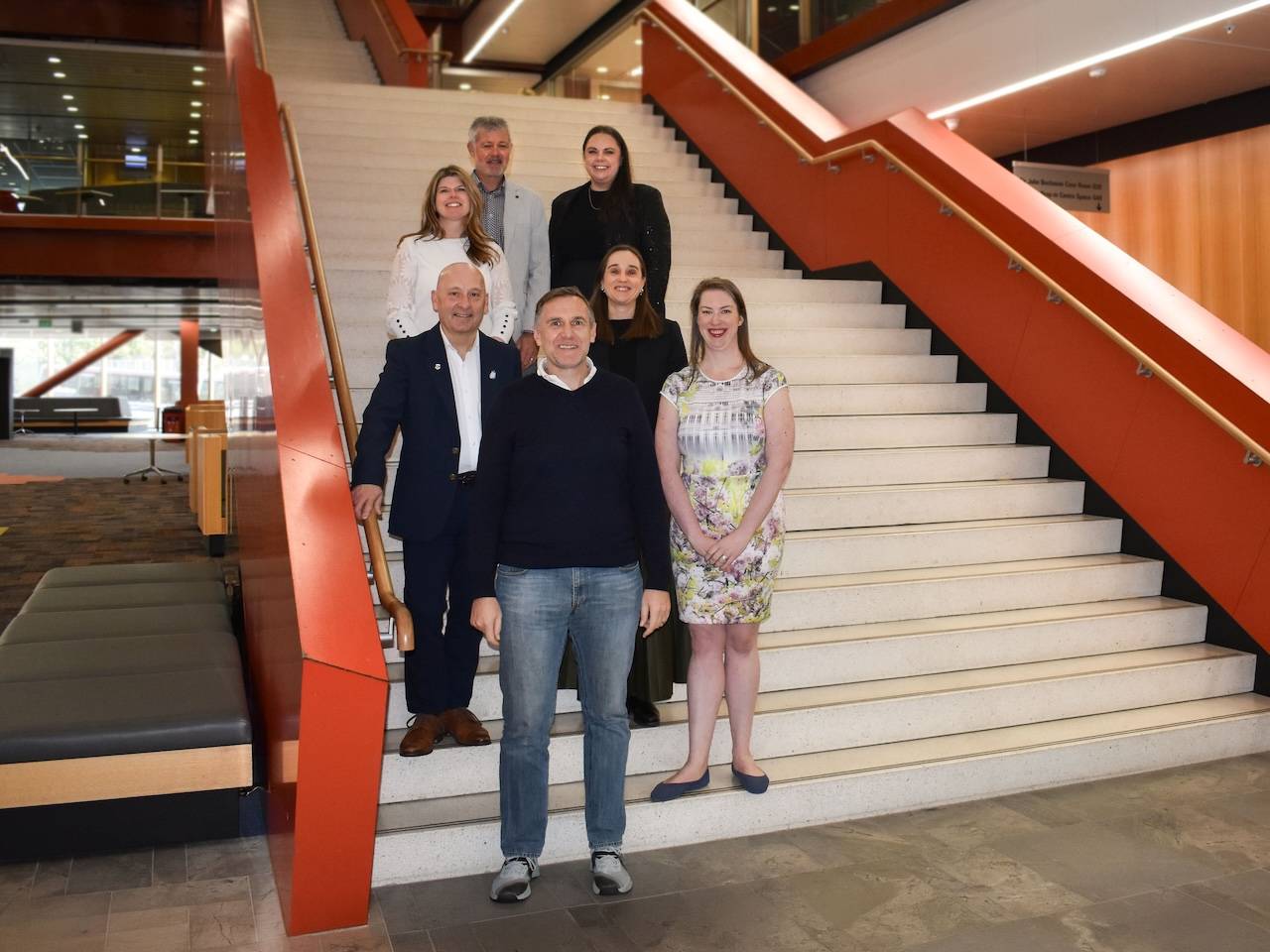
Group (clockwise from centre front) Professor Christian Hartinger, University of Auckland; Julian Bottaro, University of Auckland; Gemma Wood, Auckland Convention Bureau; Michael Stokoe, Tourism New Zealand Business Events; Stephanie Szmurlo, University of Auckland Event Services; Xanthe Smythe, NZICC; Morgan Harnett, University of Auckland Event Services
New Zealand has secured the right to host the 50th International Conference on Coordination Chemistry (ICCC50), bringing one of the field’s major international gatherings to Auckland in 2034.
The six-day conference is expected to attract between 1,000 and 1,200 delegates from around the world to the New Zealand International Convention Centre (NZICC), bringing together leading researchers, academics, emerging scientists and industry representatives.
The significance of the win extends beyond the scale of the meeting itself. Coordination chemistry underpins advances with applications across modern medicine, cleaner manufacturing, new materials and renewable energy technologies, giving ICCC50 a scientific remit that reaches well beyond the laboratory.
The successful bid was led by Professor Christian Hartinger of the University of Auckland, with Professor Sally Brooker and Professor James Crowley of the University of Otago (all pictured below) serving as co-chairs, alongside Professor Robin Fulton of Victoria University of Wellington. Their international standing within the coordination chemistry community was central to the bid, which also drew on the breadth of research being conducted across New Zealand.
The bid was presented as a genuinely national effort, bringing together researchers and institutions from across the country around a shared vision for the conference. Its case rested on the strength of New Zealand’s scientific community, the collaborative character of its research environment and its ability to deliver an international conference experience supported by a broad network of academic and business events partners.
That network included the University of Auckland Event Services team, Auckland Convention Bureau, Auckland Advocate Alliance, Tourism New Zealand Business Events and the New Zealand International Convention Centre.
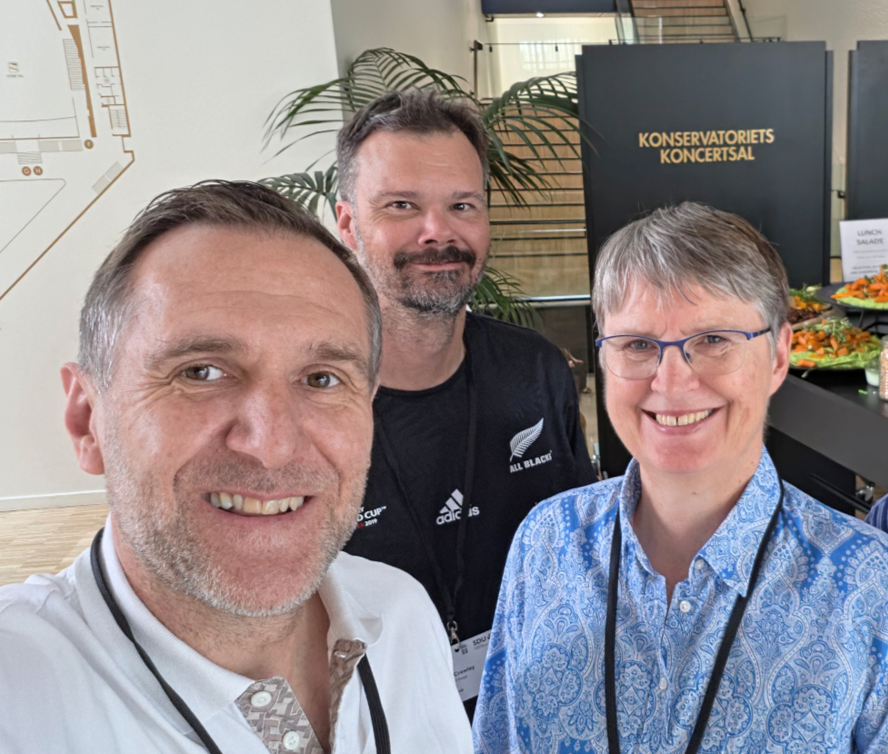
The strength of the national research ecosystem was also visible at the recent International Conference on Coordination Chemistry, where a strong contingent of New Zealand academics and students demonstrated the country’s active engagement with the international community. Their participation reflected a research environment spanning multiple institutions and disciplines, and provided tangible evidence of the connections behind the Auckland bid.
"This was a genuine all-of-New Zealand effort," said Professor Hartinger. "Our bid showcased not only the quality of coordination chemistry research being undertaken across the country, but also the collaborative nature of New Zealand science and our engagement with the international research community.
"ICCC50 represents much more than a conference. It is an opportunity to inspire the next generation of coordination chemists, strengthen international partnerships, and showcase New Zealand's research excellence, innovation and unique culture to colleagues from around the world.
"We look forward to welcoming delegates to Auckland and creating connections that will benefit researchers, institutions and scientific collaboration long after the conference concludes."
The 2034 gathering will also build on an established trajectory of international engagement. Before ICCC50 reaches Auckland, the team led by Professor Hartinger will host the 12th Asian Coordination Chemistry Conference (ACCC12) in 2028 at the University of Auckland, giving New Zealand another opportunity to deepen its connections within the global chemistry community.
The two conferences create a longer runway for international collaboration, with ACCC12 providing an earlier platform for researchers, students and institutions to connect before the larger global gathering arrives in 2034.
For Auckland and New Zealand’s business events sector, the win also demonstrates how scientific credentials and destination capability can reinforce one another when major association conferences are bid for collectively. The ICCC50 campaign brought universities, researchers, convention infrastructure and destination organisations into a single proposition, linking the country’s research capacity with its ability to host a meeting of international scale.
The anticipated benefits extend beyond delegate numbers and visitor expenditure. ICCC50 is expected to attract high-value international visitors while strengthening long-term research partnerships and raising New Zealand’s profile as a destination for international conferences, scientific collaboration and innovation.
By 2034, the conference is therefore intended to leave a legacy that reaches beyond its six days in Auckland: stronger international research networks, greater visibility for New Zealand’s scientific talent and further connections between emerging researchers, established institutions and the wider international coordination chemistry community.
Published by Meeting Media Company, the publisher of Headquarters Magazine (HQ) – a leading international publication based in Brussels, serving the global MICE industry and association community.
Since its founding in 1992, Meeting Media Group, publisher of Headquarters Magazine (HQ), has been a trusted guide and voice for associations and the global MICE (Meetings, Incentives, Conferences, and Exhibitions) industry.