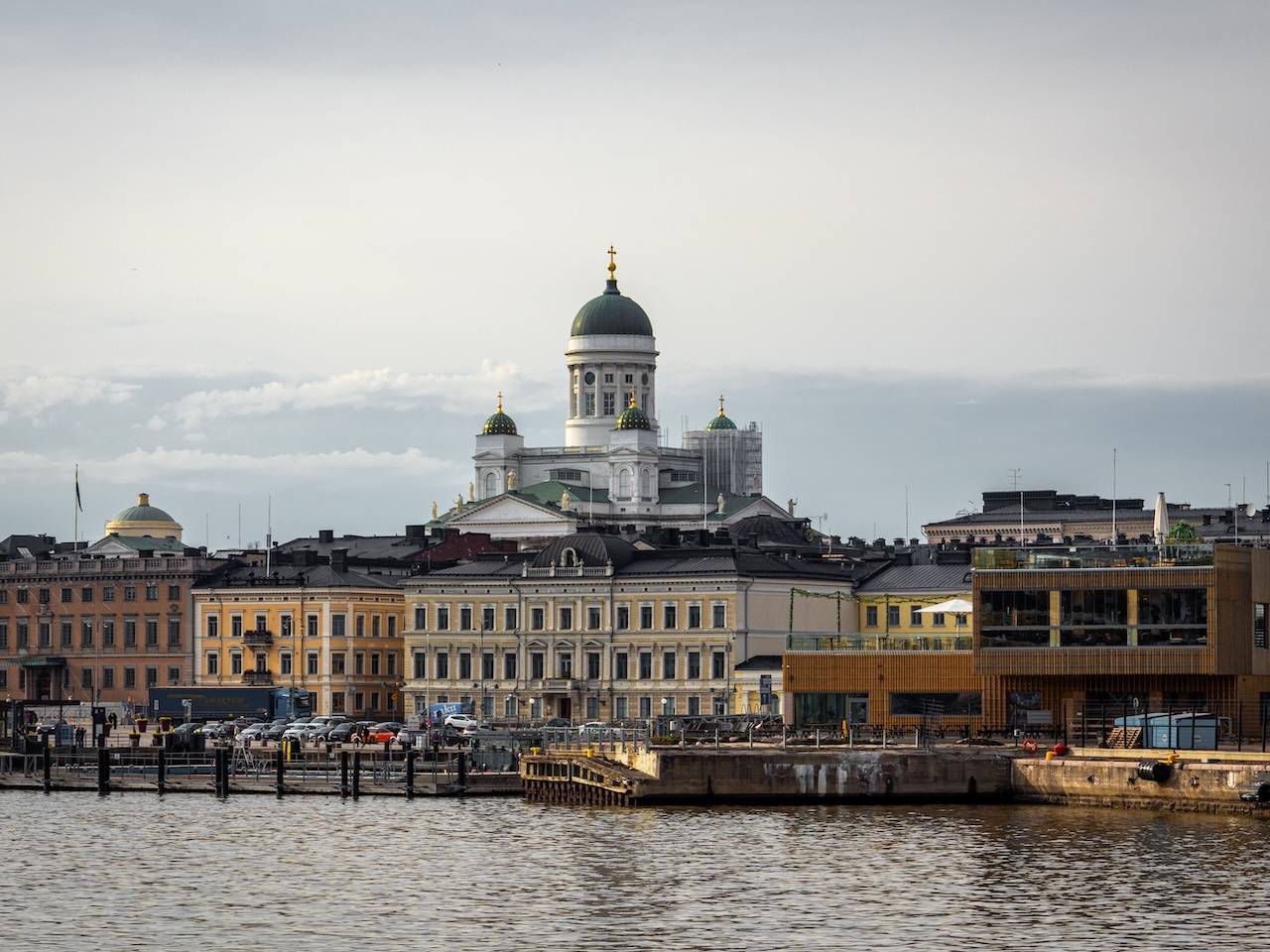
Helsinki reigns supreme at the top of the Global Destination Sustainability Index for the third year running.
The 2026 GDS-Index points to a destination sector entering a new phase of sustainability. Strategies, climate commitments and policy frameworks are now widespread; the harder question is how effectively they are being translated into measurable action.
Released by the Global Destination Sustainability Movement, the latest Index records its highest average score since the benchmark was established, at 45.5%. Some 89% of destinations assessed in both the current and previous editions improved their performance, while the gap between the Top 10 and the overall index average narrowed from 20.3 percentage points to 14.5.
The figures suggest that sustainability is becoming less about establishing a strategy and more about demonstrating delivery. Some 92.4% of assessed destinations now have greenhouse-gas commitments, while 91.8% have climate strategies and 90.5% have biodiversity strategies. Yet only 6% can demonstrate full delivery against one of these areas.
Destination Management recorded the strongest year-on-year improvement, rising by 6.2 percentage points, followed by Supplier performance at 5.1 points. Social performance increased by 3.5 points and Environmental performance by 2.6. The movement suggests that DMOs are increasingly operating as convenors across destination ecosystems, working with suppliers and stakeholders rather than focusing principally on promotion.
Resilience is also becoming more embedded in destination management. Two-thirds of assessed destinations now have a documented crisis-management plan covering preparedness, response and recovery, while 62% have a documented risk assessment.
“This year we are celebrating both excellence and momentum,” said Guy Bigwood, CEO and Chief Changemaker of GDS-Movement. “The top-performing destinations continue to raise the bar, while destinations across the wider community are accelerating their progress. The narrowing gap shows how ideas, practices, and ambition are spreading. Eleven years of measurement demonstrate the power of benchmarking, peer learning, and performance management to turn evidence into action and help destinations scale change.”
The message from the Index is therefore less about whether destinations have sustainability ambitions and more about whether those ambitions can be coordinated, implemented and measured.

Helsinki remains at the top of the 2026 GDS-Index with a score of 92.94%, followed by Gothenburg at 91.29% and Copenhagen at 90.35%. Aarhus takes fourth place, followed by Aalborg, Glasgow, Sydney, Belfast, Montreal and Reykjavik.
There is movement within the leading group. Sydney and Montreal enter the Top 10, while Aarhus rises from seventh to fourth. At the same time, the difference between first-placed Helsinki and third-placed Copenhagen has narrowed to 2.59 percentage points.
The wider Top 40 reflects the increasingly international nature of the benchmark, combining strong Nordic representation with destinations including Glasgow, Sydney, Belfast, Montreal, Barcelona, Madrid, Milan, Amsterdam, Melbourne, Berlin and Bilbao.
The Index is structured around four pillars — Destination Management, Supplier, Social and Environmental performance — making the ranking more than a single sustainability score. It provides participating destinations with a framework for benchmarking performance and identifying areas where further work is required.
.png)
The headline positions tell only part of the story. The GDS-Movement's analysis identifies several broader shifts across the 2026 results.
Together, these findings point towards a more operational definition of destination sustainability: less emphasis on what a city says it intends to do, and more on what its destination ecosystem can demonstrate.

Ireland offers a useful example of this ecosystem approach. Six Irish destinations feature in the 2026 Top 40, with Kerry ranked 16th, Dublin 17th, Cork 22nd, Clare 24th, Galway 27th and Limerick 32nd.
The country's progress is also linked to a broader approach to business-events impact. Fáilte Ireland's Business Events Impact and Legacy Programme was recognised with the 2026 GDS Impact Award, in collaboration with #MEET4IMPACT. The programme was co-created with Ireland's Business Events Ecosystem and aims to integrate economic, social and environmental impact into the planning and delivery of association conferences.
Rather than treating a conference as a self-contained visitor-economy activity, the programme encourages organisers to connect events with longer-term community and economic objectives. Its approach includes practical and financial support for organisers seeking to build purposeful impact into event design, while aligning activity with Irish Government priorities and the UN Sustainable Development Goals.
That approach mirrors one of the wider lessons emerging from the 2026 Index: destination sustainability increasingly depends on the ability to mobilise actors beyond the DMO itself. Hotels, venues, agencies, communities, public authorities and other suppliers all form part of the performance being measured.
The 2026 GDS-Index presents a sector that has moved considerably beyond defining sustainability ambitions. Average performance is rising, more destinations are improving year on year and the gap between the leaders and the wider field is narrowing.
But the relatively small proportion of destinations able to demonstrate full delivery against their climate commitments also points to the scale of the next challenge.
For DMOs and convention bureaux, that challenge increasingly extends beyond their own organisations. Progress depends on aligning the wider destination ecosystem, from suppliers and venues to communities, transport providers and public authorities, around measurable objectives.
The GDS-Movement's 2026 findings consequently shift the conversation from strategy to implementation. The next stage of destination sustainability will not simply be about setting more ambitious targets, but about showing how those targets translate into coordinated action and lasting outcomes.
The full 2026 GDS-Index results and insights are available in the report, Spark to Scale, here
Powered by Meeting Media Company, publisher of Headquarters Magazine (HQ) – a leading international publication based in Brussels, serving the global MICE industry and association community.

Since its founding in 1992, Meeting Media Group, publisher of Headquarters Magazine (HQ), has been a trusted guide and voice for associations and the global MICE (Meetings, Incentives, Conferences, and Exhibitions) industry.