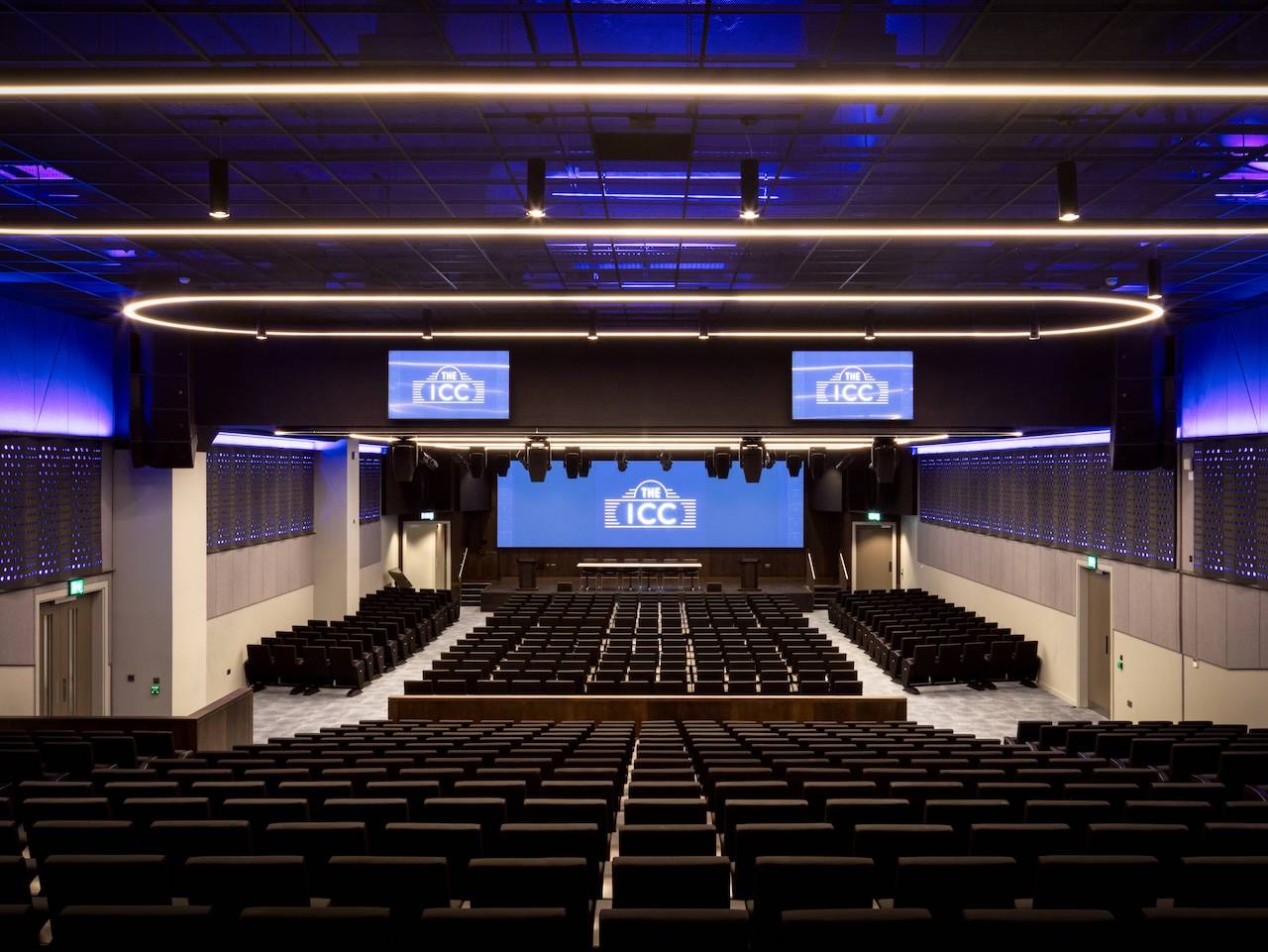
Olympia ICC Auditorium © Courtesy of Olympia
As the International Association of Ports and Harbors (IAPH) prepares to bring its World Ports Conference back to London for the first time since 1997, the 3–6 November gathering will offer an early opportunity to see how the city’s conference infrastructure has evolved. Around 700 senior stakeholders from the global port and maritime community are expected to attend a four-day programme spanning plenary sessions, parallel streams, roundtables, briefings and site visits. At Olympia, the newly opened International Convention Centre (ICC), part of a £1.3 billion redevelopment, has been designed to accommodate the demands of complex international congresses, combining dedicated auditoria and flexible meeting spaces with the wider estate’s hospitality, entertainment and cultural offer.
In this interview with Headquarters, Adam Pollington (right side), Sales Director at Olympia Events, discusses how that integrated setting is changing the proposition for international associations. From accommodating more varied conference formats to creating opportunities for networking beyond the formal programme, he argues that the value today lies in how a venue shapes the delegate journey and helps organisers achieve their objectives. The conversation also explores London’s concentration of maritime, financial, academic and technological expertise, and how the return of the World Ports Conference could materailise the new ICC’s potential to host major international association events.
A Conversation with HQ Magazine Manager, Manuel A. Fernandes.
The return of the World Ports Conference to London demonstrates that the city remains one of the world's leading destinations for international business gatherings. London continues to bring together global organisations, policymakers, investors, academics and industry leaders in a way that very few cities can.
From Olympia's perspective, the opening of the new International Convention Centre gives London an excellent platform for hosting these globally significant events. The ICC has been designed specifically for international conferences and congresses, offering dedicated auditoria, flexible breakout spaces and seamless integration with the wider Olympia destination.
For international associations, it's no longer simply about hiring a venue. They are looking for an environment that encourages networking, learning and collaboration throughout the delegate journey. The ICC enables us to offer that experience within a connected destination that includes hotels, restaurants, entertainment and event spaces."
I think London's strength lies in the breadth of expertise it brings together. It is a city where business, finance, technology, academia and policymaking naturally intersect.
For conference organisers, that creates opportunities to enrich the programme beyond what happens inside the conference venue. Delegates can connect with leading institutions, businesses and experts across multiple sectors, which often leads to new partnerships, ideas and conversations.
That's particularly valuable for a conference like the World Ports Conference, where many of the challenges being discussed – digitalisation, resilience, sustainability and future infrastructure – require collaboration across different industries and disciplines.
.jpg)
Olympia London facade © Courtesy of Olympia
The conversation has definitely evolved. Historically, many discussions centred around venue capacity and logistics. Today, international associations are increasingly focused on delegate experience, legacy, networking opportunities and how a destination can help them achieve their objectives.
The ICC adds a purpose-built convention offering to Olympia's existing event spaces, allowing us to host more complex conference formats while still benefiting from the character and flexibility of our heritage venues.
What appeals to organisers is the ability to create different experiences across the destination. They can hold keynote sessions in the ICC, networking events in one of the many restaurants on site, and give delegates access to hotels, bars and cultural experiences without leaving the estate. That opens up much more creative conversations about event design and delegate engagement.
Modern conferences are moving away from a one-size-fits-all format. Delegates expect a choice of content, more opportunities for interaction and different ways to engage with speakers and peers.
That requires flexible infrastructure. The ICC has been designed to accommodate everything from large plenary sessions to smaller breakout discussions, workshops and networking activities. The ability to move delegates easily between spaces, while maintaining a high-quality experience throughout the day, is essential.
The conference industry's continued evolution towards more personalised and interactive experiences was very much part of the thinking behind the design of the ICC.
The wider ecosystem is becoming increasingly important. Organisers want delegates to spend more time together, build stronger connections and get more value from attending in person. Having hotels, restaurants, bars, entertainment and event facilities within one destination helps create a more seamless experience. It reduces friction for delegates and creates more opportunities for informal networking beyond the conference programme.
Olympia is now a destination rather than simply a venue, and this is a good way of describing how international associations are thinking about their events.
(1).jpg)
World Ports Conference 1965 in London © IAPH Archive
One of the most valuable aspects of international association events is the exchange of knowledge and ideas that takes place alongside the formal programme. Events like this bring together influential decision-makers, experts and innovators from around the world. While the economic impact is important, there is also significant value in the connections, conversations and collaborations that emerge from bringing those communities together.
Venues play a role in creating the environment where those interactions can happen, and that's something we think carefully about when designing delegate experiences.
Success for us would be seeing delegates, organisers and partners leave feeling that the venue helped them achieve their objectives and delivered an outstanding experience.
The ICC was created to attract precisely this type of international association event; conferences that bring together global audiences, complex content programmes and meaningful opportunities for collaboration. The World Ports Conference is an excellent example of the calibre of event that the ICC has been designed to support.
Demonstrating that we can successfully deliver events of this scale and complexity helps reinforce Olympia's position as a destination for major international congresses and association conferences across a wide range of sectors.
Powered by Meeting Media Company, publisher of Headquarters Magazine (HQ) – a leading international publication based in Brussels, serving the global MICE industry and association community.
Since its founding in 1992, Meeting Media Group, publisher of Headquarters Magazine (HQ), has been a trusted guide and voice for associations and the global MICE (Meetings, Incentives, Conferences, and Exhibitions) industry.