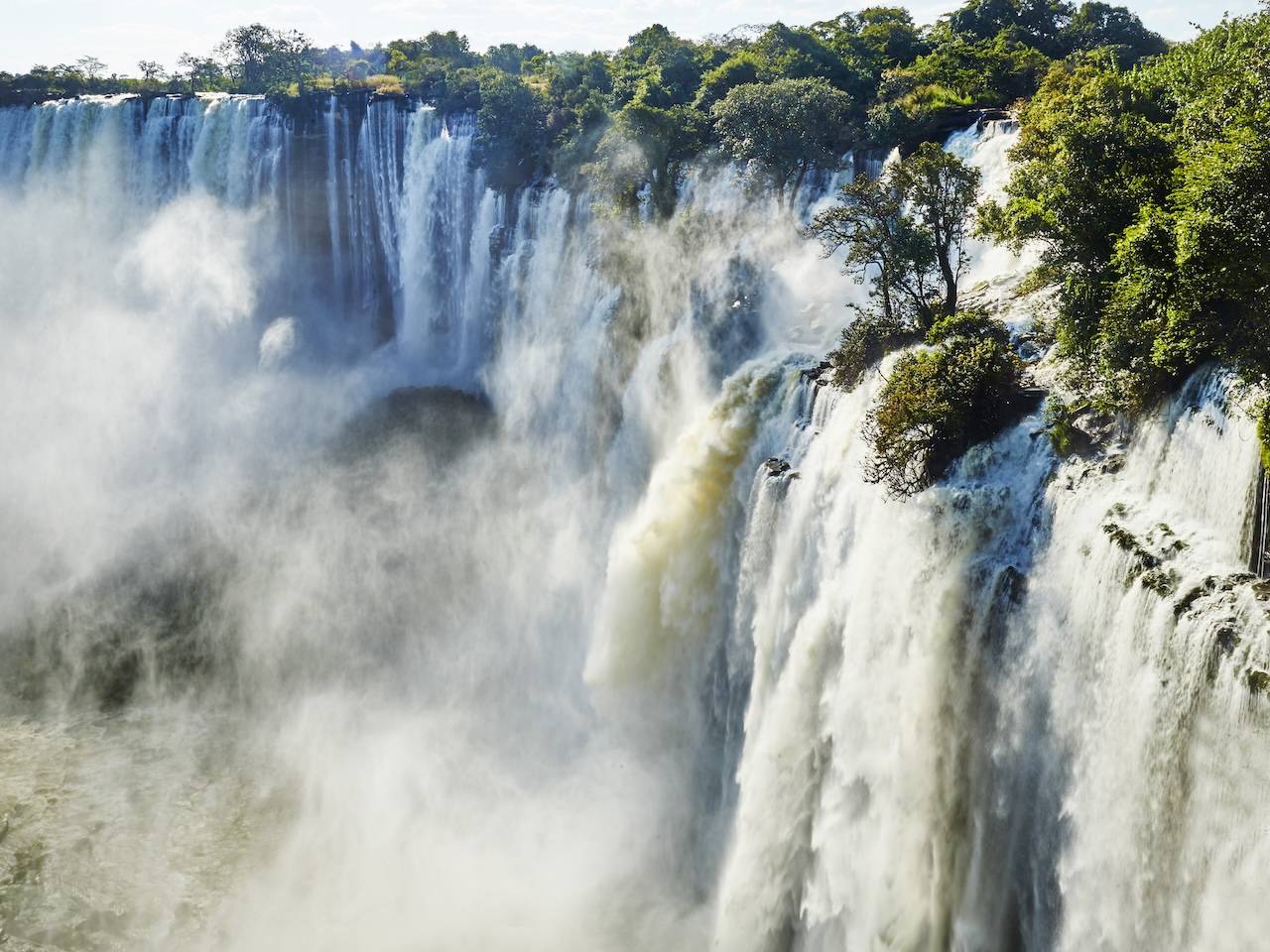
Kalandula Waterfalls © Robert Haidinger | Angola Tourism Board @ Kleber Group
The launch of the Angola Convention Bureau (ACB) in May 2026 introduced a new player to Africa’s meetings industry. Officially inaugurated in Luanda and presented to international stakeholders during IMEX Frankfurt weeks later, the bureau reflects a growing focus on business events within the country’s development plans. New convention infrastructure, expanded international air connectivity and a calendar of sector-focused forums are creating the foundations for a more coordinated meetings industry.
Angola Vision 2050 and the National Development Plan 2023-2027 provide the framework behind that shift. Economic diversification is a central objective of both programmes, with tourism, infrastructure, logistics, agriculture and industry identified as priority sectors for future growth. Angola’s development plans place particular emphasis on expanding sectors beyond the oil economy, positioning tourism as a long-term driver of investment, employment and international engagement. Business events support those ambitions by creating opportunities for investment, knowledge exchange and connections between international and local stakeholders across multiple sectors.
International business travel already plays an important role in Angola’s visitor economy. More than 223,000 international visitors travelled to the country in 2025, including almost 60,000 business travellers. Business arrivals exceeded leisure arrivals during the same period, reflecting Angola’s position as a destination for investment, commerce, government relations and sector-specific activity.
The Angola-EU Lobito Corridor Business Forum illustrates how those connections are developing. The 2026 edition focused on agriculture, agro-industry, transport and logistics projects linked to the Lobito Corridor, a strategic route connecting Angola’s Atlantic coast with Zambia and the Democratic Republic of Congo. Government institutions, investors, development organisations and private-sector stakeholders participated in discussions aimed at accelerating projects and mobilising financing across the corridor.
The Lobito Corridor has become a focal point for discussions around regional integration, critical minerals, agricultural production and supply chains connecting Southern Africa with international markets. Growing investment activity is also creating demand for forums, business meetings and sector-specific events involving policymakers, financiers, logistics operators and industry experts.

Luanda © Robert Haidinger | Angola Tourism Board @ Kleber Group
Several of Angola’s priority sectors already provide a foundation for future congresses and industry events. Mining occupies a prominent position through the Angolan International Mining Conference, which has developed into a platform for discussions around critical minerals, investment and supply chains linked to the global energy transition. Energy remains a major contributor to the economy while renewable generation, transmission infrastructure and energy security attract growing attention from investors and policymakers.
Agriculture and agro-industry feature prominently within diversification plans, creating opportunities for technical meetings focused on food production, processing, agritech and regional value chains. Infrastructure and logistics continue generating international interest through port developments, transport corridors and urban development projects. Tourism investment has emerged as another area of focus, highlighted by the Global Tourism Forum Angola Investment Summit held in Luanda in June 2026.
The creation of ACB provides an institutional framework for connecting those sectors with congresses, corporate meetings and international events. Established through a national MICE strategy approved by presidential decree, the bureau coordinates destination promotion, bid development and industry collaboration across government agencies, convention facilities, hotels, airlines and event suppliers.
The structure reflects a broader effort to align business events with national development priorities. Government institutions provide policy direction and infrastructure investment, while industry partners contribute destination representation, market development and event expertise. Kleber Group, which established operations in Luanda in 2025, manages the bureau’s international representation and day-to-day activities.

View of the Luand Convention Palace © AI-generated image
One of the most significant developments supporting that ambition is the Lundo Project on the Chicala peninsula. At the heart of the development, the Luanda Convention Palace is expected to open towards the end of 2026 with capacity for approximately 3,000 delegates. Plans include exhibition facilities, seminar rooms and dedicated spaces for executive, corporate and diplomatic meetings. The Executive Oval Room has been designed to accommodate up to 375 participants and will feature multilingual support and advanced conference technology.
The project is transforming part of Luanda’s waterfront through new hospitality, residential and commercial developments. At its centre, the convention palace will anchor a district designed to support international conferences, exhibitions and investment events, complemented by accommodation, cultural attractions, entertainment options and services for delegates and organisers.
"Angola's rapid infrastructure development is laying the groundwork to compete in the global MICE market. Its status as an emerging destination allows it to offer innovative and uncrowded proposals, increasingly sought after by organisers and companies. Angola is not simply investing in venues; we are creating an ecosystem that connects business events with investment, knowledge exchange and economic development. The Angola Convention Bureau provides the platform to bring those opportunities together," says Julia Kleber, CEO at Kleber Group.

Talatona Convention Centre © Angola Tourism Board @ Kleber Group
Beyond destination promotion, the bureau’s role is to support conference attraction, bid development and long-term industry growth across Angola’s wider business events ecosystem. Accessibility has also expanded through the Dr António Agostinho Neto International Airport. Designed for up to 15 million passengers annually, the facility has become Angola’s principal international gateway. Lufthansa, Emirates, Qatar Airways and Ethiopian Airlines are among the carriers strengthening connections between Luanda, Europe, the Middle East and other African markets.
The airport also anchors plans for an Airport City incorporating hotels, offices and logistics facilities aimed at corporate travellers, investors and international business activity. Together with Luanda’s growing meetings infrastructure, it reinforces the city’s role as a meeting point for organisations operating across Southern Africa and the Atlantic region. Current meetings activity remains centred around facilities such as the Talatona Convention Centre, which regularly hosts regional conferences, government gatherings and business forums. Additional capacity from the Luanda Convention Palace will expand the destination’s ability to accommodate larger congresses, exhibitions and international events while creating opportunities to attract new sectors and meeting formats.
ACB’s long-term role includes conference attraction, sector partnerships and the development of recurring event programmes. Convention infrastructure, international air connectivity, investment forums and sector expertise are already in place. The bureau’s creation marks a coordinated approach to developing Angola’s meetings industry around those existing strengths.
Powered by Meeting Media Company, publisher of Headquarters Magazine (HQ) – a leading international publication based in Brussels, serving the global MICE industry and association community.

Since its founding in 1992, Meeting Media Group, publisher of Headquarters Magazine (HQ), has been a trusted guide and voice for associations and the global MICE (Meetings, Incentives, Conferences, and Exhibitions) industry.