The 21st edition of the Taipei forum brought international perspectives to Taiwan, with discussions focusing on human connection, experience design and more sustainable event planning.
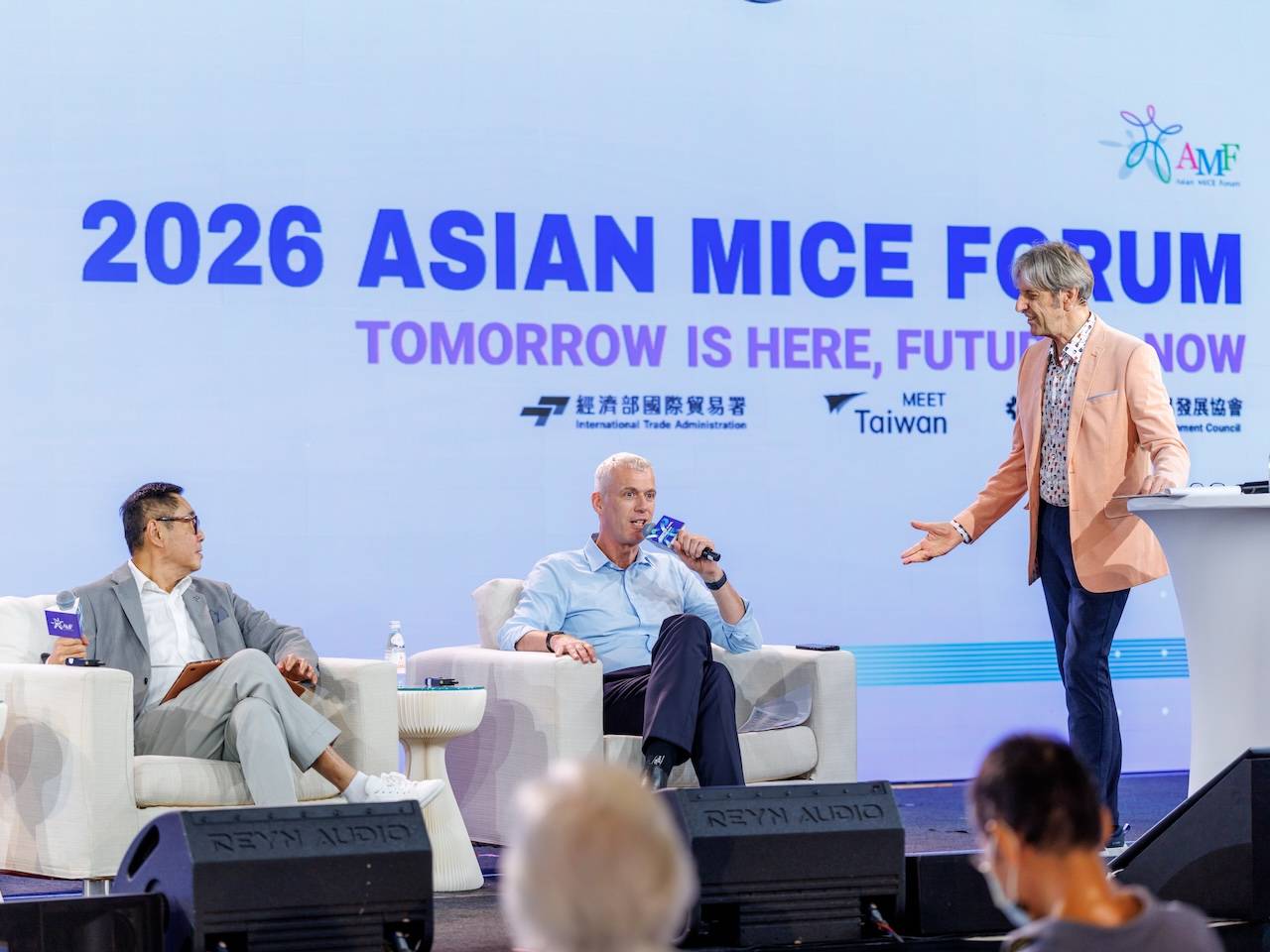
Business events are competing in a world where information is increasingly accessible, but meaningful human interaction remains difficult to replicate. How organisers respond to this challenge was a central theme of the 2026 Asian MICE Forum (AMF), held in Taipei on 1 October under the theme Tomorrow is Here, Future is Now.
Now in its 21st edition, the forum brought together international MICE professionals and experts from different sectors to examine changing participant expectations and consider how events can deliver value beyond the exchange of information. Organised by the International Trade Administration (TITA), Ministry of Economic Affairs, and implemented by the Taiwan External Trade Development Council (TAITRA), AMF has welcomed more than 8,000 MICE professionals from around the world since its establishment in 2006.
The 2026 programme built on the previous year's 20th-anniversary edition and the launch of AMF 2.0, continuing the forum's role as a meeting point between Taiwan's business events industry and international expertise.
The opening keynote, Why People Gather, by internationally renowned architect Ole Scheeren, Principal of Büro Ole Scheeren, examined the relationship between space, design and human interaction. His contribution placed the physical environment at the heart of the discussion about what makes an event meaningful.
As face-to-face encounters take on renewed importance, the challenge for organisers extends beyond bringing people into the same room. Venue design, spatial arrangements and the experience of moving through an event can all influence how participants interact and connect.
The question is particularly relevant to an industry navigating increasingly sophisticated digital tools and expanding access to online content. While technology can facilitate participation and information exchange, the value of gathering in person depends increasingly on what people experience together.

This tension was explored further in the panel Too Much Content, Too Little Impact, which considered how business events can move beyond the delivery of information to create more meaningful engagement.
Discussions addressed changing audience expectations, experience design and the role of technology, while highlighting the importance of human interaction. Face-to-face encounters can foster trust and create multisensory experiences that are difficult to reproduce through digital channels alone.
The conversation continued with Designing from Feeling to Remembering, which drew on perspectives from C2 Montréal and South by Southwest (SXSW). The session explored how sensory elements, interaction and technology can help transform an event from a programme of sessions into an experience that participants remember and share.
The emphasis was on emotional engagement, immersive co-creation and a sense of belonging. Rather than treating content as the sole measure of an event's value, these approaches place greater importance on how participants engage with one another and what they take away from the experience.
For organisers, this raises questions about how programmes are designed, how audiences are involved and how technology can support rather than displace human connection. The objective is not simply to deliver more information, but to create the conditions for ideas, relationships and experiences to have a lasting effect.
Alongside its programme, AMF incorporated measures intended to reduce the environmental impact of the forum. These included reducing single-use materials, increasing the use of reusable resources, shortening travel distances and adjusting catering arrangements.
Based on the scenarios assessed, the measures were estimated to reduce emissions by approximately 414 kgCO₂e, representing a reduction of around 38%. The figures illustrate how operational decisions can translate sustainability considerations into measurable outcomes, although the estimate relates to the scenarios assessed for this event.
The approach also reflects a broader question for business events: how can organisers align the experience they create for participants with the environmental considerations involved in delivering it?

The forum's discussions and participation provided a platform for exchanging perspectives across markets and disciplines. For Taiwan, this international dimension is central to AMF's role in connecting local industry professionals with developments, expertise and potential partners from elsewhere in the world.
Looking ahead, TITA intends to continue strengthening international partnerships through AMF and MEET TAIWAN, connecting the country's MICE sector with global trends and resources while creating opportunities to showcase Taiwan as a business events destination in Asia.
The themes explored in Taipei point to a wider challenge for the industry. As access to information becomes less of a differentiator, event organisers are being prompted to consider more carefully what makes participation worthwhile: the quality of human interaction, the emotional resonance of the experience and the decisions made in planning and delivering the event.
Powered by Meeting Media Company, publisher of Headquarters Magazine (HQ) – a leading international publication based in Brussels, serving the global MICE industry and association community.
Since its founding in 1992, Meeting Media Group, publisher of Headquarters Magazine (HQ), has been a trusted guide and voice for associations and the global MICE (Meetings, Incentives, Conferences, and Exhibitions) industry.